
Custom assembly automation · Case study
Automatic Screw Fastening for M22 Threaded Tubes
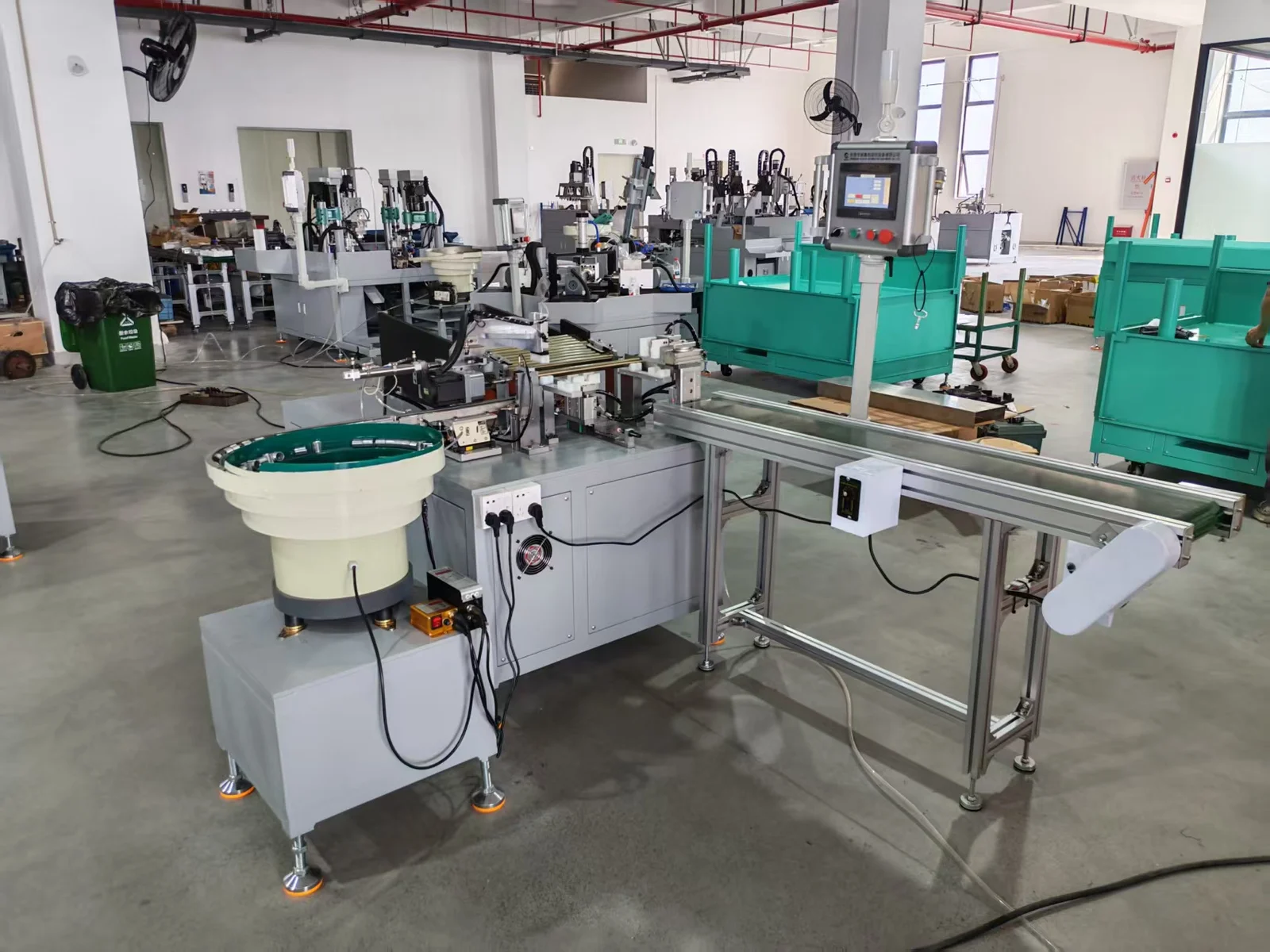
A dedicated machine feeds metal tubes and threaded components, fastens them together and unloads the assembled parts. Operators replenish the feeders and start the machine.
 View full-size image ↗
Workshop video
See the feeding and fastening sequence
The 30-second edit includes the machine layout, tube feeding, three consecutive fastening cycles at original speed and a view of the assembled tube.
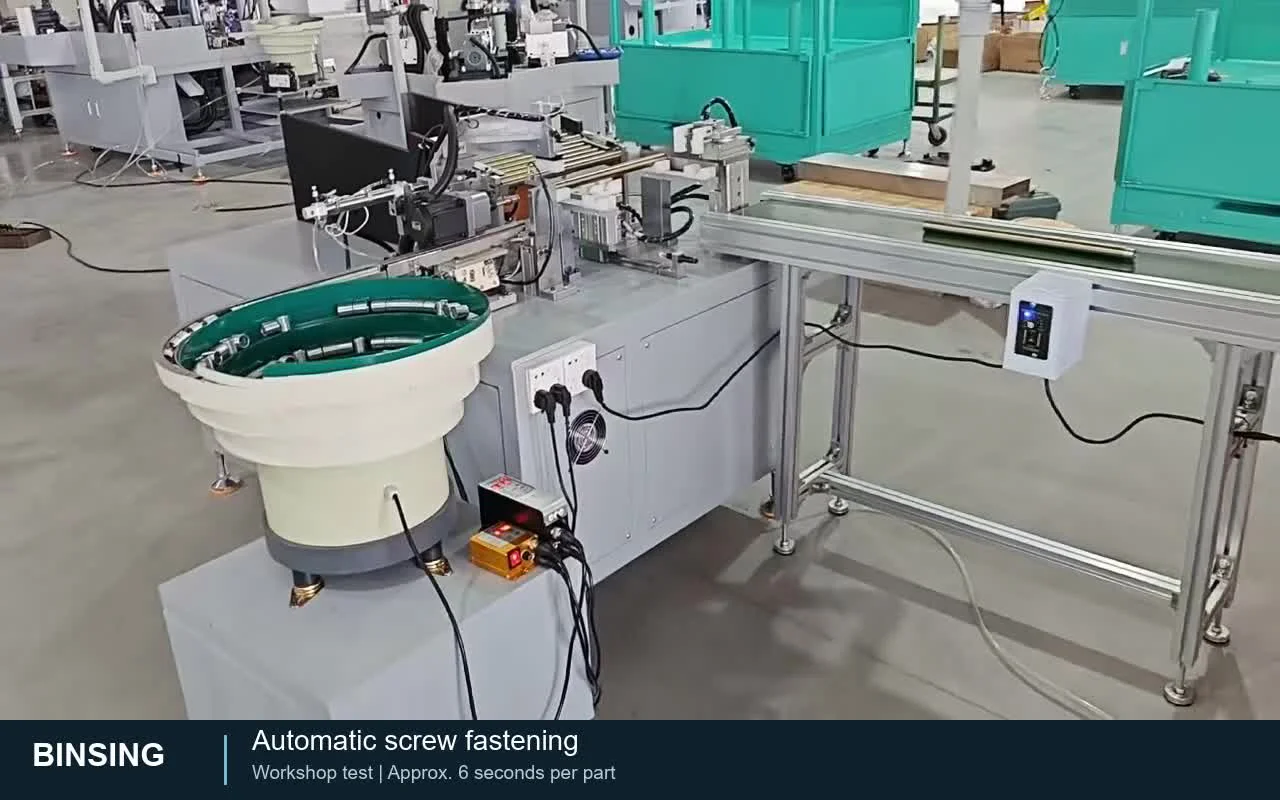
Operators replenish the component feeder and tube rack. The machine carries out the feeding, fastening and unloading sequence after startup.
The application
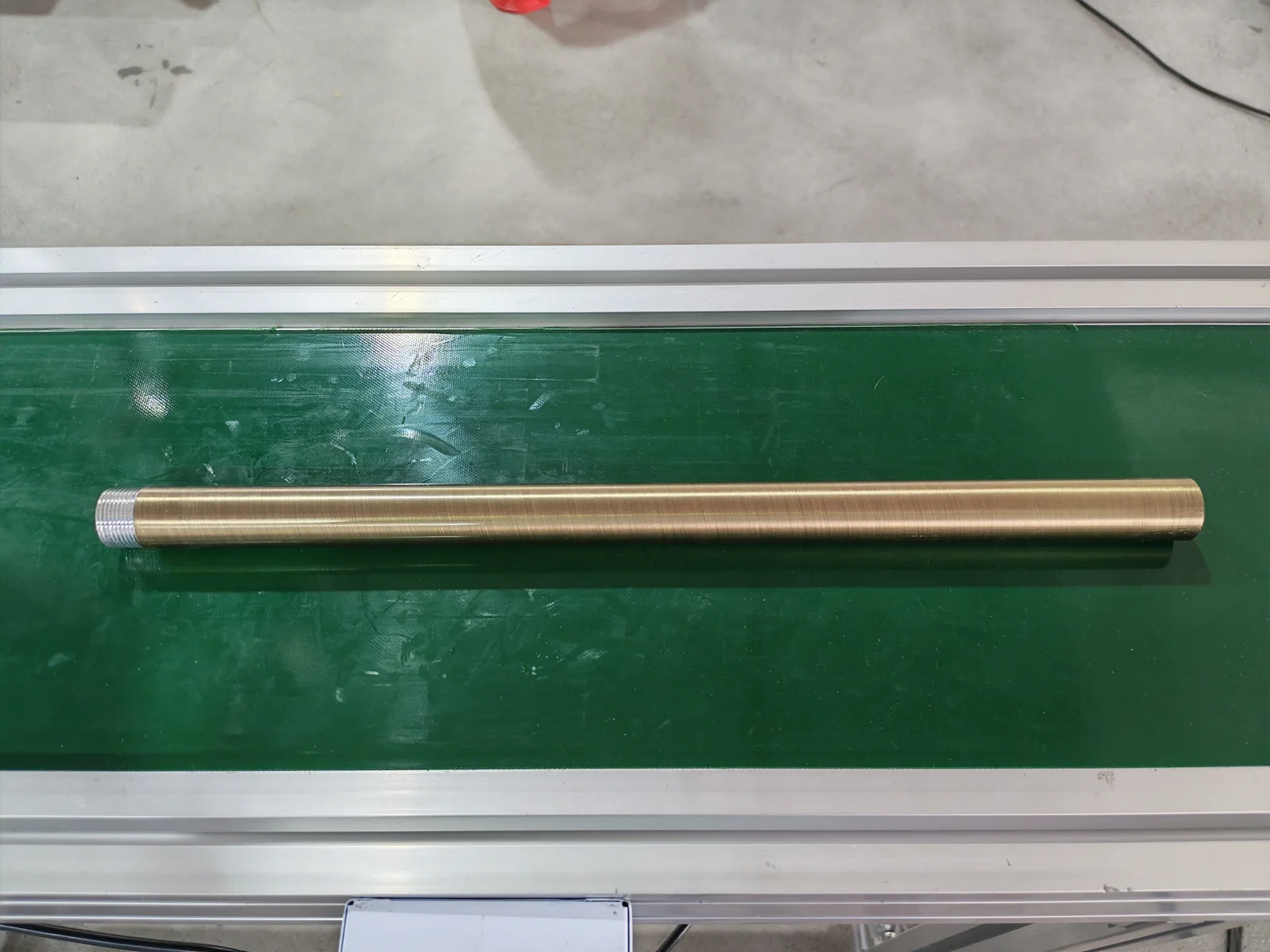
Assemble a threaded component into a metal tube
The tube arrives with its M22 internal thread already prepared. This project covers assembly into that thread; drilling and tapping are separate upstream operations.
 View full-size image ↗
Built around the supplied parts
The customer requested automatic fastening into metal tubes. The machine combines a vibratory component feeder, tube storage, pneumatic handling and a servo-driven fastening mechanism.
The project record confirms completed production and commissioning, with the machine ready for shipment. These photographs and the workshop video document that stage.
For another part, the component geometry, thread fit, fastening depth and required inspection must be reviewed together.
Process route
From replenishment to assembled-part discharge
Automatic cycling still requires an operator to replenish both material supplies and start the machine.
Replenish and start
The operator puts threaded components into the vibratory bowl, loads tubes into the storage rack and starts the machine.
Feed and position
The feeding mechanisms present a tube and a threaded component to the fastening station.
Fasten the component
The servo-driven mechanism rotates the threaded component into the tube's existing internal thread.
Unload the assembly
The machine transfers the assembled tube to the discharge conveyor, ready for collection.
Project configuration
Dedicated feeding and servo fastening
The PLC coordinates the assembly sequence. A touchscreen provides the operator interface, and a 0.75 kW servo motor drives the fastening operation.
These specifications describe the machine shown. A different tube or threaded component needs its own feeding, locating and fastening review.
| Application | Fasten a threaded component into a metal tube |
|---|---|
| Tube internal thread | M22 |
| Tube length | 405 mm |
| Component feeding | Vibratory bowl feeder |
| Tube handling | Storage rack and pneumatic feeding mechanism |
| Fastening drive | 0.75 kW servo motor |
| Controls | PLC and touchscreen |
| Electrical supply | 380 V |
| Project status | Testing and commissioning complete; ready for shipment |
Machine details
Follow the two incoming part streams
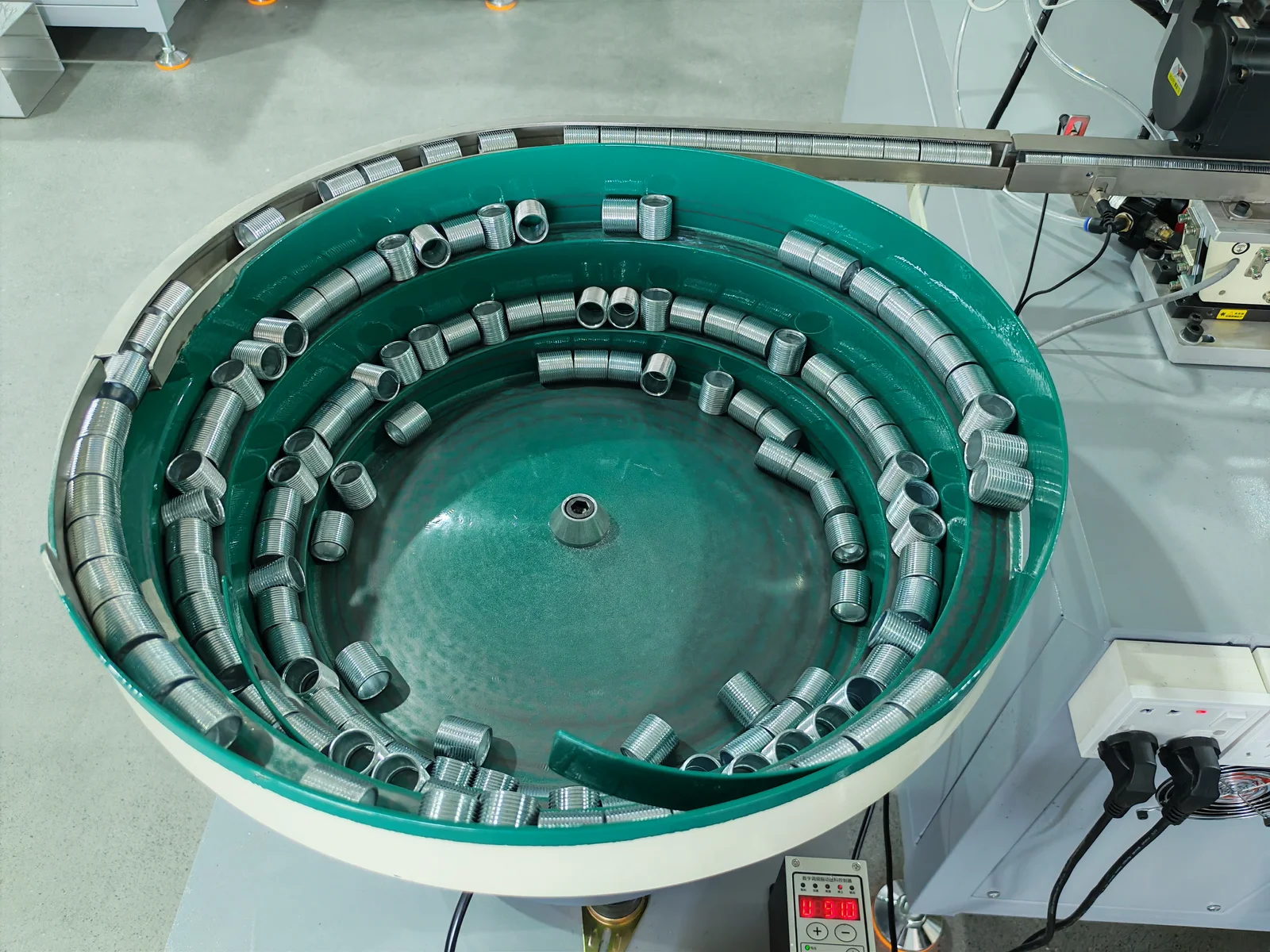
The original workshop photographs show the component feeder and the tube-handling arrangement. Open either image to inspect it at full size.
 View full-size image ↗
Threaded component feeding
The bowl and feed track present threaded components to the assembly mechanism.
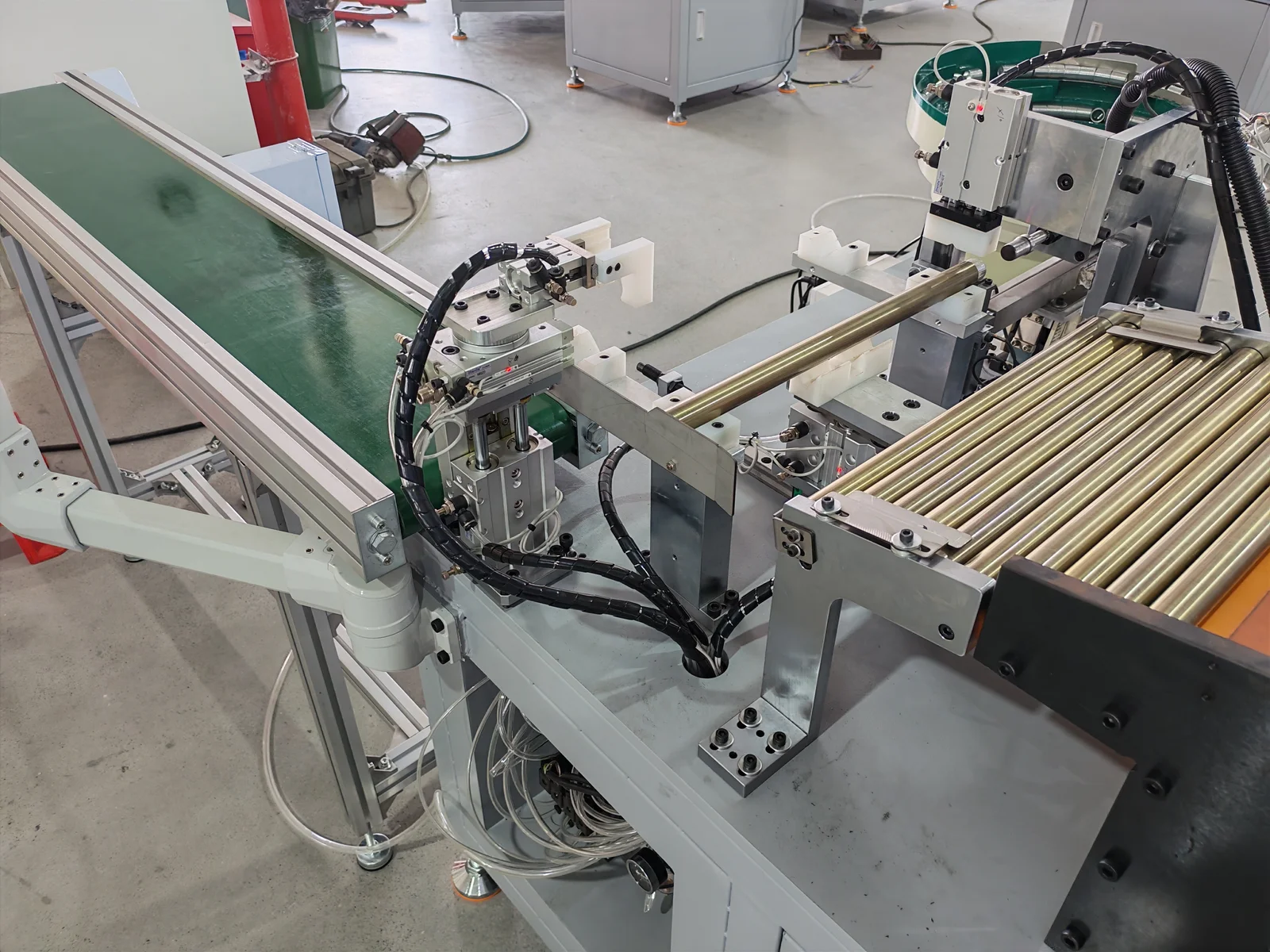 View full-size image ↗
Tube storage and working area
A dedicated rack, positioning arrangement and discharge conveyor handle this tube application.
Plan your application
Have a similar assembly task?
A drawing is useful, but clear part photos and a description are enough to start the conversation.
Discuss Your PartUseful details to share
- Drawings or clear photos of both mating parts
- Thread specification and required fastening depth or torque
- Material, part variants and protected surfaces
- Current loading method, output target and acceptance checks
The selected machine or solution will be included in your inquiry.
Explore BINSING