
Start with the workpiece

Drilling & Tapping Applications

Start with your profile, tube or repeated metal part. Use its holes, threads, accessible faces and clamping surfaces to compare machine layouts. The guides below help prepare a drawing review; suitability is confirmed for your actual part and process.

Choose your workpiece

Profiles, tube walls and thin sections

Choose the guide that matches the decision you need to make. The equipment links are starting points for a configuration review; the drawing determines the proposed layout.

Workpiece guide

Metal and aluminum profiles

Decide which holes are made before cutting to length and which depend on the finished end. Keep cut order separate from the support and hole coverage needed along a long profile.

Send for review: Section drawing, finished lengths, cut faces and hole references.

Plan drilling before or after cutting Review a servo-traverse layout
Workpiece guide

Aluminum extrusion end tapping

Identify the end features that need threads, including the supplied screw ports or prepared holes. Show each end separately so tool entry, usable thread depth and locating surfaces can be reviewed.

Send for review: Both end views, port geometry, thread callouts and incoming-hole condition.

Prepare an extrusion end-tapping inquiry Compare tapping machine options

Workpiece guide

Tubes and hollow sections

Map holes to the individual walls of square, rectangular or round tube. Separate one-wall features, paired wall features and machining from different faces before choosing tool directions.

Send for review: Cross-section, wall thickness, feature IDs and internal edge or cleanliness requirements.

Map the tube walls and machining access Review a multi-side layout

Workpiece guide

Thin-wall parts and clamping

Define where the fixture may touch and support the part, then specify how the finished features are checked after release. This workholding review supports the selected drilling or tapping route.

Send for review: Allowed contact zones, protected surfaces and released-part inspection requirements.

Prepare a thin-wall workholding review Compare drilling and tapping layouts

Choose your task

Four ways to approach the application

Application guide

Several operations on a repeated part

Your sequence includes drilling, chamfering or tapping at separate positions. Explore how an indexed layout can bring the stations together.

Useful starting information: Show the operation order and the surfaces available for clamping.

Explore rotary indexing

Application guide

Holes or threads on different faces

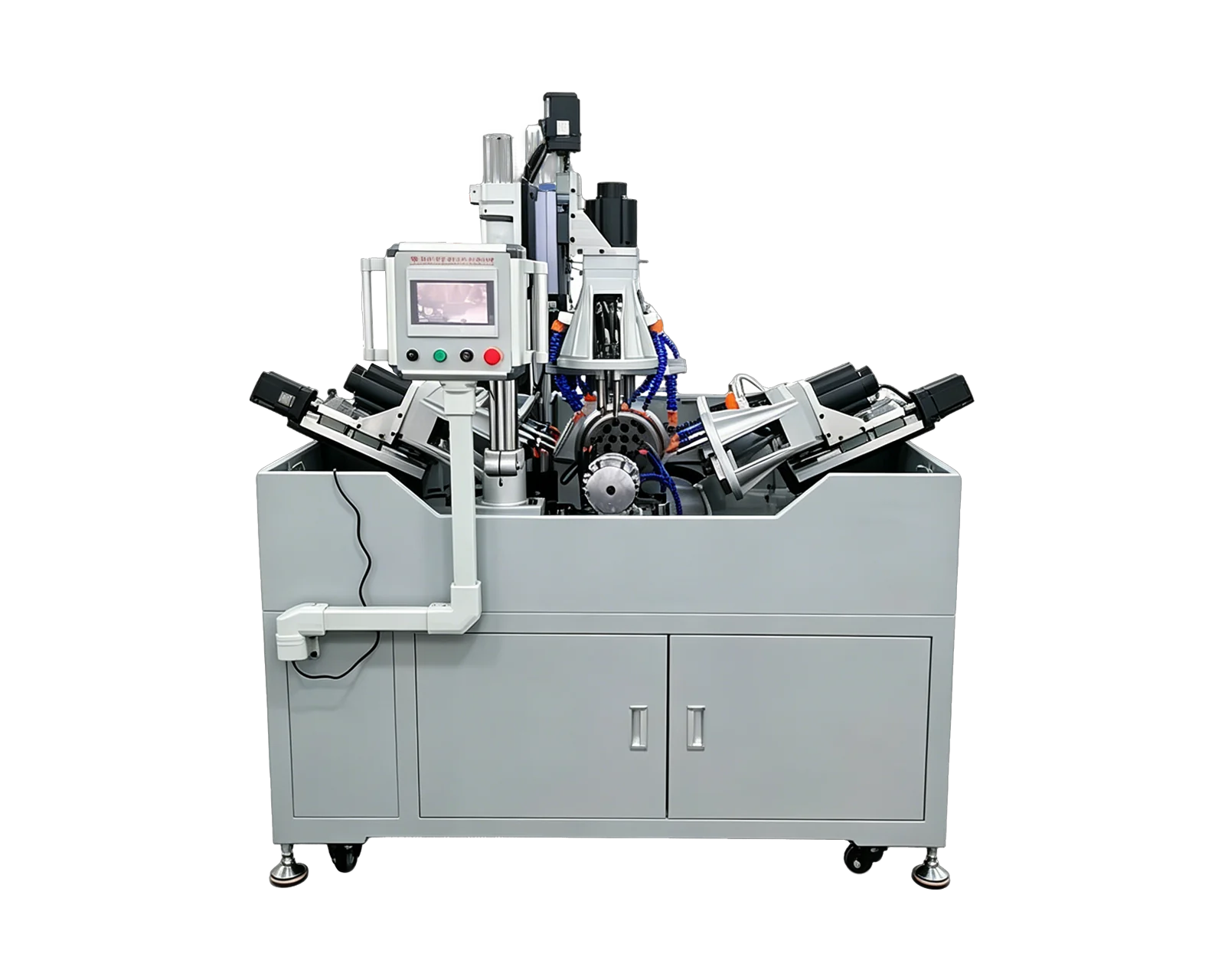
The part needs machining from multiple directions. Explore vertical and horizontal head arrangements and their workholding requirements.

Useful starting information: Mark every machining face, hole position and thread on the drawing.

Explore multi-side machining

Application guide

Repeated small parts that need loading

Positioning and feeding are part of the machining task. Part shape, orientation and surface condition guide the feeding approach.

Useful starting information: Provide clear part photos or a sample, plus the thread specification.

Explore automatic feeding

Application guide

A larger or dedicated hole pattern

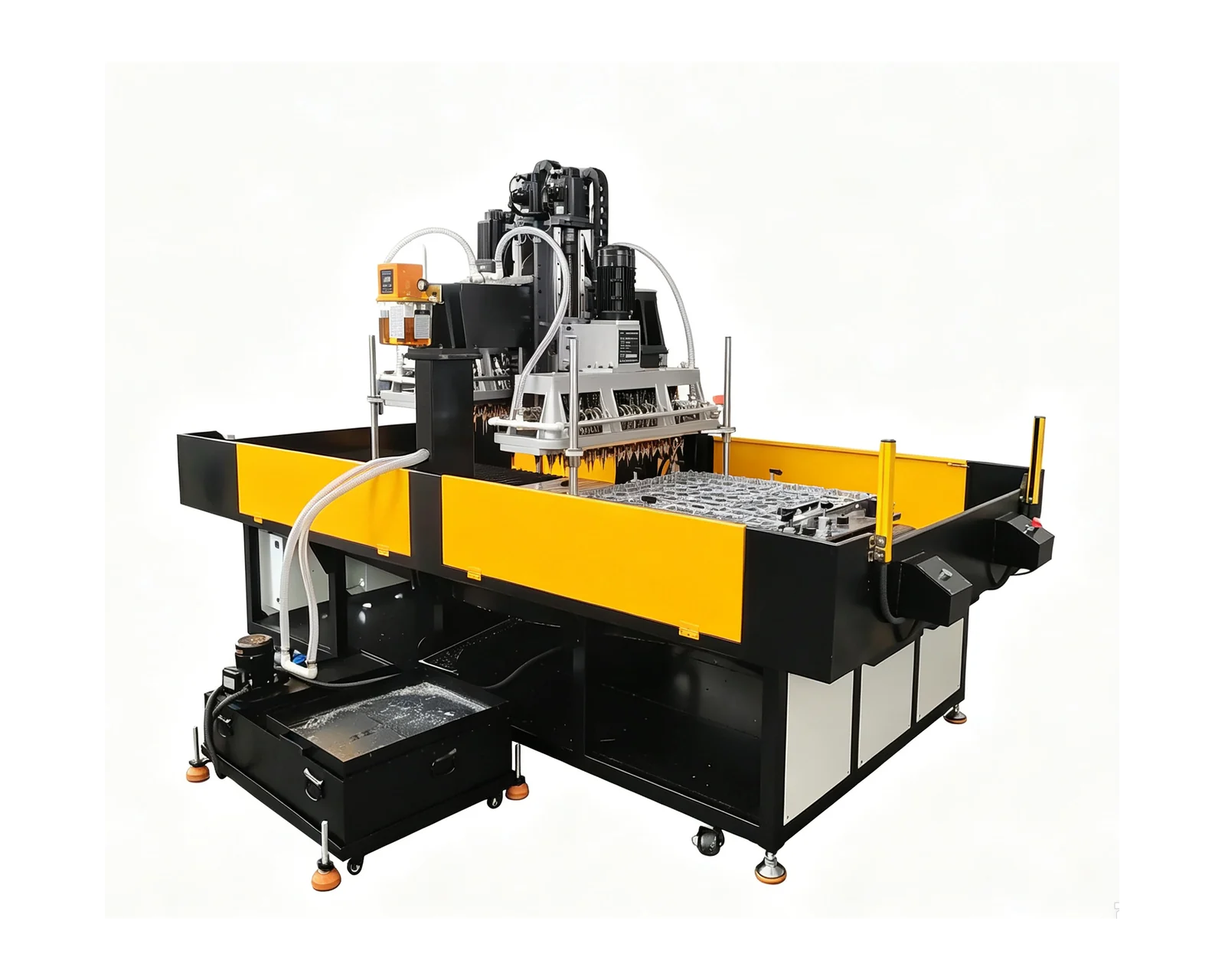
Part dimensions and hole layout call for a dedicated worktable or multiple machining heads. Explore custom multi-spindle and gantry arrangements.

Useful starting information: Share overall dimensions, hole coordinates, depth and material.

Explore multi-spindle & gantry

See the equipment

Different parts need different layouts

Compare these equipment configurations with the accessible machining faces and hole pattern on your own part.

Before selection

Define the result you need

Material, tolerances, tool access, loading and chip removal affect the machining approach. Send the drawing with the cross-section, end views and identified machining features, plus clear photos showing the part as supplied.

If the required operation is already clear, compare the four standard platforms .

Application checklist

  1. What operations and machining faces are required?
  2. What are the material, dimensions and hole or thread specifications?
  3. Which dimensions need a defined tolerance?
  4. How is the part currently loaded and clamped?
  5. What output or cycle target should be considered?

Start with your part.

Share a drawing or photo, the required operations and your output target. You can begin without choosing a machine.

Discuss your application