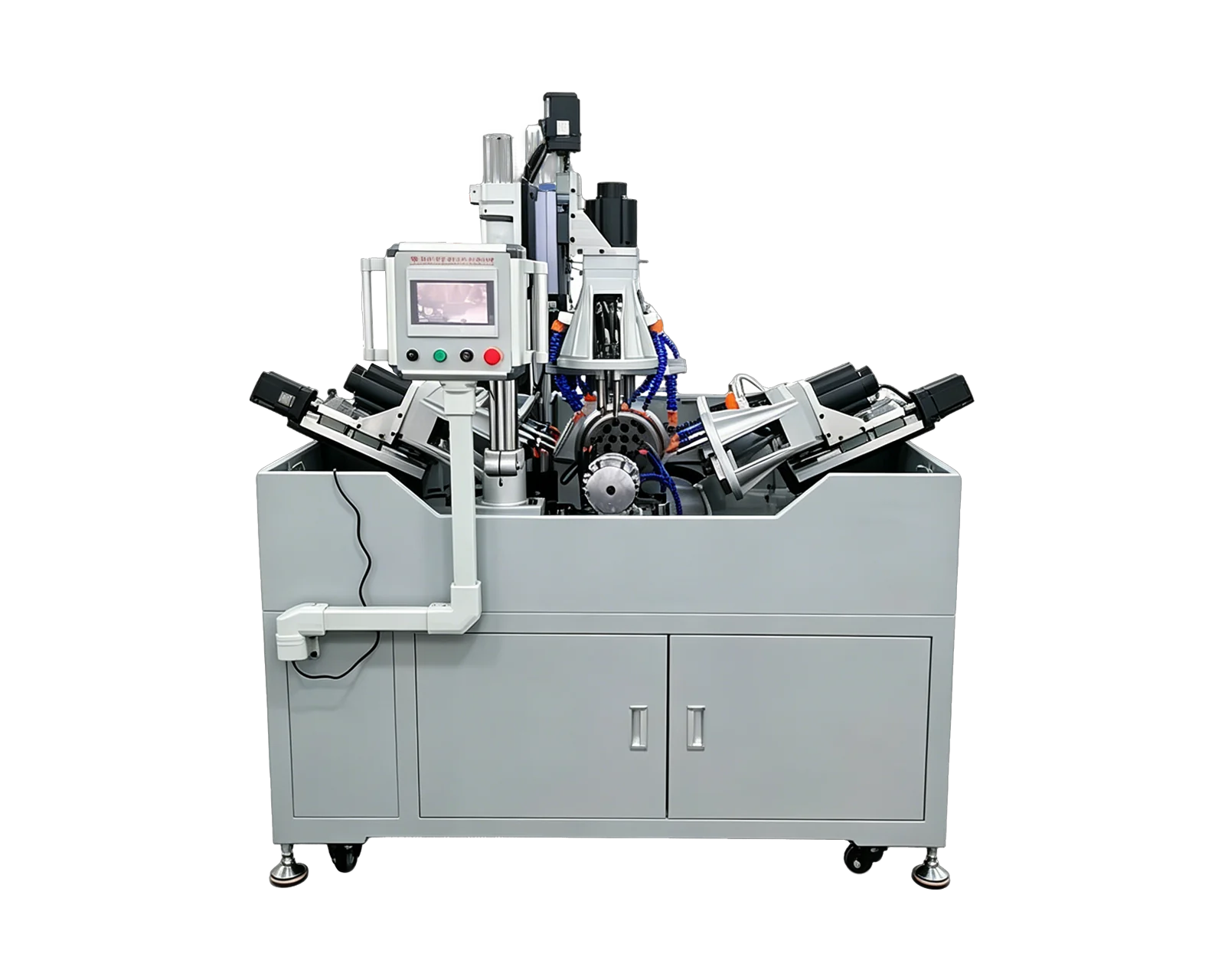
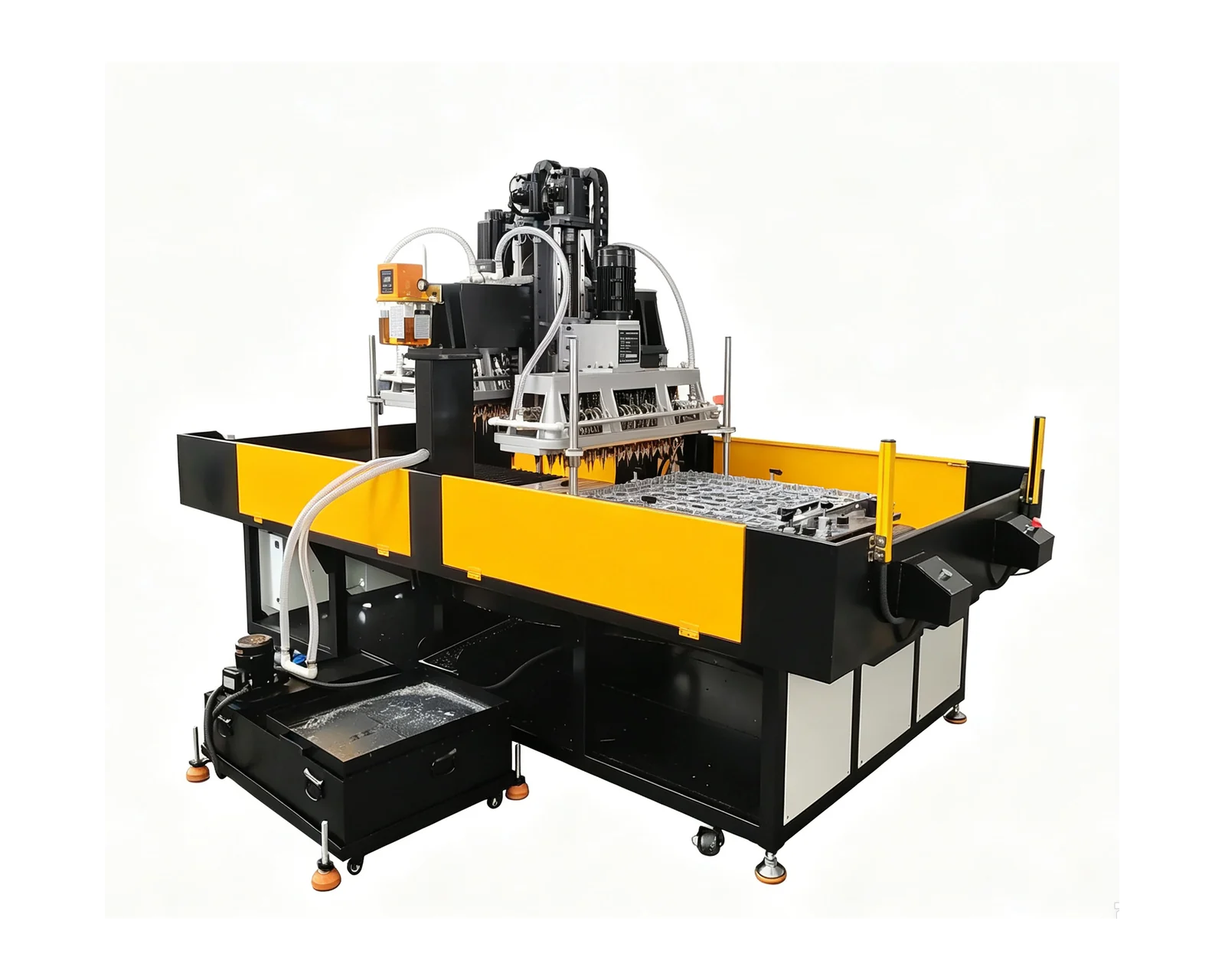
When one position is enough
If a compatible hole group can be reached with one matched head and fixture, compare a fixed arrangement before adding traverse moves. Use the feature groups and tool access to explain why another position is needed.
Standard machine
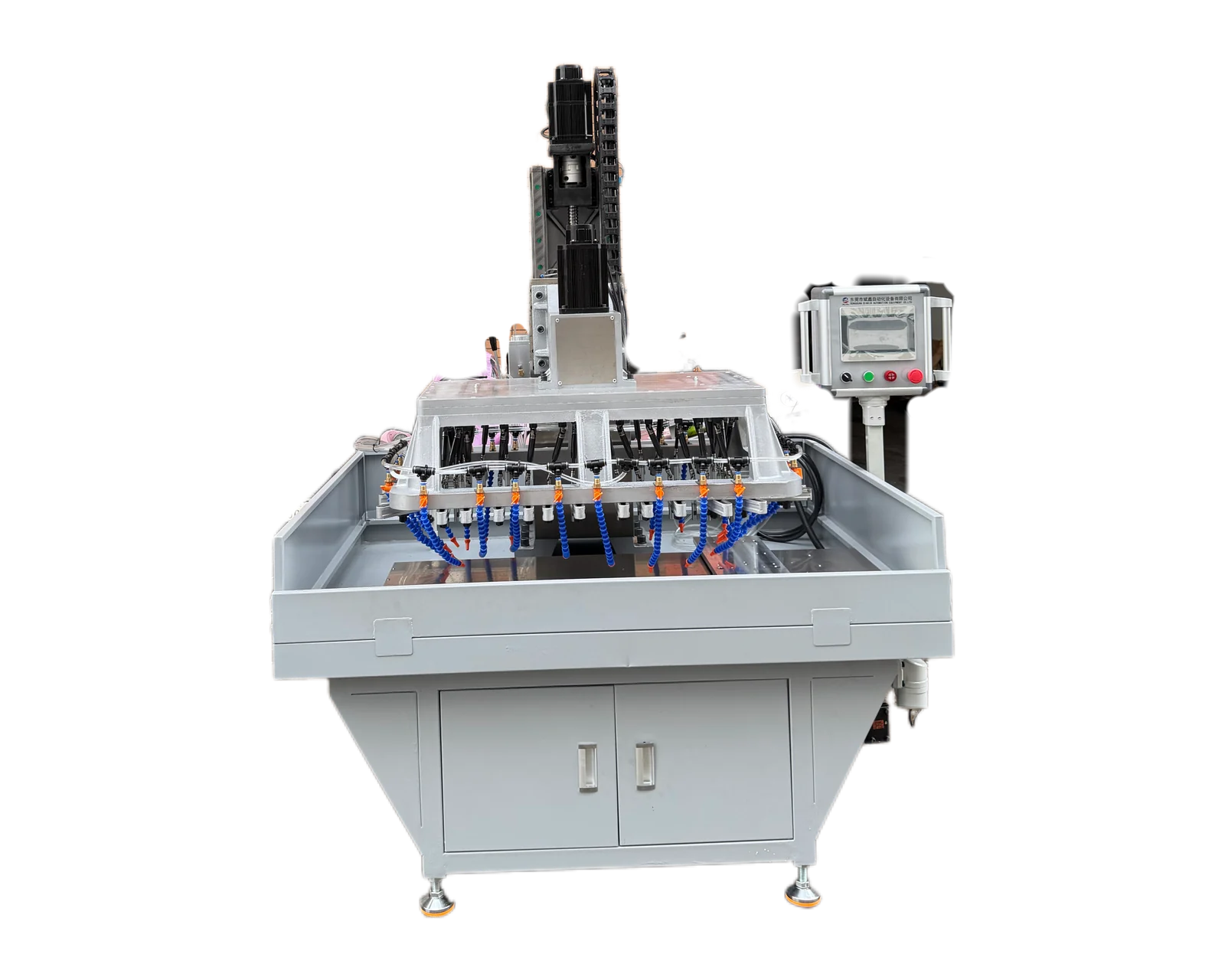
A servo-traverse multi-spindle platform for parts that need several machining positions. Map your hole groups, operations and locating references to a proposed movement sequence, then match the tooling and fixture to that sequence. BINSING reviews travel, loading and changeovers against the complete part drawing.
Define your configuration
Give drawing features and proposed machine positions separate identifiers. The supplier can then show which tool group works at each position, what moves between operations and which part references remain in use.
| Function | Scope to review | Confirm for your part |
|---|---|---|
| Incoming part and location | Define how the blank reaches and sits in the fixture. | Material, prepared features, locating faces, clamps and loading orientation |
| Position and feature groups | Assign the required holes or threads to named positions in the proposed sequence. | Feature IDs, hole coordinates, operations, tools and active spindle group |
| Traverse movement | Identify the moving assembly and the clearance needed between working positions. | Part and fixture envelope, projections, travel and approach/withdrawal paths |
| Operation changes | Explain how the sequence moves from drilling to tapping or another included operation. | Tool or part changes, manual actions, intermediate cleaning and checks |
| Variant changeover | Separate position-setting changes from physical setup changes. | Different lengths, hole spacing, head/tool layout, fixtures and first-part checks |
Scroll horizontally to compare all columns on smaller screens.
The platform reference does not specify a universal traverse range, positioning tolerance or completed-part cycle time. Several positions do not imply automatic tool changing, simultaneous cutting at every position or support for any future hole pattern. Confirm the offered sequence and tooling for the named part variants.
If a compatible hole group can be reached with one matched head and fixture, compare a fixed arrangement before adding traverse moves. Use the feature groups and tool access to explain why another position is needed.
Traverse addresses a defined positioning sequence. Rotary indexing organizes operations around stations; a multi-side arrangement addresses access from different directions. Compare each route against the same operations, handling and finished-part checks.
Request a demonstration that connects loading, clamping, every proposed position, any intervention and unloading to identified samples. Visible movement alone cannot establish feature accuracy or accepted output. State which variants and setup changes the review covers.
Configuration review
A universal capacity is not specified for this platform. The following configuration details are confirmed against your workpiece and machining requirements.
| Platform | Servo traverse, multi-spindle |
|---|---|
| Spindle arrangement | Selected from the hole pattern |
| Traverse and machining travel | Confirmed from the part dimensions |
| Drilling and tapping capacity | Confirmed for material and tooling |
Machine operation
Use these equipment examples to review the layout and operation. Tooling, workholding and the machining sequence must be agreed for your part.
A servo traverse platform for positioning a workpiece through a multi-spindle machining sequence. Define the movement and tooling from your drawing.
View machine platform →Price & quotation
A servo-traverse drilling and tapping machine price depends on the positioning arrangement, head and tool groups, fixture, worktable and included handling. Ask the offer to name the operations at each position and the changes needed between variants. List any upstream hole preparation, separate edge finishing or external inspection so the quotation covers the actual route.
Before ordering
The catalog describes a servo-traverse platform for positioning the workpiece through a multi-spindle sequence. Request the proposed layout with the moving assembly, fixed tooling, fixture and reference positions identified. The movement and usable travel must be confirmed for your configuration.
Position settings may be only part of the change. Head spacing, tool access, fixture references, part support and operations can also differ. Submit both drawings and ask for an explicit list of retained, adjusted and replaced items.
That depends on the offered tool and positioning arrangement. Ask for the sequence to identify tool changes, manual actions and any release or transfer of the part. The platform name alone does not confirm a complete automatic drill-and-tap cycle.
Continue your review
Decide whether the feature groups need several positions.
Connect visible layout to the position and feature evidence you need.
Keep operation coverage and handling consistent between proposals.
Review support and references along the full component.
Connect cut faces and hole references to the proposed operation order.
Related custom layouts
Explore these alternatives when a dedicated station layout, feeding arrangement or machining sequence is part of the requirement.
Machine features on several faces with coordinated workholding
Combine vertical and horizontal machining heads for parts with holes or threads on multiple faces. Confirm access, clamping and the operation sequence before selecting a layout.
Explore solutionMatch multiple machining heads to a larger hole pattern
Custom multi-spindle and gantry arrangements for workpieces requiring a dedicated hole layout, worktable or fixture. Machine dimensions and cutting conditions follow the actual part.
Explore solution