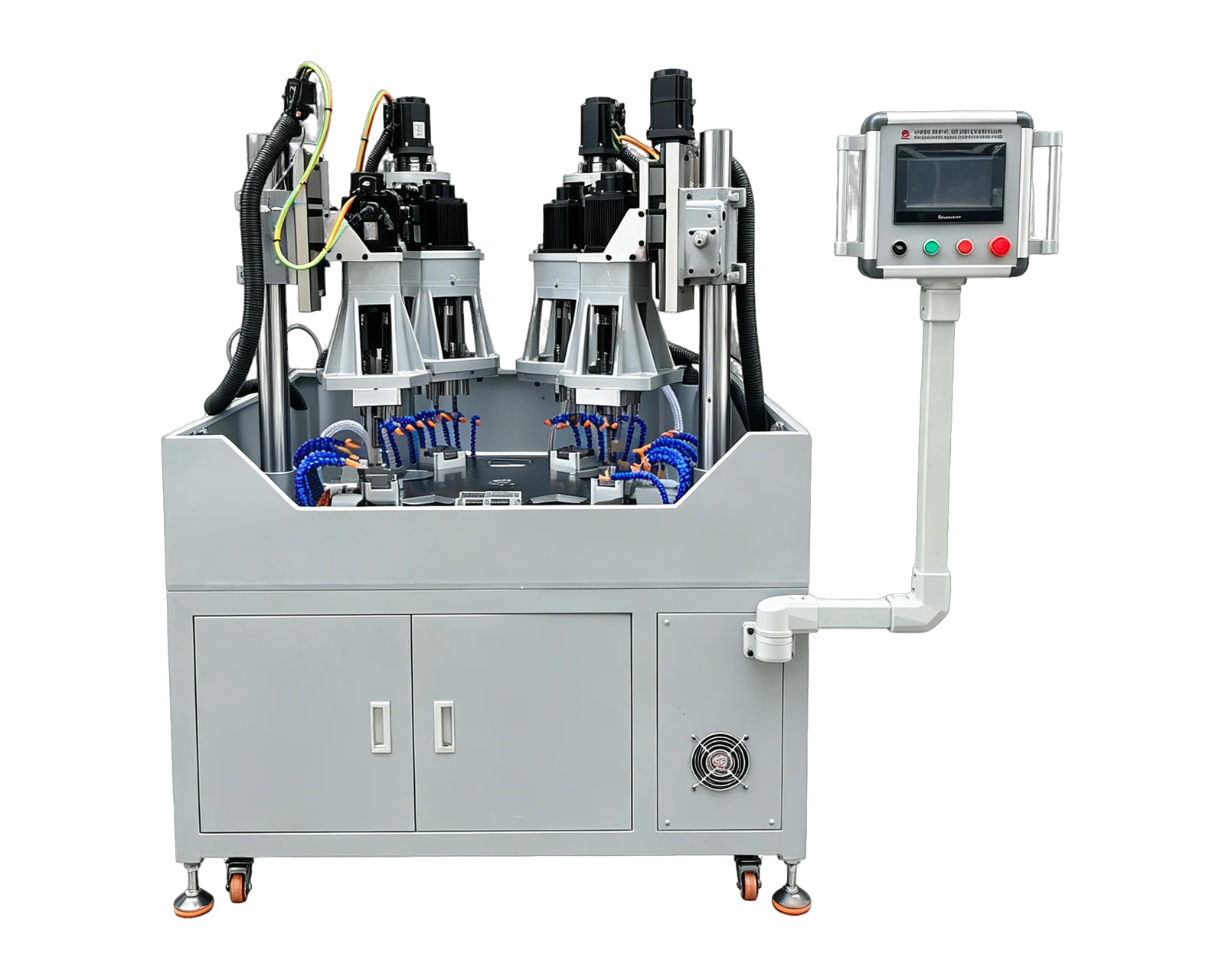
Custom solution

Multi-Side Drilling & Tapping Machines

Review a custom drilling and tapping layout for metal parts with features on several faces. BINSING combines vertical and horizontal machining-head arrangements with part-specific workholding. Send a marked drawing to define tool access, operation order and the included machining scope.

  • Drilling
  • Tapping
  • Multiple faces
Custom vertical and horizontal multi-side machining equipment
Custom solution

Define your configuration

Map the machining faces before choosing a layout

A multi-face machine review starts with the finished features and the supplied blank. The rows below define the information needed for a proposal; they do not assign a fixed number of heads or promise that every face can be completed in one clamping.

Proposed process functions and questions to resolve
FunctionScope to reviewConfirm for your part
Identify faces and featuresAssign each drilled hole, thread and prepared feature to a named face.Drawing feature IDs, approach directions, dimensions and depth references
Establish location and supportChoose a workholding concept around surfaces available on the incoming part.Datums, allowed contact areas, protected surfaces and blank variation
Review tool accessAssess the head, tool and holder through approach, cutting and withdrawal.Ribs, recesses, clamps, neighboring tools and space beyond through-holes
Plan the operation orderSeparate features that can be grouped from those needing an earlier operation or repositioning.Drill-before-tap requirements, intersecting holes and any part transfers
Define completed-part checksConnect each finished feature and cross-face relationship to its inspection basis.Included operations, outside finishing or cleaning, and measurement responsibility

Scroll horizontally to compare all columns on smaller screens.

Multi-side describes machining directions. Multi-spindle describes a tool arrangement, while controlled axes describe machine motion. A vertical-and-horizontal head layout is not, by itself, a five-axis CNC machine or a guarantee of simultaneous machining.

01

One fixture or separate setups

Review which tools can reach the part while the proposed clamps are in place. If the part must be relocated, identify the reference transfer and the feature relationships that need verification after the complete route.

02

Intersecting and internal features

Show where holes meet, which surfaces are already finished and how chips or burrs can be accessed. Internal finishing, flushing and leak testing need explicit scope; creating the openings alone does not confirm those results.

03

Match the layout to the work

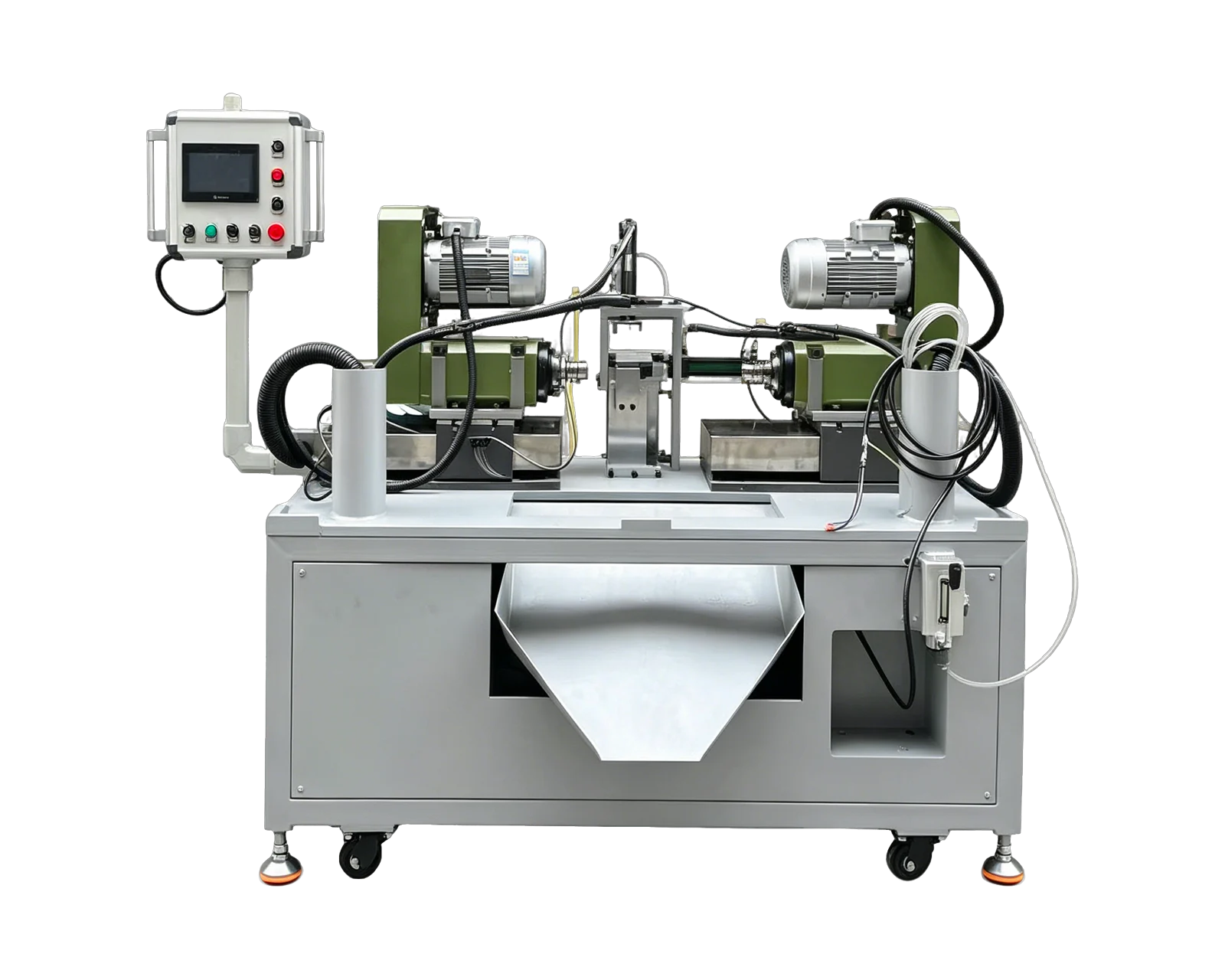
For only two opposite drilling faces, compare the horizontal double-head platform. For successive operations around a table, review rotary indexing. Use the same feature list and loading boundary when comparing candidates.

Equipment examples

Machine arrangements in this family

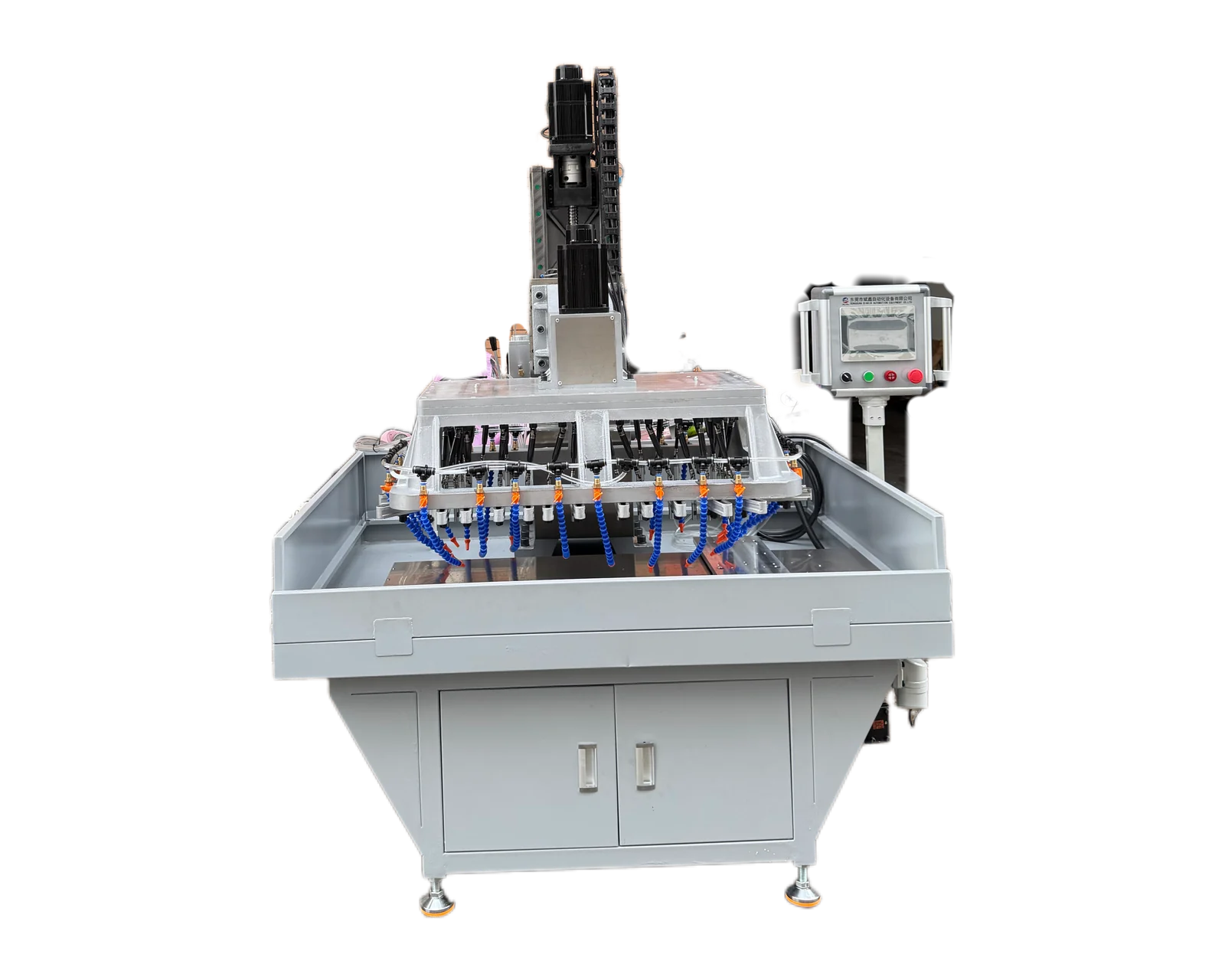
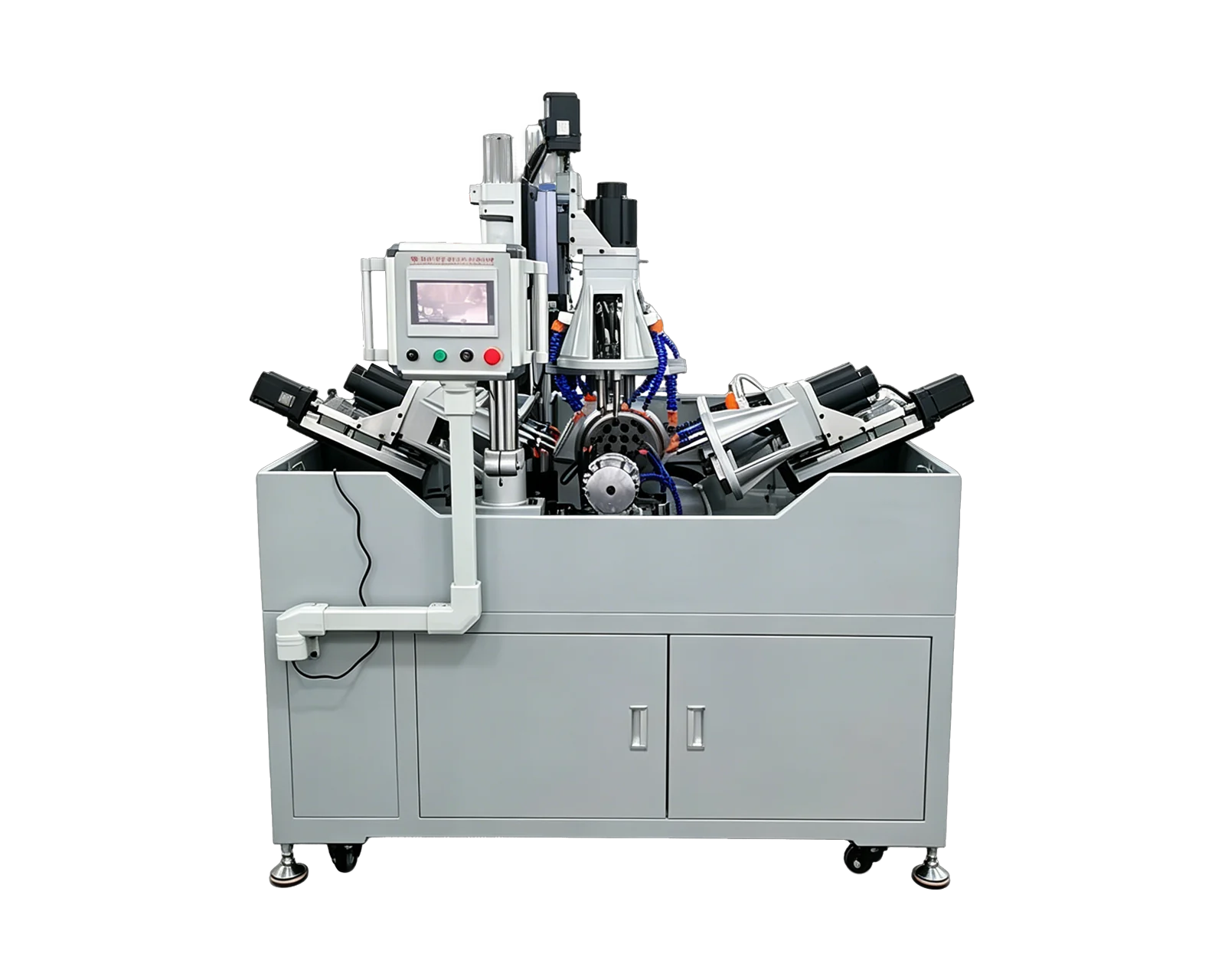
These real equipment references illustrate different layouts. Specifications and performance are confirmed for the proposed configuration and workpiece.

Vertical & horizontal drill-and-tap machine

Custom equipment reference

Vertical & horizontal drill-and-tap machine

Machining heads approach the clamped part from different directions.

Rotary vertical & horizontal configuration

Custom equipment reference

Rotary vertical & horizontal configuration

An indexed layout combines machining from several directions.

Machine operation

Watch related equipment videos

Use these equipment examples to review the layout and operation. Tooling, workholding and the machining sequence must be agreed for your part.

Multi-Side Drilling & Tapping
CUSTOM CONFIGURATION / VIDEO

Multi-Side Drilling & Tapping

Combine vertical and horizontal machining heads for parts with holes or threads on multiple faces. Confirm access, clamping and the operation sequence before selecting a layout.

View related solution →

Price & quotation

Request a price for a defined equipment scope

A multi-side drilling and tapping machine price depends on the machining directions, heads and tooling, workholding, part movement, controls and handling functions. Request a face-by-face scope naming the included operations and any manual relocation. Identify outside deburring, cleaning and inspection work so quotations cover the same finished-part requirement.

  • Incoming and finished drawings with named faces, datums and feature IDs
  • Material, hole sizes/depths and thread sizes/pitches with usable depths
  • Allowed locating/clamping areas, protected surfaces and incoming variation
  • Intersecting features, required operation order and work to remain outside the machine
  • Part variants, loading preference, output target, utilities and inspection requirements

Before ordering

Questions to resolve for your part

Can several faces be drilled and tapped in one clamping?

That can be reviewed as a project objective. The proposed tools, holders, supports and clamps must reach the required features without interference. Ask the layout to identify any reorientation or separate operation before confirming one-clamping coverage.

Will all machining heads run at the same time?

The agreed sequence determines which actions overlap. Tool access, shared space and feature dependencies can require separate steps. Request an operation map instead of deriving output from the number of heads.

Does a cross-hole application include deburring and leak testing?

Only where those functions are expressly included. Show internal intersections and the finished cleanliness, edge and test requirements. The proposal should identify what is performed in the machine and what remains a separate process.

Continue your review

Guides for the next decision

Also consider

Related standard platforms

If a defined platform suits the part, compare these standard machines before specifying a complete custom arrangement.