Length variants and incoming ends
List all part lengths, end conditions and variants in the inquiry. Ask which stops, supports, fixtures or head settings change between them. A photograph cannot establish the usable working range.
Standard machine
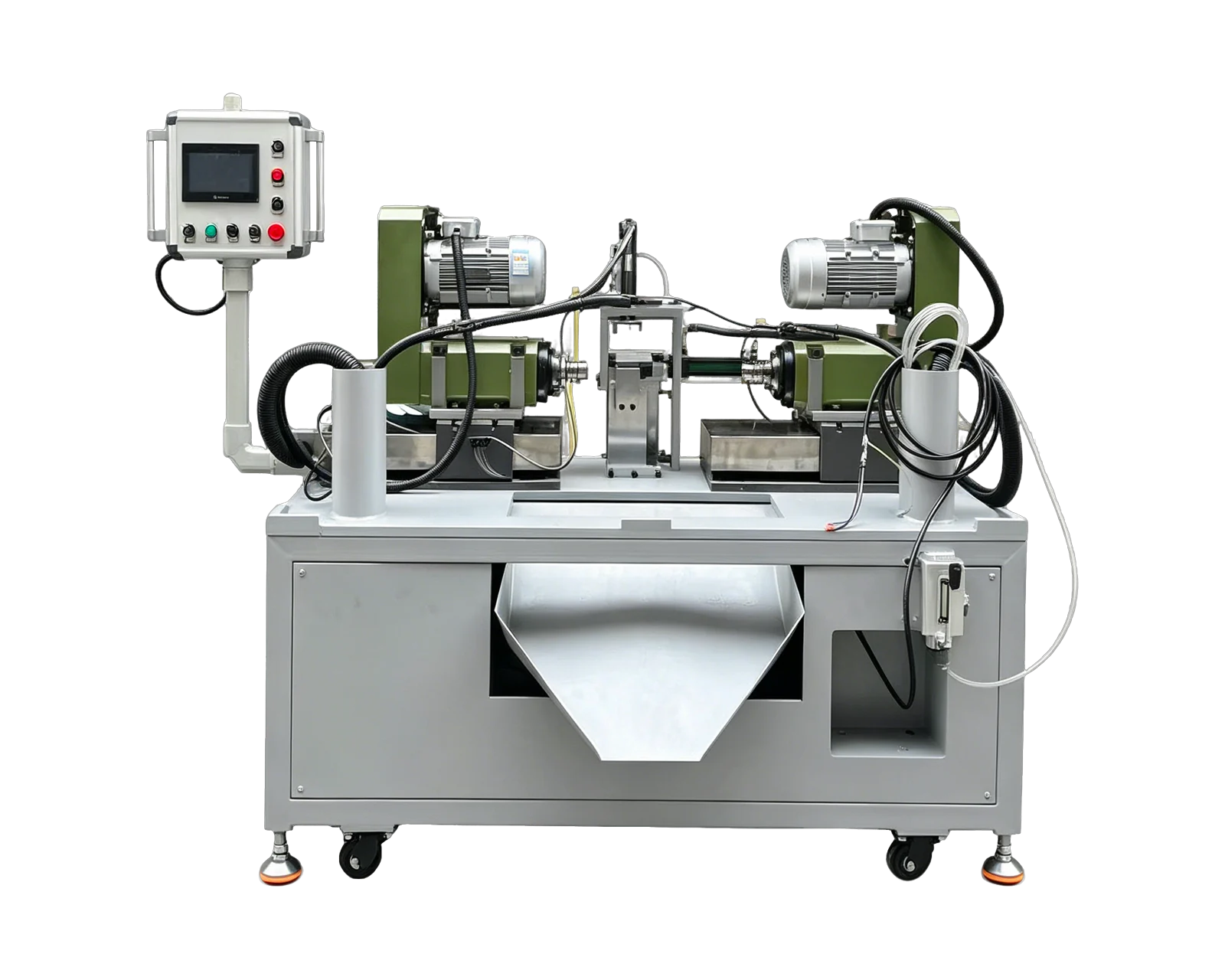
Review an opposing-head drilling arrangement for repeated metal parts with features at both ends. BINSING matches the workholding, head travel and loading method to your drawing. Define each end separately before requesting a double-end drilling machine configuration.
Define your configuration
A two-end review needs more than the overall part length. Identify the left and right machining requirements from a stated viewing direction, then agree how the incoming part is located and how the finished relationship is checked.
| Function | Scope to review | Confirm for your part |
|---|---|---|
| End A | Specify the features approached by the first head. | Hole diameter, depth/reference, entry condition and surrounding geometry |
| End B | Specify the opposite-end features independently, including unequal requirements. | Hole size/depth, prepared features and any different tooling or operation |
| Part location | Review the stops, support and clamps with both tool paths visible. | Overall length and its variation, locating surfaces, orientation and allowed contact areas |
| Head movements | Define approach, drilling and withdrawal for each head. | Required travel, clearances and whether the reviewed sequence is simultaneous or sequential |
| Finished relationship | Check both individual features and the drawing-defined relationship between them. | Inspection datum, position/orientation requirements and who provides the result records |
Scroll horizontally to compare all columns on smaller screens.
Two opposing heads do not by themselves establish synchronous motion, equal end features or a particular accuracy. Workpiece dimensions, drilling capacity and travel are confirmed for the proposed material, tooling and configuration. Tapping requires a separate confirmed process scope.
List all part lengths, end conditions and variants in the inquiry. Ask which stops, supports, fixtures or head settings change between them. A photograph cannot establish the usable working range.
Describe how the part reaches the fixture and leaves it. Compare positioning, clamping, both machining actions, removal and agreed checking together. Two heads are not evidence of a fixed output multiplier.
If the part also requires holes on top or side faces, compare a multi-side arrangement. If the main requirement is a sequence of drilling and tapping positions, review the process route before selecting a two-end platform.
Configuration review
A universal capacity is not specified for this platform. The following configuration details are confirmed against your workpiece and machining requirements.
| Machine arrangement | Two opposing horizontal heads |
|---|---|
| Workpiece size | Confirmed from the part drawing |
| Hole capacity and travel | Confirmed for material and tooling |
| Loading method | Selected for the application |
Machine operation
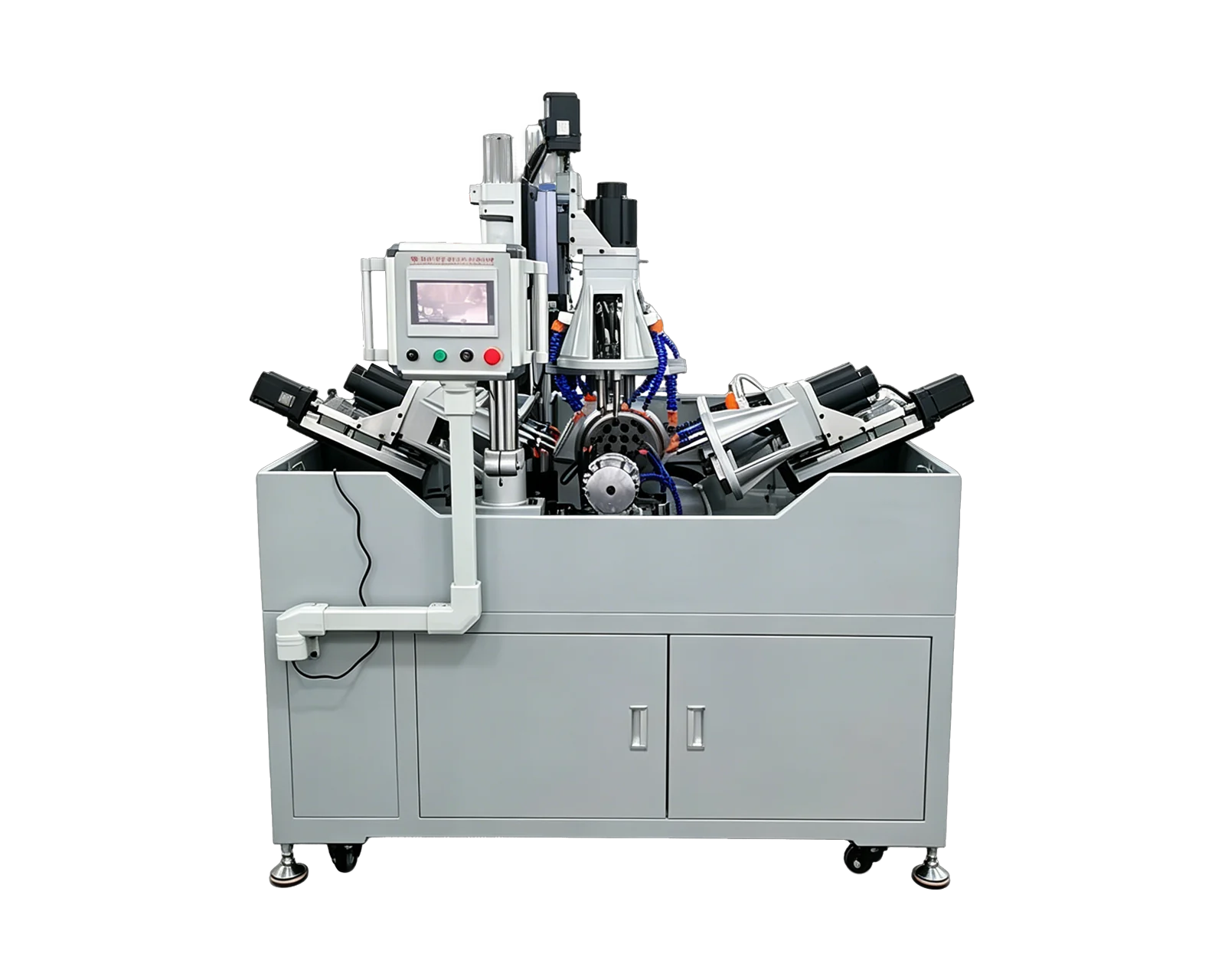
Use these equipment examples to review the layout and operation. Tooling, workholding and the machining sequence must be agreed for your part.
Opposing horizontal heads for parts requiring machining at both ends. Workholding and loading are matched to the part geometry.
View machine platform →Price & quotation
The price of a horizontal double-head drilling configuration depends on the head and travel arrangement, tooling at each end, workholding, included length variants and loading/discharge scope. Ask for separate confirmation of each end's work and the completed-part inspection boundary. No universal part-length or hole-capacity range is assumed from the equipment image.
Before ordering
Include each end's requirements separately so the heads, tooling and sequence can be reviewed. Opposing heads do not require identical feature descriptions, but a particular mixed configuration must be confirmed against the drawing.
No. State the actual drawing requirement and its inspection basis. Location, workholding, tooling and the installed process all need review, followed by the agreed finished-part evidence.
The published platform is an opposing-head drilling reference. If tapping is required, specify the thread, pitch, usable depth and prepared hole at each end. The supplier must confirm a suitable process and equipment scope before it is included in the quotation.
Continue your review
Screen the part before comparing configurations.
Connect unequal ends, length variation and inspection.
Separate visible layout from verified performance.
Choose a tool approach based on the workpiece.
Related custom layouts
Explore these alternatives when a dedicated station layout, feeding arrangement or machining sequence is part of the requirement.
Machine features on several faces with coordinated workholding
Combine vertical and horizontal machining heads for parts with holes or threads on multiple faces. Confirm access, clamping and the operation sequence before selecting a layout.
Explore solution