
Explore equipment for your inquiry
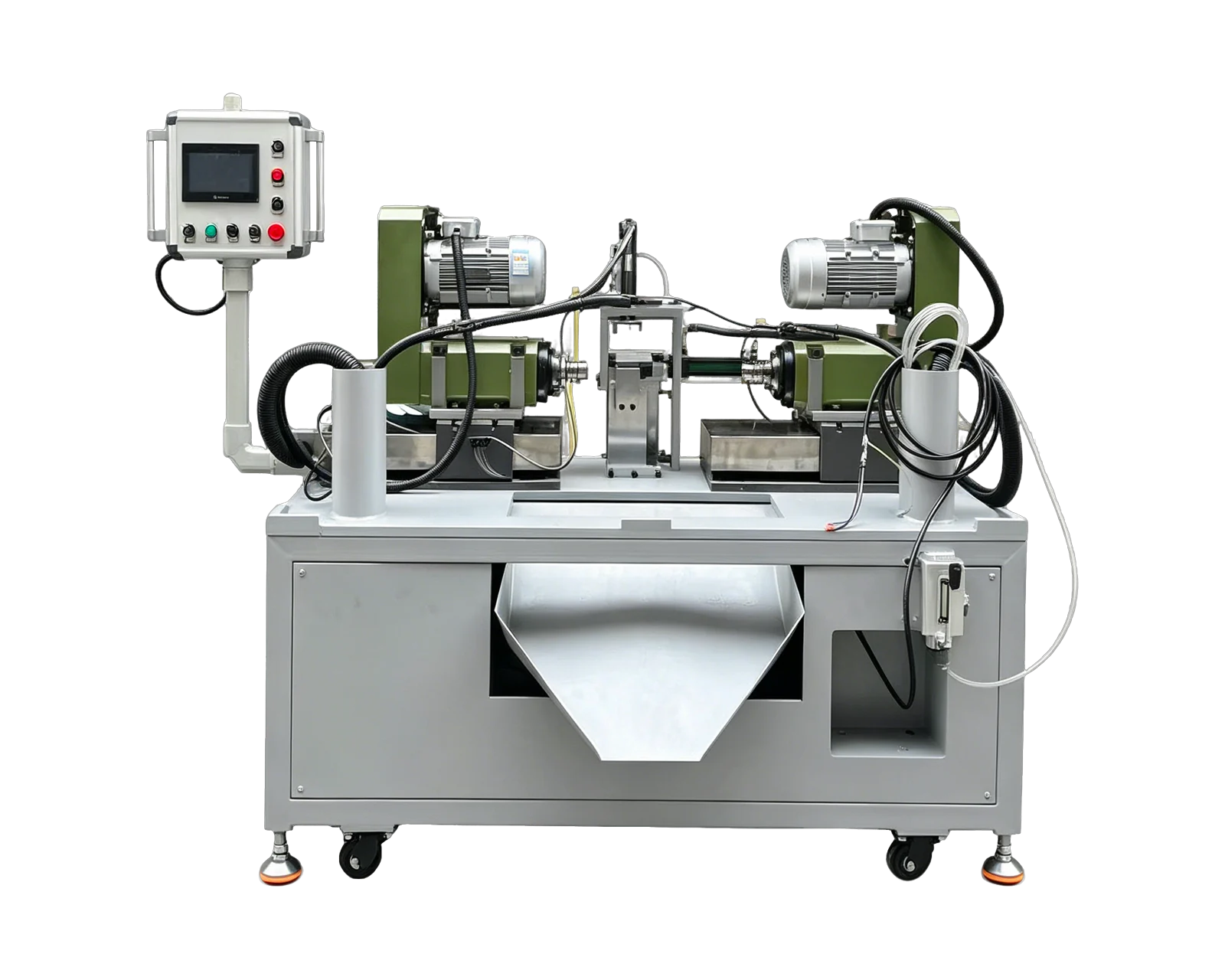
Horizontal Double-Head Drilling Machine →Review the published specifications and configuration options against your part drawing before requesting a quote.
Describe each end separately
Use this article for the first layout decision: whether an opposing-head arrangement deserves a drawing review for your metal component. Mark ends A and B, show the overall shape and identify the two intended tool-entry directions. A part with two holes on one face presents a different access question from a part with one hole at each opposite end.
List the work that must be finished, including any features on additional faces. Keep hole sizes, depths and relationship requirements on the drawing. The linked two-end workpiece review provides the detailed A/B input sheet once the initial access and loading concept looks feasible.
Check fit before comparing machine specifications
The catalog identifies two opposing horizontal heads and application-specific workholding. Workpiece size, capacity and travel require confirmation from the drawing and tooling. Use this review to make an inquiry specific enough for an initial layout assessment.
Resolve workholding and access together
Identify where the part may be supported and clamped without blocking either end. Include fragile areas, finished surfaces that must not be marked and variation in the incoming blank. Ask the supplier to explain the locating stops and the sequence for loading, positioning and clamping the workpiece.
If the part family includes different lengths or sections, request the fixture and adjustment requirements for every intended version. Do not assume that a change in length is handled by the same setup without review. The resulting proposal should state the approved workpiece range and any additional fixtures or tooling.
Confirm what the two heads actually do
Ask whether the proposed operations occur together or in a defined sequence, and what determines that choice for the application. Describe any drilling, chamfering, tapping or other steps required beyond the two end holes. Only operations explicitly included in the quotation should be treated as part of the supplied process.
A two-head demonstration is useful for understanding the machine arrangement. It does not confirm that the same tools, settings or timing will suit a different material and part length. Request an assessment using your own features and agree how critical dimensions and finished parts will be checked.
Recognize when another layout should be compared
An opposing-head platform deserves consideration for a stable repeated two-end drilling task. Broaden the review if the component also needs features on other faces, if access is obstructed, or if its part family demands substantial repositioning and changeover. A multi-side solution may be relevant when the machining directions define the process.
When requesting output, specify complete finished parts rather than individual holes. Include loading, removal and any off-machine steps in the production discussion. Before purchase, obtain a written scope stating the tooling, workholding, handling method, intended parts and acceptance conditions so the selected arrangement can be evaluated against the actual job.