
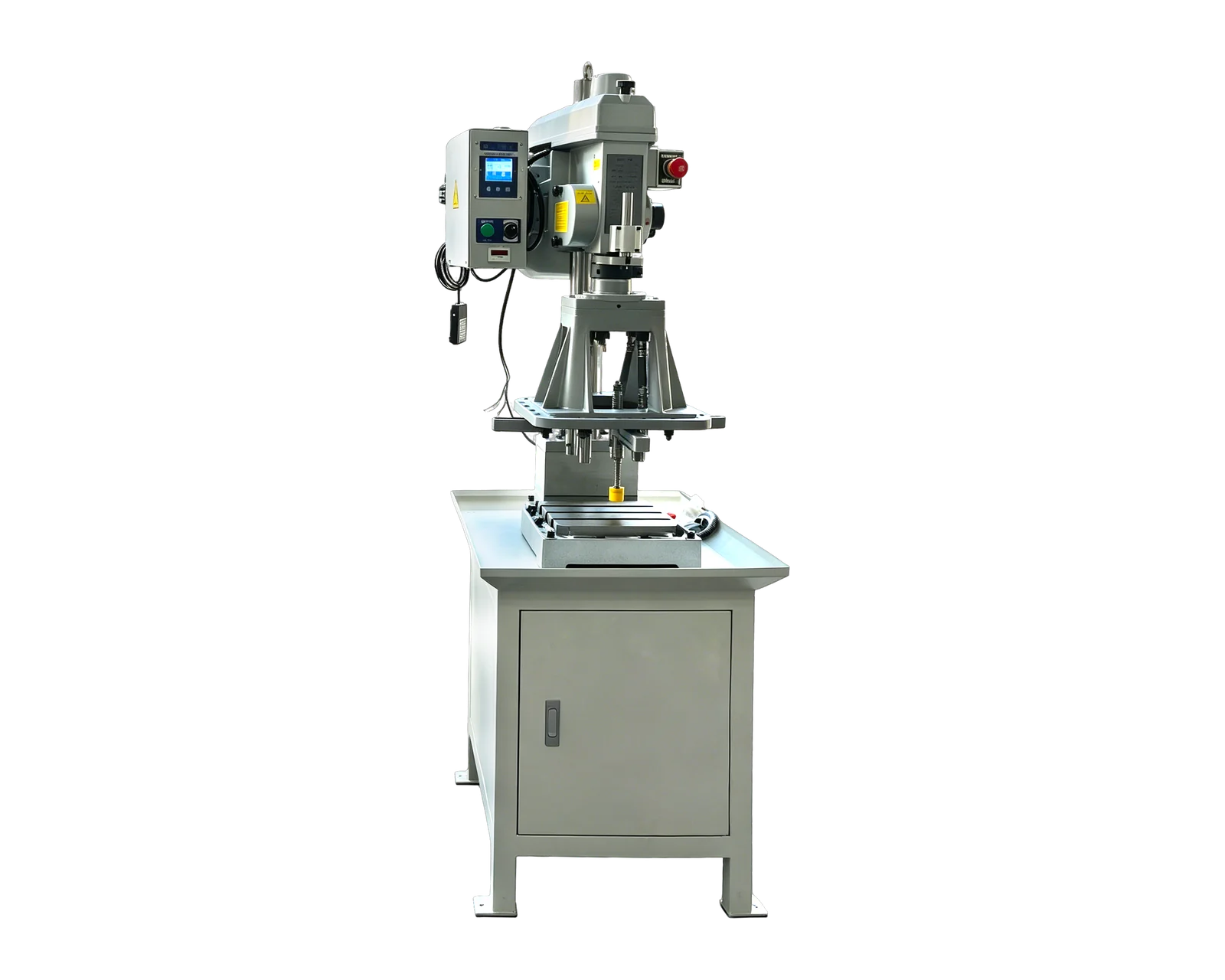
Standard platform · BX-4508V
4508 Gear-Driven Automatic Tapping Machine
A gear-driven tapping platform for repeated thread machining. Select the pitch gearing, tooling and fixture for your workpiece.
View machineStandard machines & custom configurations
Compare gear-driven and servo tapping machines for repeated internal threads in metal parts. Start with the thread schedule, prepared-hole condition and material, then select a BX-4508V or BX-20015 configuration. Review blind holes, multi-spindle tooling and loading as separate application requirements.
Choose a starting platform
Start with the machining task, then review the platform specifications and the tooling your part needs.
| Platform | Application fit | Catalog reference |
|---|---|---|
| 4508 Gear Tapping Machine | Repeated tapping operations where thread size, pitch and workholding can be defined in advance. | Tapping range: M1–M8 Spindle stroke: 45 mm Motor power: 0.75 kW |
| Dual-Servo Drilling & Tapping | Parts with repeated hole or thread patterns that benefit from coordinated multi-spindle machining. | Drilling range: Ø1–15 mm Tapping range: M0.8–M16 Spindle travel: 50–200 mm |
Catalog ranges describe each platform, not guaranteed results for every material or spindle arrangement. Confirm the selected tools, fixture and process with your drawing. Scroll the comparison table horizontally on smaller screens.
Standard platform · BX-4508V
A gear-driven tapping platform for repeated thread machining. Select the pitch gearing, tooling and fixture for your workpiece.
View machine
Standard platform · BX-20015
Servo-controlled spindle rotation and feed on a multi-spindle platform. Match the head and fixture to the holes and threads in your part.
View machineApplication review
Use these requirements to route your inquiry. Material names and drive types are starting points for review, not proof of a particular capacity or guaranteed thread result.
| Your requirement | What to review | Explore the options |
|---|---|---|
| Repeated tapping of prepared holes | Compare required pitch gearing, tools, holders and changeovers with servo settings and the same fixture scope. | Gear-driven vs servo selection |
| Blind-hole tapping | Separate usable thread depth, prepared-hole depth and bottom geometry; identify the reference face and inspection requirement. | Blind-hole requirements |
| Tapping stainless steel | Provide grade, supplied condition and prepared holes. Define representative trial samples and the result records needed. | Stainless steel trial review |
| Drilling and tapping aluminum | Identify alloy, temper, blank form and upstream operations. Mark which features arrive finished and which belong to this machine. | Aluminum workpiece review |
| Drilling and tapping brass | Identify the actual grade, supplied form, prepared-hole state and permitted locating or clamping contacts. | Brass workpiece review |
Scroll horizontally to compare all columns on smaller screens.
Define what is automatic
A tapping cycle controls tool rotation and axial movement for the thread. It does not by itself include sorting loose parts, loading the fixture or removing completed parts. A dedicated feeding cell adds those handling stages after the part shape, orientation and supplied condition have been reviewed.
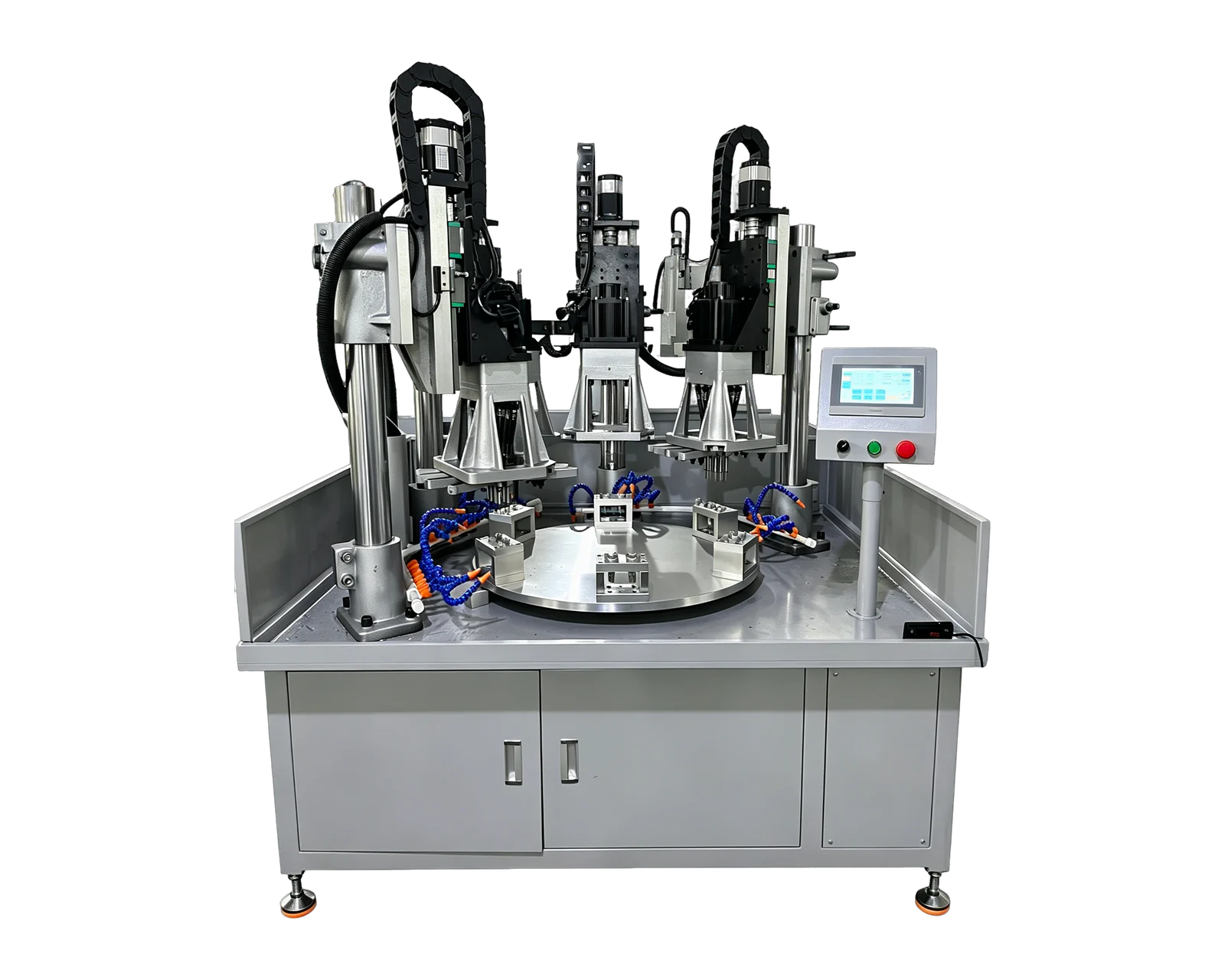
Custom solution
Move parts between drilling, chamfering and tapping stations on a rotary layout. Station count, tooling and loading are designed around the workpiece.
View solution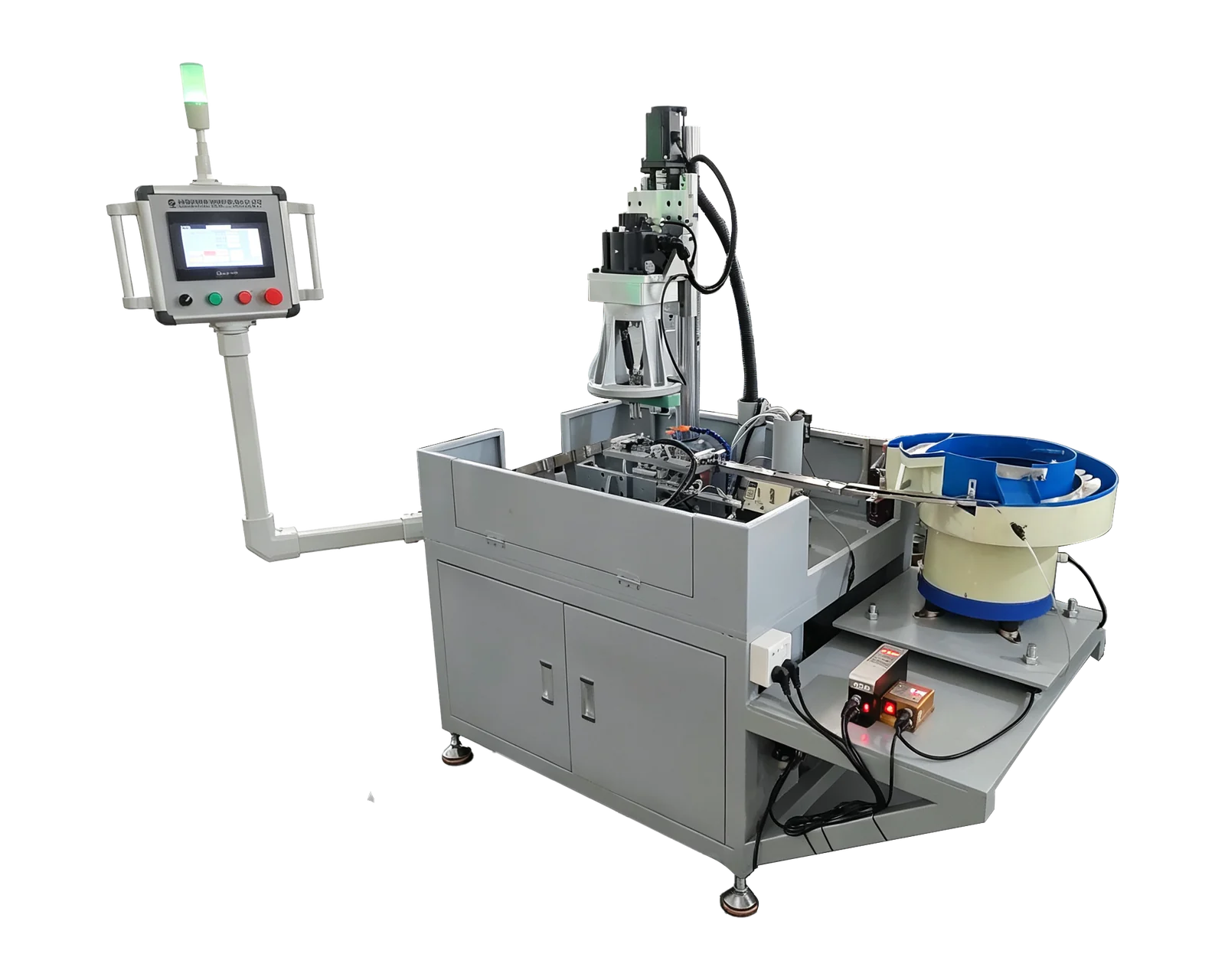
Custom solution
Combine part feeding, positioning and machining in a dedicated cell. Feeding suitability depends on the shape, orientation and surface condition of the workpiece.
View solutionMatch the tools to the part
The BX-4508V lists a multi-spindle head option; the BX-20015 provides a dual-servo platform for a reviewed configuration. Neither platform's catalog tapping range confirms every thread group or number of simultaneous taps.
| Part requirement | Configuration to review | Information to send |
|---|---|---|
| Repeated threads with the same pitch | Review a matched head for a compatible group. Confirm the rotation-to-feed relationship, tap holders, depth and reversal for every position. | Thread callouts, pitch, blind/through condition and usable depth |
| Different pitches or tapping depths | Separate the features into process groups before choosing simultaneous or sequential tapping. A shared feed arrangement cannot be assumed to suit each thread. | Feature-by-feature thread schedule and required sequence |
| Existing host machine | Review the drive, mounting interface, travel and control arrangement before confirming a head configuration. | Host specifications, interface drawings and working-envelope photos |
A synchronized tapping cycle concerns spindle rotation and axial feed. It does not by itself specify automatic loading or guarantee that different pitches can share one feed motion.
Machine operation
Use these equipment examples to review the layout and operation. Tooling, workholding and the machining sequence must be agreed for your part.
A gear-driven tapping platform for repeated thread machining. Select the pitch gearing, tooling and fixture for your workpiece.
View machine platform →Price & quotation
Tapping machine price depends on the selected platform, pitch gearing or servo configuration, spindle arrangement, tools, holders and fixture. Include the material grade, prepared-hole condition, thread-depth requirement and agreed trial scope. Identify drilling, loading and inspection separately so offers cover the same completed-part requirement.
Understand machine cost factors →Compare the actual thread sizes, pitches, materials and changeover requirements. The BX-4508V uses pitch gearing; the BX-20015 uses servo-controlled spindle rotation and feed. Review tooling, fixture and required settings for each part rather than selecting on the drive label alone.
A material family alone is insufficient for selection. Submit the grade, supplied condition, thread dimensions, prepared-hole specification and part geometry. Review the proposed tools, fixture and trial for each application rather than applying a catalog range to every material.
Provide usable thread depth separately from prepared-hole depth, with the reference face, bottom geometry and inspection requirement. Ask for the tool, holder, travel, reversal and chip or cleaning scope to be confirmed together. A drive label does not establish a universal bottom clearance.
BINSING has dedicated feeding and tapping configurations. Suitability for your part depends on whether it can be separated, oriented, located and discharged consistently in its normal supplied condition. Share a drawing, photos and representative sample information before treating automatic feeding as a confirmed feature.
Provide thread size and pitch, usable thread depth, through-hole or blind-hole detail, material and the prepared-hole specification. Include hole positions, part photos, target output and loading preference. Identify any additional drilling or chamfering so the proposal can state the full machining scope.
Share a drawing or photo, the required operations and your output target. You can begin without choosing a machine.