
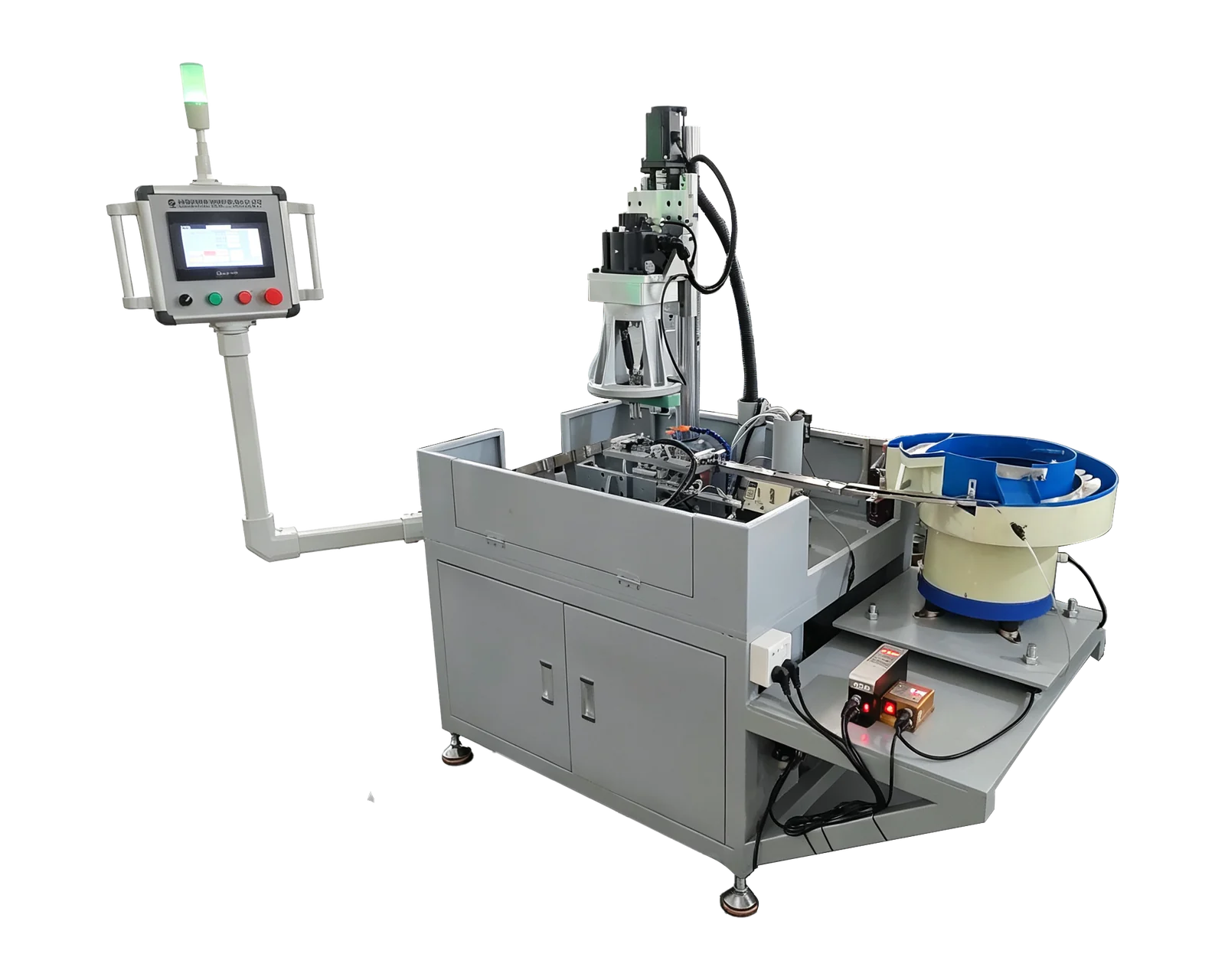
Explore equipment for your inquiry
Automatic Feeding & Tapping →Review the layout options and required part information to define the scope of a custom equipment inquiry.
Define where automation starts and ends
Begin with the condition in which parts reach the machine. Are they loose in a container, arranged in trays, already oriented or manually placed in a fixture? Then describe what should happen after tapping: manual removal, guided discharge, collection or transfer to another process. These boundaries determine the handling requirement.
The phrase automatic tapping does not answer those questions. A machine may carry out the tapping cycle while an operator loads and removes each component. Another proposal may integrate feeding, positioning, machining and discharge. Both need a clear description of the human tasks and supplied equipment to be compared fairly.
Hypothetical quotation example: Offer A starts with an operator placing an oriented blank in a fixture and ends with the operator removing it. Offer B starts with approved loose blanks at a feeder inlet and ends at a collection chute. Both offers describe automatic tapping, but only B proposes automated part transfer. Any unpacking before the inlet or inspection after the chute remains outside that stated boundary unless separately included. This example defines scope; it does not describe a particular supplied machine.
Separate each function in the quotation
Ask suppliers to mark each function as included, optional, customer-supplied or outside the scope. Avoid a single checkbox labeled full automation. A function-by-function comparison makes differences visible before price discussions and gives both sides a practical basis for acceptance.
Assess the part before choosing a feeder
The automatic feeding and tapping solution may use a vibratory bowl or a dedicated part-feeding arrangement. Suitability depends on workpiece shape, orientation and surface condition. Provide photographs of all sides, dimensions and representative samples when requested; a drawing alone may not show how supplied parts behave during handling.
Describe burrs, oil, coatings and any tendency for parts to arrive mixed or connected. Identify cosmetic surfaces and the orientation needed at the tool. These are assessment inputs, not reasons to assume a particular feeder will or will not work. Ask the supplier to confirm the proposed method against representative incoming parts.
Keep operator work visible in the production plan
Even when a feeding arrangement is included, clarify replenishment, finished-part collection, tool changes, checks and recovery from interruptions. Ask what routine intervention is expected and what equipment or consumables the factory must provide. A useful quotation explains those responsibilities without relying on an ambiguous unattended-operation claim.
For output comparisons, use complete acceptable parts over an agreed production period. State assumptions about supply, inspection and interruptions. A video showing several successful cycles demonstrates part of the process; it does not establish long-term feeding reliability or sustained production for a different component.
Choose the right automation scope for the job
Manual loading may remain a candidate where the product mix, handling requirement or batch pattern does not justify a dedicated feeding arrangement. An integrated cell deserves assessment when repeated parts and a defined orientation make the feeding task central to the production requirement. Compare the actual labor tasks and process boundaries in each proposal.
A standard tapping platform can therefore be a starting point without implying a complete feeding system. If automatic supply and discharge are required, state them at the first inquiry. Before ordering, confirm the incoming-part specification, included handling equipment, sample-trial conditions and agreed acceptance checks as part of the written machine scope.