
Explore equipment for your inquiry
Automatic Feeding & Tapping →Review the layout options and required part information to define the scope of a custom equipment inquiry.
Start with the orientation the tapping fixture needs
Mark the face that must point toward the tap and the surfaces that can locate the workpiece. Then compare that required orientation with every position in which a loose part might arrive. A symmetrical outline does not necessarily mean either end is acceptable: a chamfer, recess or hole may distinguish the machining side.
For an initial review, photograph the part from several directions alongside a dimensioned drawing. Identify features that look similar but are functionally different. Ask the supplier to explain how the proposed feed path distinguishes the correct orientation and what happens to a part that arrives incorrectly. These questions are more useful than asking whether a bowl can handle a particular material name.
Assess parts as they will arrive from production
Describe the supplied condition, including oil, burrs, coatings and any permitted cosmetic marks. If two parts can nest, hook together or stack, show that behavior with a short video. The review should include the actual variation expected between batches, rather than only one carefully selected sample.
Feeding and tapping have different acceptance questions. A part may be easy to orient but difficult to locate for machining, or easy to clamp after manual placement but awkward to separate in bulk. Review both stages before treating automatic loading as a confirmed feature.
Review the entire route to the tapping position
Ask to see a proposed sequence covering bulk supply, orientation, transfer, location, clamping, tapping and discharge. Specify whether finished parts need to remain separate from incoming parts, and whether their discharge orientation matters for the next operation.
Agree how an absent, misplaced or retained part will be handled. Detection, recovery and operator access belong in the project scope; they should not be assumed from the words automatic feeding. Also clarify who replenishes the parts and removes finished output. A cell can automate individual transfers while still requiring routine operator attention.
Keep other loading methods in the comparison
Bowl feeding is worth reviewing for a repeated part with a well-defined orientation and production requirement. Keep manual loading, trays or another dedicated feed arrangement open for comparison when parts change frequently, surface contact is restricted, or bulk separation remains uncertain.
The choice should reflect your actual mix of parts. List the variants you expect to run and ask which changes require a new feed path, tooling or fixture. Do not assume a feeder designed for one component automatically covers another that looks similar. If only part of the process needs automation, a simpler loading arrangement may still meet the production objective.
Hypothetical sample-selection example: two blanks share the same thread and outline, but one arrives dry and the other with production oil. A third variant adds a cosmetic coating. Label these incoming conditions separately and identify permitted contact surfaces on each sample set. A successful dry-part demonstration leaves the oily and coated conditions unresolved until they are assessed; the shared thread designation does not close the feeding question.
Make the feeding trial part of acceptance
Agree on representative sample parts and the conditions for a demonstration. Ask for the full sequence to be shown, including replenishment and recovery, rather than only a close-up of tapping. Define the required output and the method for counting accepted finished parts with the supplier.
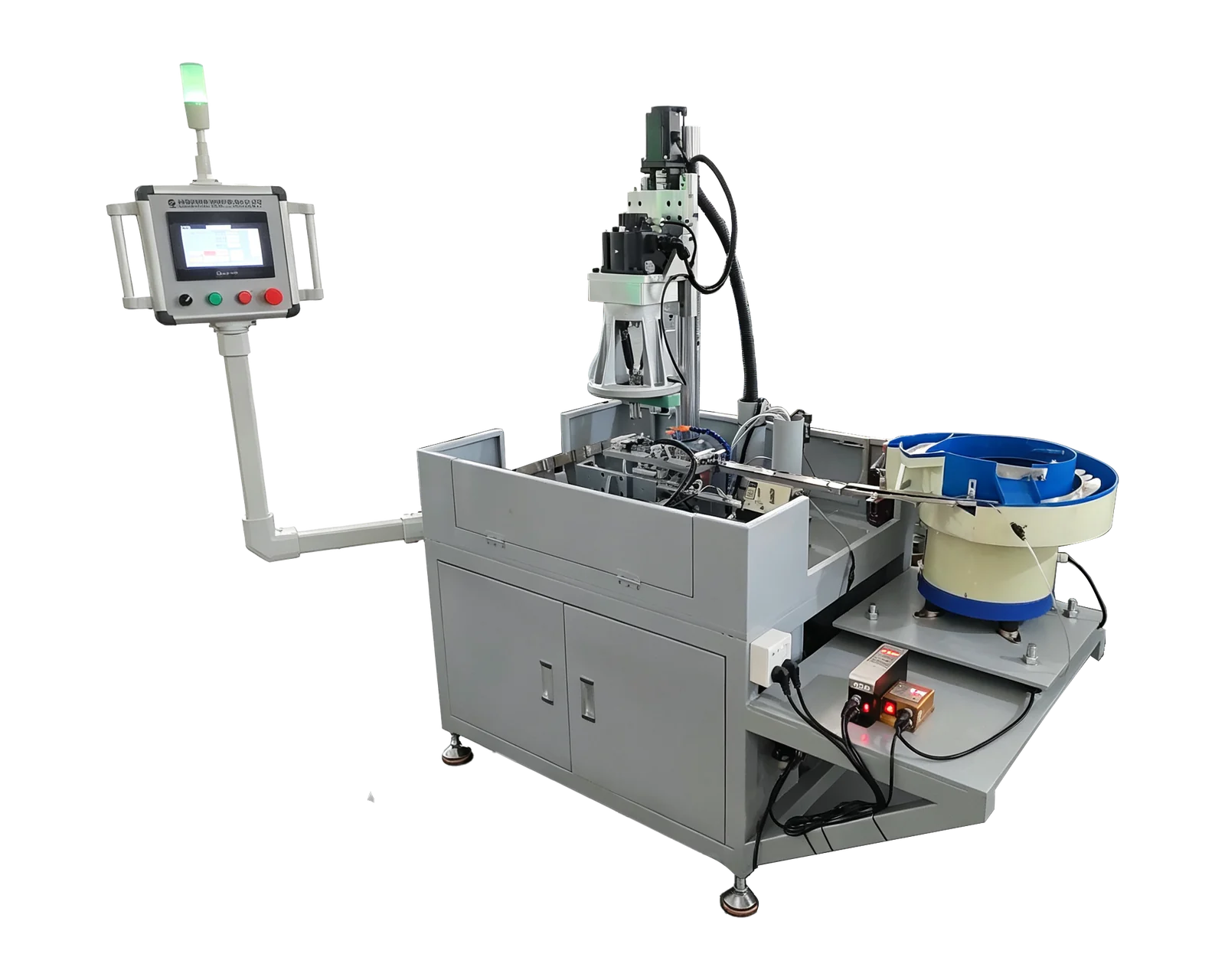
BINSING's automatic feeding and tapping page shows an existing equipment direction. It is a starting point for discussing your part, not confirmation that the pictured configuration will handle it. Begin with drawings and photos by email; physical samples can be arranged as the review progresses.