
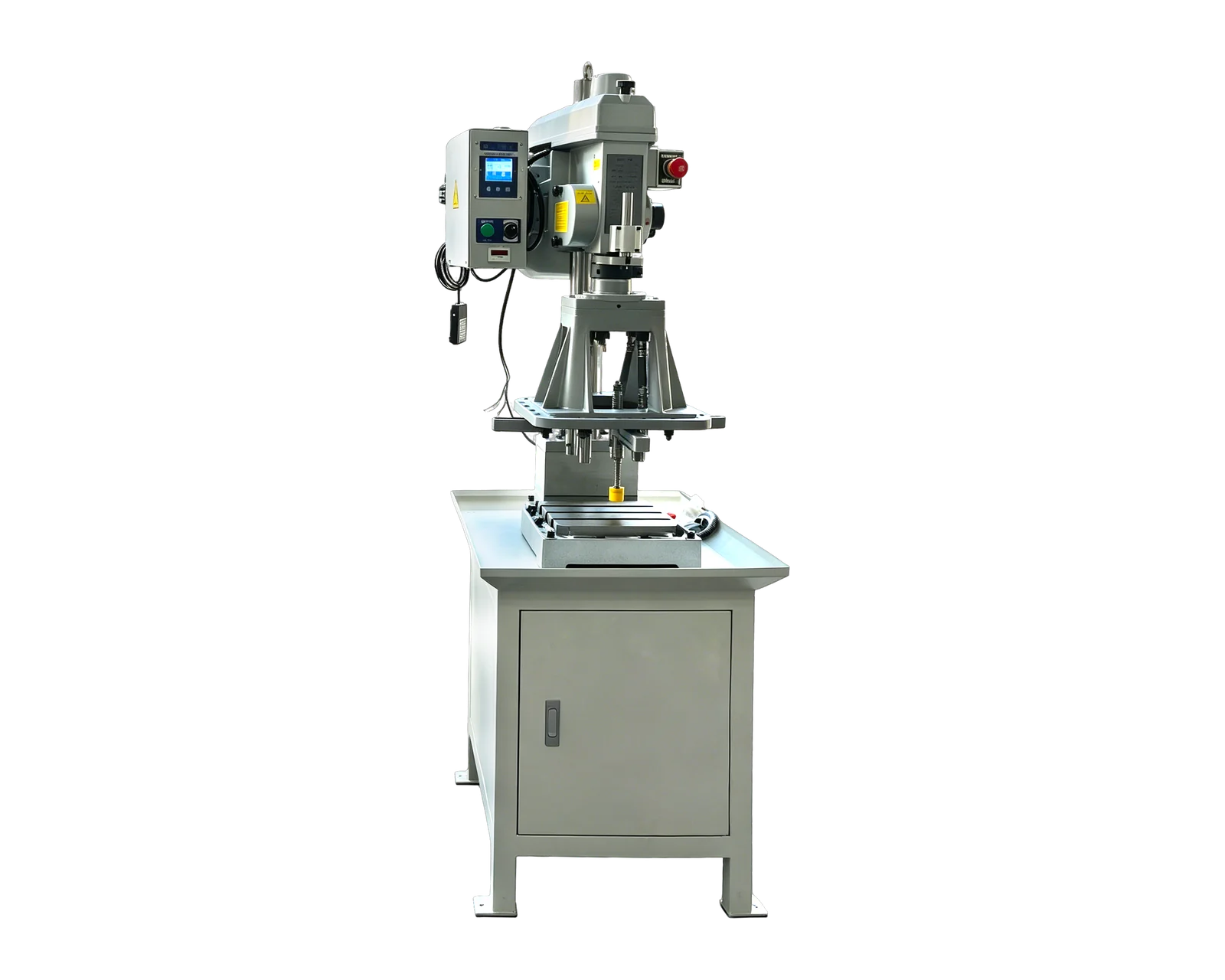
Explore equipment for your inquiry
Automatic Tapping Machines →Compare tapping platforms and feeding options before defining your thread-machining inquiry.
Start with the grade and the history of the incoming hole
Sandvik Coromant distinguishes stainless steel families and notes differences in chip behavior and machinability. Its guidance also identifies work-hardened surfaces as a machining consideration. The practical implication for a trial request is to identify the actual grade and prior processing, rather than assume every stainless sample represents the same cutting condition.
Record whether the trial starts from an undrilled blank or an incoming prepared hole. If the supplier prepares the hole for the demonstration but production will receive it from another operation, make that difference explicit. The two routes can be compared only after the responsible reviewers decide what evidence is needed to establish their equivalence.
Choose the question before choosing the run length
A feasibility run asks whether an agreed process can produce acceptable features under stated conditions. A production evaluation asks additional questions about repeatability, interventions and tooling over a defined run. Neither label supplies a universal sample count. Have the buyer and supplier agree on the evidence and its limitations before samples are consumed.
If production includes several material lots or supplied conditions, list them in the coverage plan. Samples selected because they are convenient to ship may omit the input that matters most. Ask the process specialist which differences require separate investigation and identify any unavailable condition as an open limitation, rather than silently claiming complete coverage.
Use a run log that connects the tool to every result
The log should preserve sequence as well as totals. An end-of-run photograph of several good parts cannot reveal which tool made them or whether a replacement occurred halfway through. The following fields can be adapted to the available trial arrangement; recording capability and responsibility should be agreed in advance.
Distinguish a new-tool demonstration from tool-life evidence
Identify whether the trial tool is new, previously used or reconditioned, and record its available history. Keep tool changes visible even when the replacement has the same catalog code. If tool life is part of the intended conclusion, agree on the end condition and inspection approach with the relevant specialists; a tool that survives the parcel of samples has not necessarily reached that condition.
OSG's published tapping material identifies chip evacuation as an important source of tapping difficulties. For your trial, record the observations and interventions that the reviewers request rather than assigning a cause from chip appearance alone. Include the specified cutting-fluid arrangement in the setup record so the demonstrated process can be reviewed against the proposed production arrangement.
If the proposed production route uses several taps together, record which tool and spindle made each inspected feature. A single-spindle trial may help evaluate one operation, but its results do not by themselves verify the complete multi-spindle load or every hole position. Confirm that any observed process signals are available on the quoted configuration before requesting them as routine production records.
State exactly what the trial supports
A hypothetical report might conclude that identified samples produced acceptable threads with one documented setup, while explicitly leaving another material lot and a longer run unevaluated. That is more useful for purchasing than a general stainless steel capable statement. It tells the buyer what evidence exists and which question must be answered before making a production commitment.
Send BINSING the grade, supplied condition, thread drawing, incoming-hole route and intended evaluation question. Attach existing tool and inspection records when available. Ask which equipment and tooling arrangement can be considered and how results will be recorded. Application-specific parameters, acceptance methods and production coverage require confirmation by the responsible technical reviewers.
For a machine quotation, attach the trial record or identify the missing evidence. Separate the candidate tapping platform from the material qualification: prepared-hole tapping may lead to a BX-4508V review, while drilling-and-tapping or a different head arrangement may lead to a BX-20015 review. Neither model is presented here as qualified for all stainless steel work. Ask the offer to state the exact grade, feature and trial conditions it covers.
