
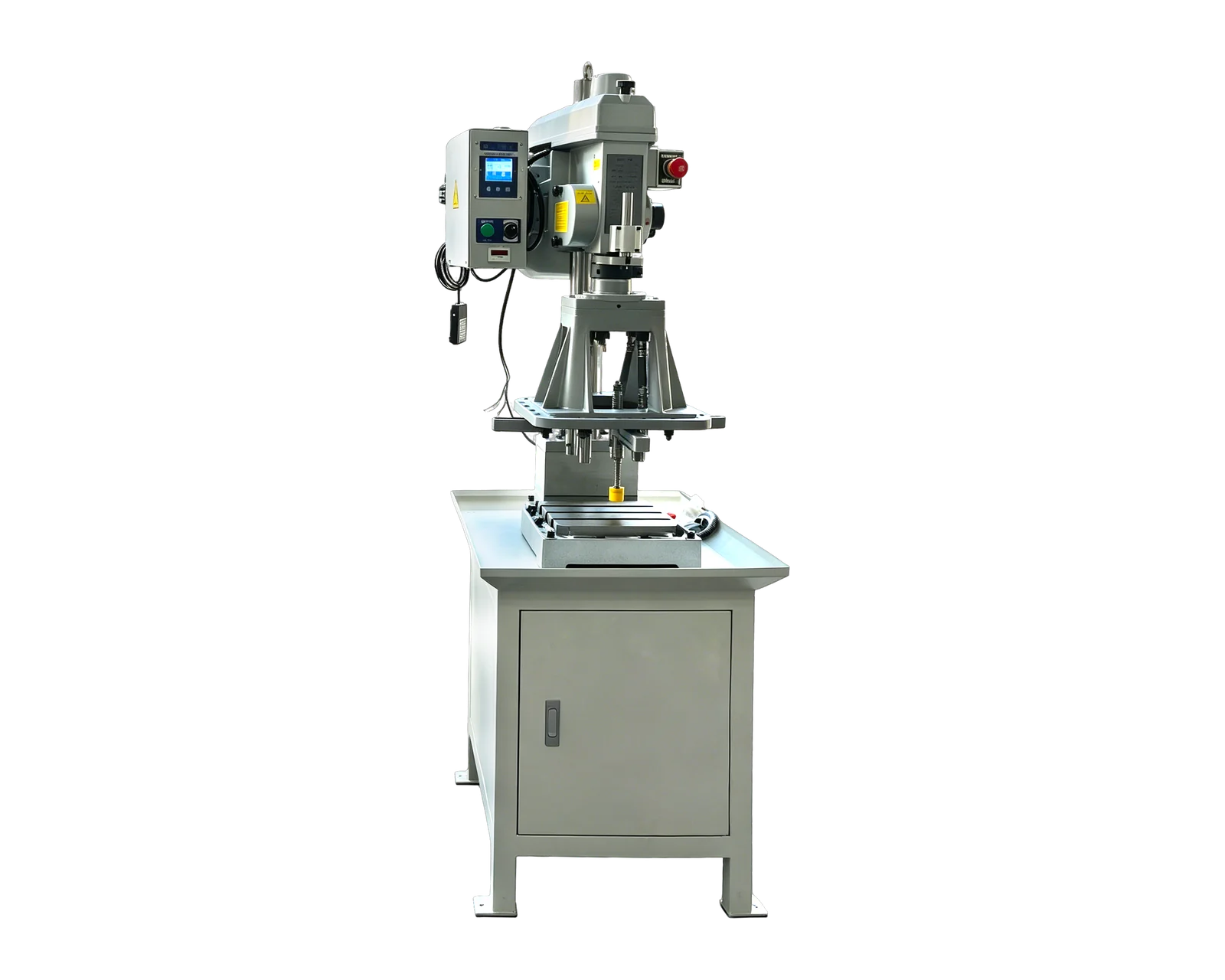
Explore equipment for your inquiry
4508 Gear-Driven Automatic Tapping Machine →Review the published specifications and configuration options against your part drawing before requesting a quote.
Start with an event, not a diagnosis
A photograph of a broken tap answers only a small part of the question. Add the tool identifier, the hole reference and what the operator actually observed. Did the event occur during entry, further into the hole or during withdrawal? If nobody saw the timing, record it as unknown. An inferred sequence should not become a fact in the next supplier email.
Count exposure as well as failures. Three breaks in a shift means little without knowing how many holes were attempted, how many tools were installed and whether the failures belonged to one position. Record interruptions and tool replacements alongside the production count. This gives the reviewer a denominator and prevents one troublesome hole from being mistaken for uniform behavior across the whole part.
Pair each observation with something comparable
The table is a collection plan, not a fault diagnosis. Where possible, retain an identified unmachined sample from the same lot and an accepted part from the same setup. Preserve the failed tool for examination under the site's handling procedure. Avoid cleaning away or discarding evidence before the responsible reviewer has specified what should be documented.
Check the hole and tool combination before buying a remedy
OSG's tap-breakage guidance identifies chip congestion, tap suitability and prepared-hole size as relevant review areas. Its guidance does not establish the cause in your application. Bring the actual tap code and prepared-hole results to the tool supplier rather than requesting a generic stronger tap or more powerful machine.
Separate the drawing requirement from what was measured. A drill's nominal diameter is not an inspection result for the hole it produced. Likewise, a program depth is not the measured usable depth in a physical sample. Ask the technical reviewer to identify which measurements are needed and how they should be taken. Do not enlarge a hole or substitute a forming tap without confirming the resulting thread and process requirements.
Use the record to define the next trial
In a hypothetical investigation, failures appear only after a supplier changes the incoming pre-drilled parts. That timing is a useful lead, but it does not prove the supplier caused the breakage. Compare identified samples and the documented setup first. The reviewer may then specify a test that isolates a relevant difference while preserving the required finished thread.
Write down the proposed change, the conditions held constant and the result that would support or reject the explanation. Keep failed attempts in the report. A run that produces a few acceptable holes can demonstrate feasibility under those conditions; it cannot establish production tool life without an agreed evaluation length and acceptance basis.
Translate a verified limitation into an equipment question
If review identifies a machine-related limitation, describe that limitation explicitly in the inquiry. Ask the equipment supplier how the proposed arrangement addresses it and what evidence would demonstrate the improvement. A different drive system, holder or loading method is a proposal to evaluate, not an automatic cure for every broken tap.
Send BINSING the drawing, tool references, event table and representative successful and failed results. State whether you want to assess an existing process or compare a replacement arrangement. The available machine, tooling and trial scope require application review; the catalog image on this page does not establish suitability for the reported failure.
