
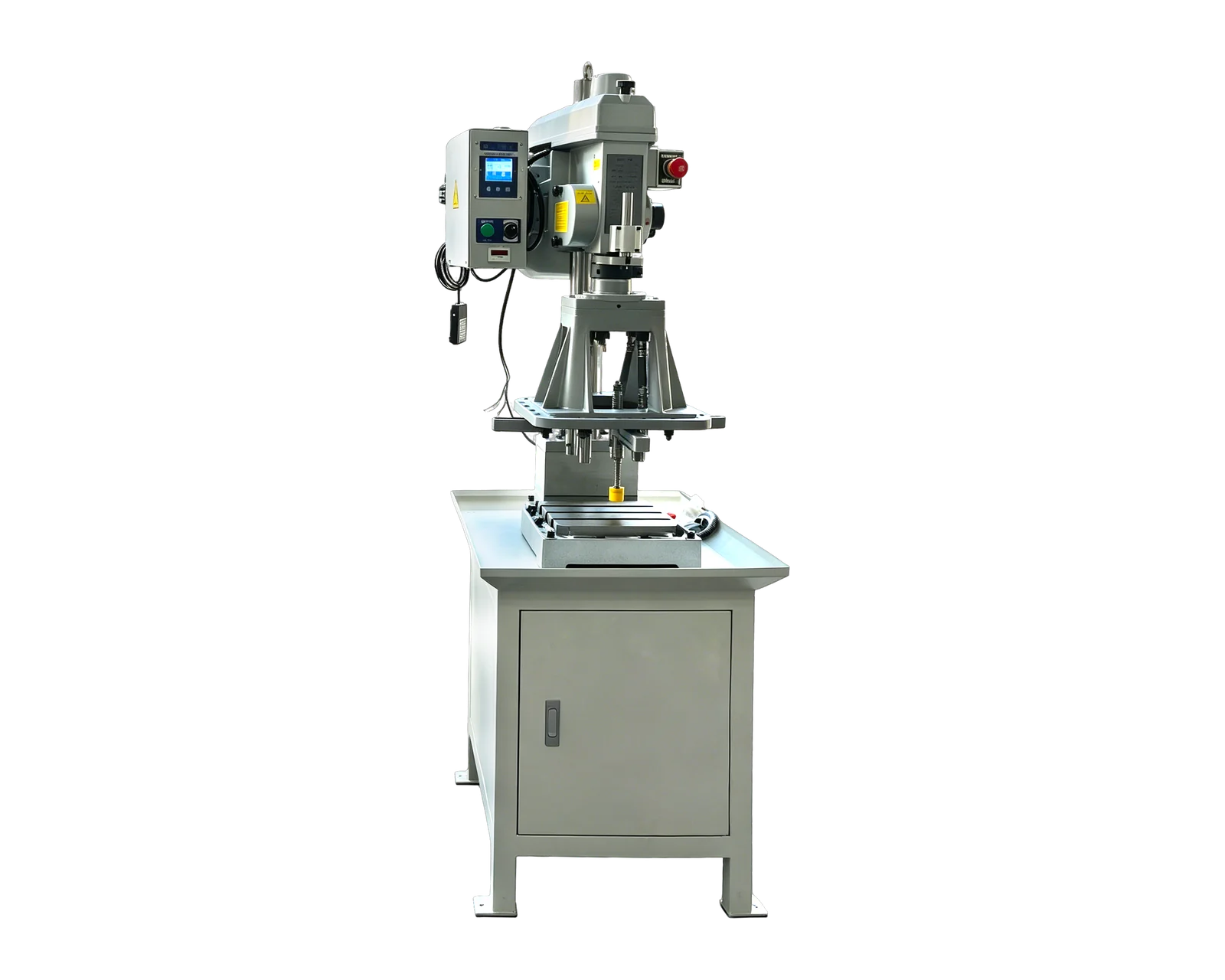
Explore equipment for your inquiry
4508 Gear-Driven Automatic Tapping Machine →Review the published specifications and configuration options against your part drawing before requesting a quote.
Describe the incoming part separately from the finished part
Send the finished drawing together with an incoming-part sketch or marked copy. Identify the holes already produced, the locating surfaces available at this stage and any operations still outstanding. A finished drawing can show a thread without explaining what the tapping station actually receives. Include the upstream process and explain whether parts arrive directly from another machine, from storage or from an outside supplier.
List the thread designation, required threaded extent and relevant drawing requirements without substituting a nominal hole description for the incoming specification. Ask the responsible process owner to provide the approved incoming-hole requirements. Include the material condition and any coating or treatment already present. These details establish the review boundary; selecting cutting conditions and tooling remains a separate application discussion.
Make the upstream handoff visible in the quotation
Create a short handoff table rather than relying on the phrase pre-drilled parts. The purpose is to identify evidence and responsibility, not to prescribe universal hole dimensions. If incoming variation is not yet measured, mark it as unknown and request a sample review before treating the tapping arrangement as settled. Keep the source of each specification visible so supplier assumptions can be checked.
Use samples that represent the incoming supply
A carefully selected sample may establish whether a layout can reach a feature, but it does not describe the variation across normal incoming lots. State how samples were obtained and which production route they represent. Where several drilling sources or fixtures supply the same tapping machine, identify those sources separately. Keep measurements linked to the sample identifiers rather than sending an unlabeled bag of parts.
For example, suppose a buyer receives the same part number from two upstream drilling stations. This is a hypothetical purchasing scenario. The useful question is whether both supplies meet the same agreed incoming condition and can use the proposed locating arrangement. A successful review of parts from one station should not silently become approval of the second supply before its relevant differences are examined.
Separate tapping from preparation and handling
Write an operation list showing what happens before loading, within the machine and after unloading. If cleaning, sorting, entrance preparation or additional inspection is requested, list it as an explicit item for review. A tapping-only quotation can otherwise appear lower in cost simply because necessary surrounding work is assigned to an operator or another process without being visible in the comparison.
For a standard tapping platform, confirm the part-specific fixture, thread-related configuration and loading arrangement in the proposed scope. Automatic tapping does not by itself define automatic feeding or verification of every incoming hole. Ask which conditions the proposed station checks, which are accepted as incoming requirements and what evidence supports those distinctions. Compare proposals against the same boundary.
Link the machine review to the incoming condition
Record the drawing revision, sample source, incoming condition and finished-thread checks used for a trial. Identify who supplies the inspection equipment and who records the results. If an issue appears, preserve its relationship to the sample and incoming measurements so the parties can examine upstream preparation, workholding and tapping scope without assuming a cause from the finished appearance alone.
Keep the agreed incoming specification with the purchase record. If the drilling source, material state or preparation process changes later, request a review of the affected assumptions. To start a discussion with BINSING, email the finished drawing and a clear description of the pre-drilled supply. State which operations should remain outside the tapping machine and which additional tasks you want considered.
