
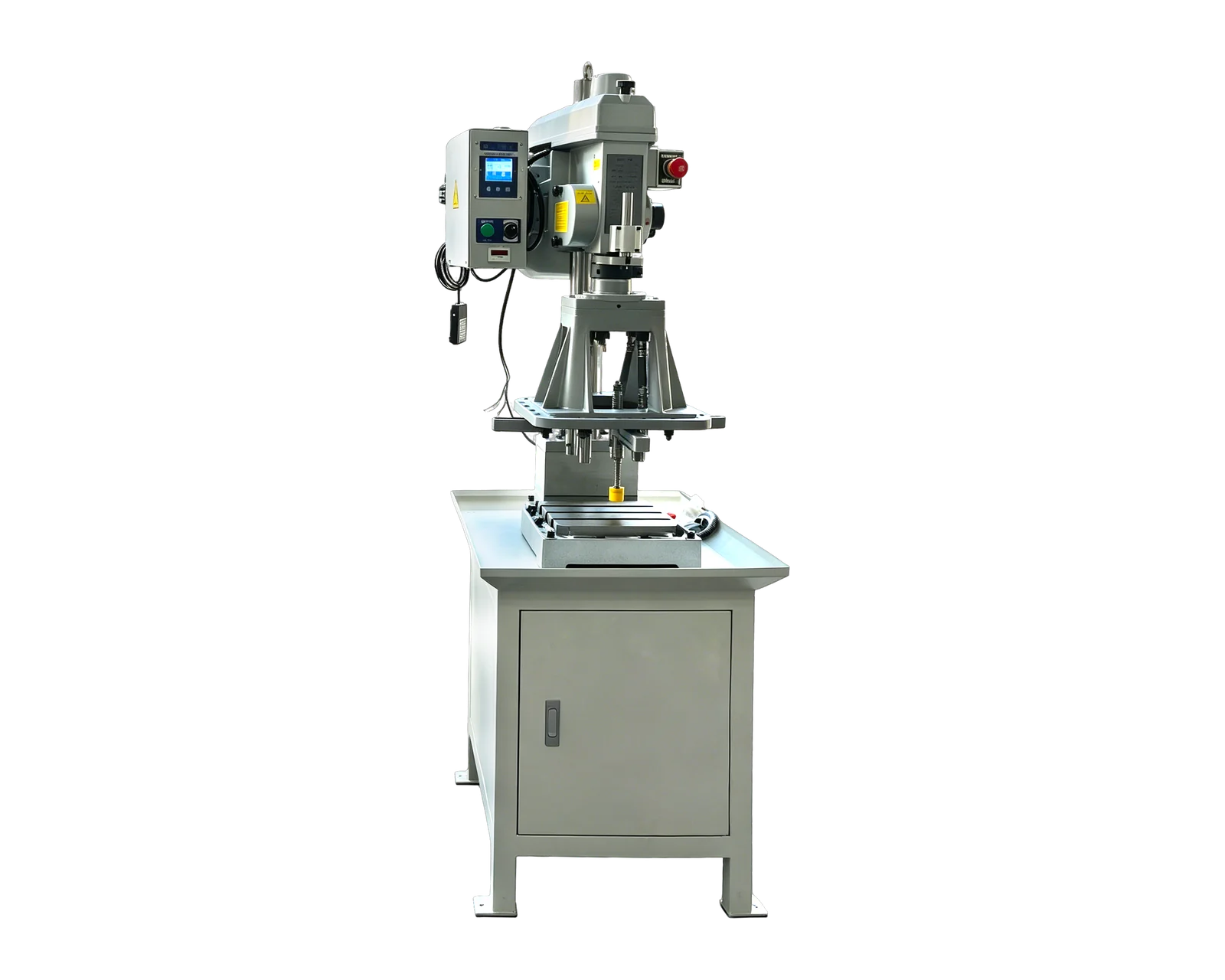
Explore equipment for your inquiry
4508 Gear-Driven Automatic Tapping Machine →Review the published specifications and configuration options against your part drawing before requesting a quote.
Same thread callout, different material movement
Cutting taps remove material to produce the thread; forming taps displace material into the thread profile. OSG describes its A-XPF forming process as plastic deformation without generating cutting chips. This is an advantage specifically at the forming operation: it does not remove chips already left by drilling or eliminate a separate cleanliness requirement.
Start the comparison with the actual alloy and condition, not a broad label such as metal or aluminium. Ask the tool supplier to confirm that the selected forming tool covers that material and required thread. A successful cut-tapping route is useful baseline evidence, but it does not establish that the same incoming stock is suitable for a different mechanism.
Use these branches before requesting a machine change
The following decision path is an original purchasing aid. It separates a viable alternative from an idea that still needs process development. An unresolved branch should become a defined trial question, not an assumed machine feature.
- Material or product approval for forming is unknown: retain the existing route as the baseline and request a material/tool suitability review before comparing equipment prices.
- Forming is a confirmed candidate but incoming holes are fixed by another process: obtain the proposed pilot-hole requirement and check whether that upstream process can change and hold it.
- The pilot-hole route can be controlled: review the proposed lubricant, delivery arrangement and available spindle load at the intended operating condition.
- All process inputs are defined: trial both routes against the same finished-thread requirements and compare accepted output, preparation and consumables.
- One route cannot meet the required finished result: resolve that process issue before treating a lower machine price or a chip-free operation as a purchasing benefit.
Do not carry over the cutting-tap drill size
OSG's forming-tap hole guidance explicitly treats its pilot-hole tables as reference values. Material displacement affects the finished minor diameter; a hole that produces excessive thread crest growth can leave that diameter too small. The practical implication is to connect the selected tap, material and pilot-hole range to inspected results, rather than approving a drill solely from its marked diameter.
Create two separate process entries if both routes are under consideration. Each entry needs its own approved hole requirement and measured sample results. Do not merge the entries because the finished drawing has not changed. If existing pre-drilled inventory is involved, ask whether it belongs to either approved route before including it in the trial quantity.
Review lubrication and load as part of the route
Sandvik Coromant's technical session on forming highlights lubricant effectiveness and delivery, including the need to assess an MQL arrangement specifically for forming. A coolant system being present does not answer whether it supplies the selected process correctly. Record the proposed fluid, application method and tool-supplier requirements; do not substitute an unverified universal mixture or concentration.
OSG's GRT technical discussion shows that changing forming-tool geometry changes measured torque and thrust in its stated test. Those values are not machine ratings for your component. Ask for application-specific load information and compare it with the offered spindle, transmission and holder limits. Do not assume a fixed multiplier between cutting and forming, or infer suitability from motor power alone.
Compare complete routes with an identified example
Consider a hypothetical purchase where a buyer already receives drilled brackets and wants to remove interruptions attributed to tapping chips. Route A keeps the approved cutting process. Route B proposes forming but requires a revised upstream hole and a different lubrication arrangement. A useful comparison includes those changes, the cost of qualifying them and the finished results from each route. It does not compare only two tap prices.
Keep the trial parts separated by route and incoming lot. Record the selected tools, preparation and operating conditions alongside the drawing-based thread checks. Include the required minor-diameter assessment and any product-specific approval defined by the quality team. A thread gauge result should not silently replace a separate product requirement, and a chip-free operation does not prove the complete part is ready for assembly.
Send BINSING the current route and the proposed change together. State whether you need a new tapping platform or an assessment of an existing arrangement. The equipment review should identify what the quotation covers and what still needs tooling or sample validation. This article establishes a comparison method; it does not confirm forming capability for a catalog machine or an unreviewed part.