
Explore equipment for your inquiry
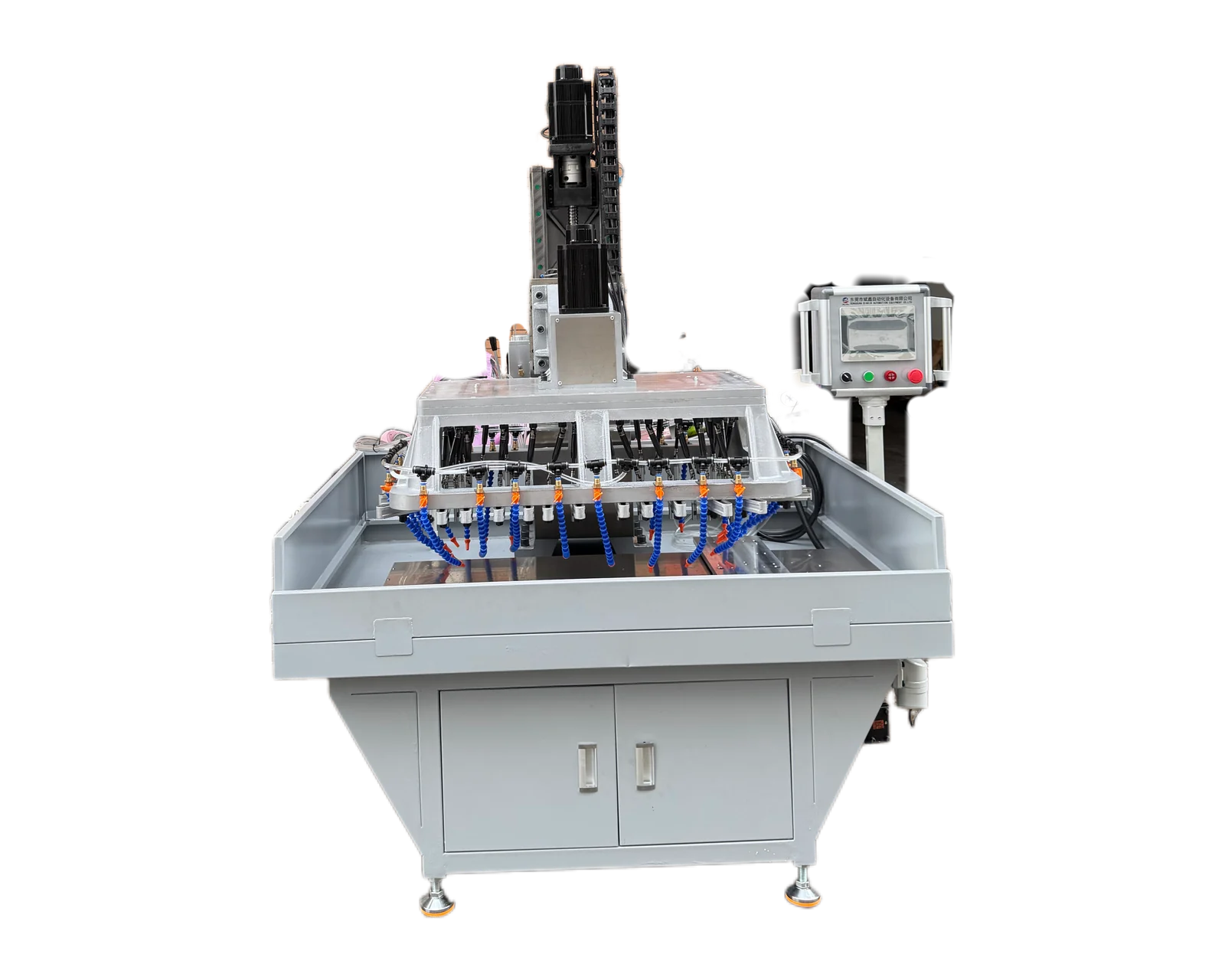
Multi-Spindle Drilling Machines →Compare simultaneous drilling, traverse layouts and custom configurations against your complete hole pattern.
Classify the features before counting spindles
Give every hole a drawing-linked identity. Record its direction, required diameter or thread, depth reference and starting condition. Features that look alike in a top view may need different tools or sequences. Distinguish a clearance hole from a threaded hole and an existing opening from solid material. The supplier needs that information to propose a defensible grouping.
SUHNER's official POLYdrill range includes fixed and adjustable hole-spacing arrangements. Its drilling application page also describes simultaneous multiple operations. These sources establish that such equipment arrangements exist; they do not confirm that your entire hole pattern can share a feed or establish any BINSING cycle time. The next step is an application-specific layout review.
Show prerequisites and possible overlap together
The following hypothetical part has six features. A1–A4 are one repeated hole family, B1 needs a different drilling operation, and C1 needs drilling followed by tapping. This deliberately simple map does not specify cutting conditions. It shows why six holes need not mean six tools working at the same time, and why a mixed route may be more appropriate than either extreme.
Review the space around every tool
A hole-center drawing alone does not establish tool access. Ask for a layout showing holders, tool projections, surrounding part features and fixture elements. Include the loading position and the proposed approach and withdrawal paths. Adjustable spacing does not mean unlimited holder clearance. Fixed spacing does not remove the need to check the real work envelope.
Where operations share a feed arrangement, request confirmation that the proposed tools and features can work within that arrangement. Where heads move independently, ask how their sequence and interference avoidance are defined. Do not infer independent motion, individually controlled speed or automatic tool changing from the phrase multi-spindle. Record the actual proposed configuration and leave unresolved points visible in the quotation.
Compare complete sequences rather than spindle arithmetic
For a sequential proposal, list positioning, machining, tool changes, loading and required inspection. For a grouped proposal, list each group and the actions between groups. Some actions may overlap; others must wait. Show those relationships on a timing diagram supplied for the actual system. Summing all operations can overstate a parallel route, while ignoring positioning or transfer can understate a sequential one.
The longest tool action is not automatically the complete grouped cycle. Approach, return, part exchange and other included work still matter. Avoid claims such as four spindles delivering exactly four times the output. Compare accepted completed parts over the same observed period, with the same starting condition and inspection boundary. Record whether the test includes ordinary replenishment and tool service.
Keep feature-level evidence even when the operation is grouped
Assign each tool position to its corresponding hole identity during the trial. A summary stating that the part passed gives less diagnostic information than a feature-level result when one position behaves differently. Keep the acceptance method consistent across the two proposals. For a threaded feature, its prerequisite operation and final thread check remain visible even if equipment integrates the transfers.
Send BINSING a marked hole map, material and supplied-state information, target part mix and the available workholding references. Request both a grouping proposal and an explanation of the operations that remain separate. A mixed solution is a valid outcome. The catalog platform is an inquiry starting point, with compatibility and installed functions to be confirmed for the project.
