
Delivered project · Case study
Dual-Servo M3 Tapping for Electronics Housings
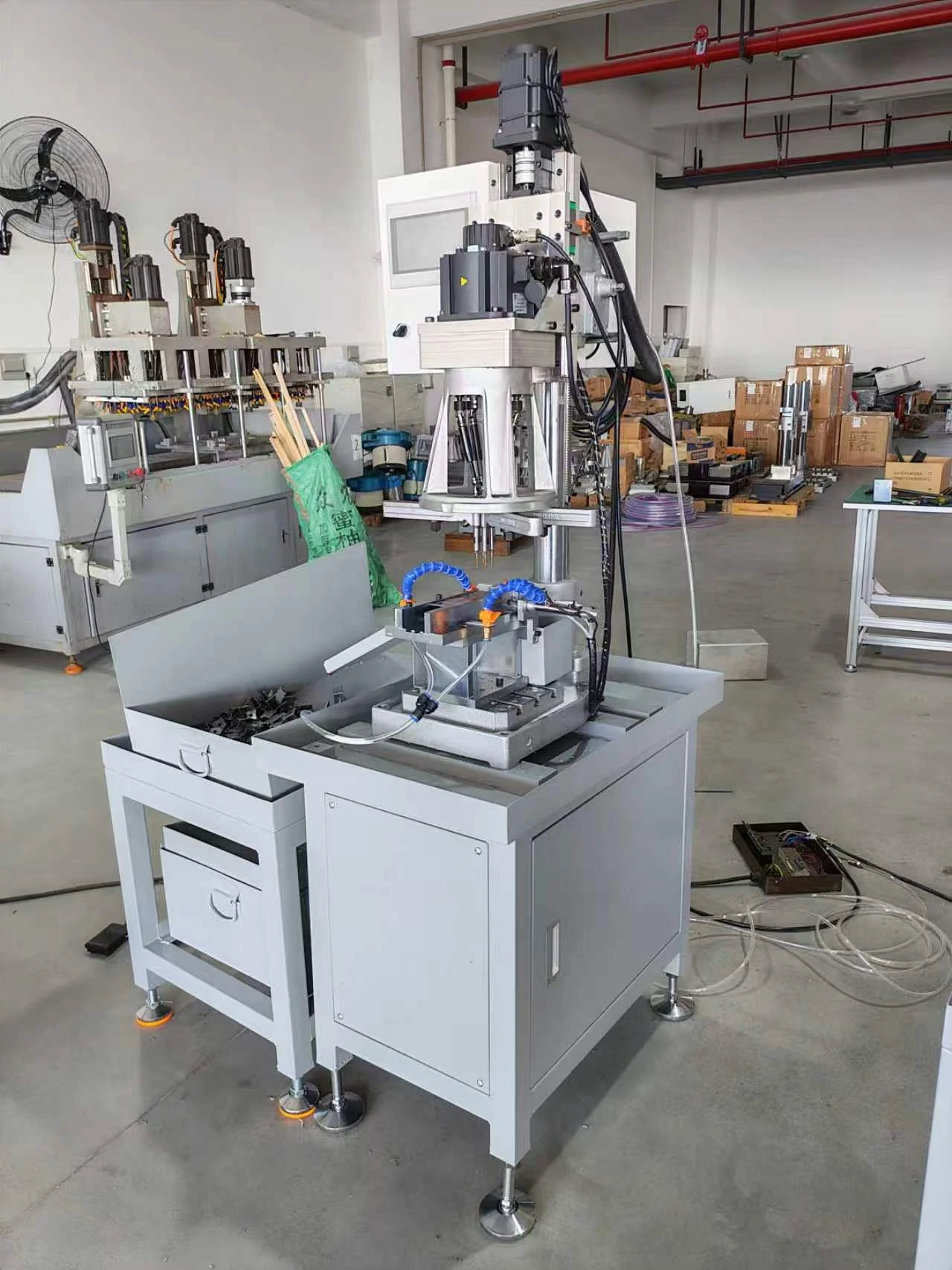
Four M3 × 0.5 holes tapped simultaneously in a 2.0 mm stamped steel housing. The operator pushes each part into position; the machine taps the holes and pneumatically ejects the finished part into a collection chute.
 View full-size image
The application
Small threads in a 2.0 mm stamped steel housing
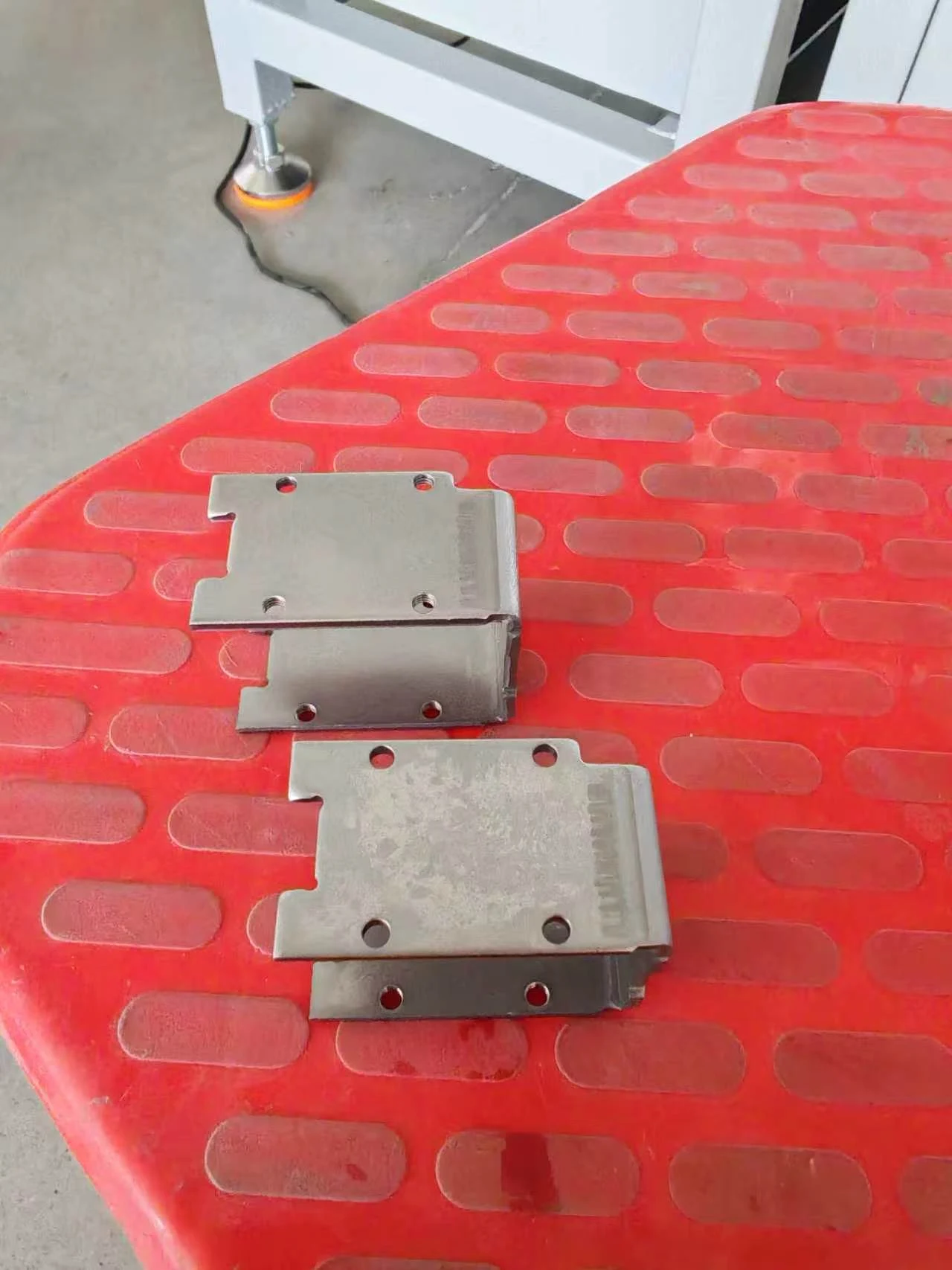
The component is a housing for electronics accessories. This project processes four M3 × 0.5 holes in one simultaneous tapping operation.
 View full-size image
Housing and four-hole layout
The 2.0 mm stamped steel housing is positioned for four holes to be tapped together.
 View full-size image
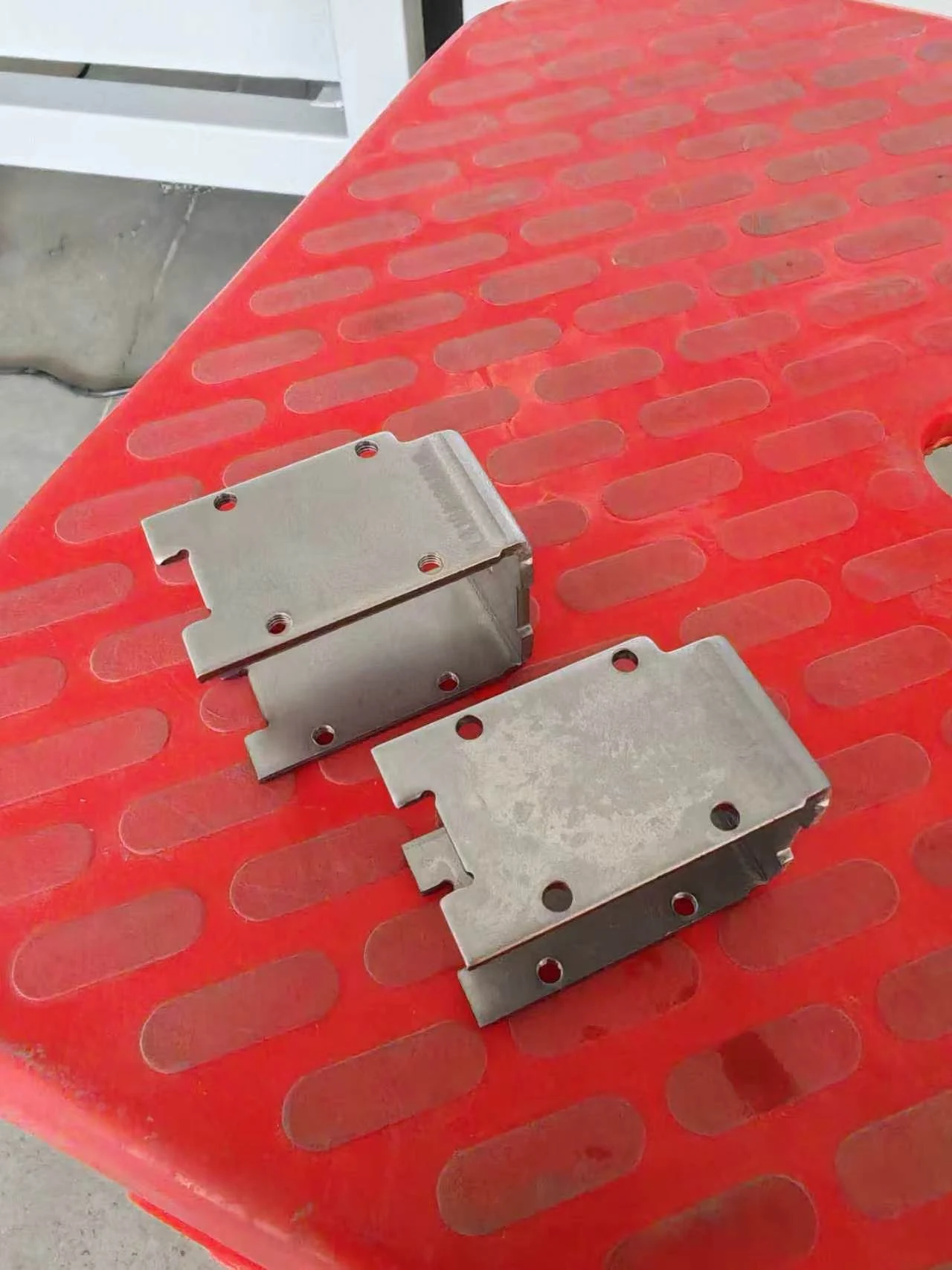
Part and thread detail
Thread specification for this delivered application: M3 × 0.5.
Increase processing speed
Tap four holes together and simplify handling between parts.
Reduce manual retrieval
Use pneumatic discharge to transfer the finished part into the collection chute.
Improve thread quality
Use servo-controlled spindle rotation and feed for the tapping operation.
These were the project objectives. No measured before-and-after production or thread-quality results are stated here.
Process route
Manual feeding, automatic tapping and discharge
The operator feeds every housing individually. Once the part reaches its locating position, no additional fixing operation is required.
Feed the housing
The operator pushes one housing to the fixture’s locating position.
Locate the part
The part-specific fixture positions the housing for the four-spindle head, without an extra manual fixing step.
Tap four M3 holes
The dual-servo system controls spindle rotation and feed as the four holes are tapped together.
Eject and collect
The pneumatic mechanism automatically pushes the finished housing into the collection chute.
Project configuration
Separate servos for spindle rotation and feed
A 1.5 kW spindle servo and a 0.75 kW feed servo form the dual-servo system. The D120 mm four-spindle CT5 head matches the four-hole M3 layout of this housing.
Servo-driven guide-rail feed, PLC control and a touchscreen support the tapping sequence and operator interaction.
| Workpiece | Stamped steel housing for electronics accessories; 2.0 mm sheet thickness |
|---|---|
| Project thread layout | Four M3 × 0.5 holes tapped simultaneously |
| Multi-spindle head | D120 mm four-spindle CT5 head |
| Spindle servo | 1.5 kW |
| Feed servo | 0.75 kW; servo-driven guide-rail feed |
| Feed stroke | 120 mm |
| Column height adjustment | 0–350 mm |
| Controls | Servo control, PLC and touchscreen |
| Part handling | Manual feed to the locating position; automatic pneumatic discharge |
| Machine dimensions | Approximately 1100 × 1200 × 1950 mm |
| Machine weight | Approximately 160 kg |
Cycle planning
Separate tapping time from the complete part cycle
Loading, positioning and discharge must be included when planning production output.
Design tapping time
1–3 seconds for the tapping operation, depending on the hole count and thread diameter of the configuration. This range excludes loading and unloading and is not a measured complete cycle for this housing.
Complete part cycle
Approximately 5 seconds per part, estimated from the supplied video. Two consecutive complete cycle intervals span approximately 10 seconds. Timing between matching head-return positions includes the intervening manual feed, tapping and automatic discharge sequence. This is a short video sample, not a sustained production-output test.
Equipment details
Inspect the drives, fixture and discharge arrangement
Photographs keep their full frame. Open any image at full size for a closer view.
 View full-size image
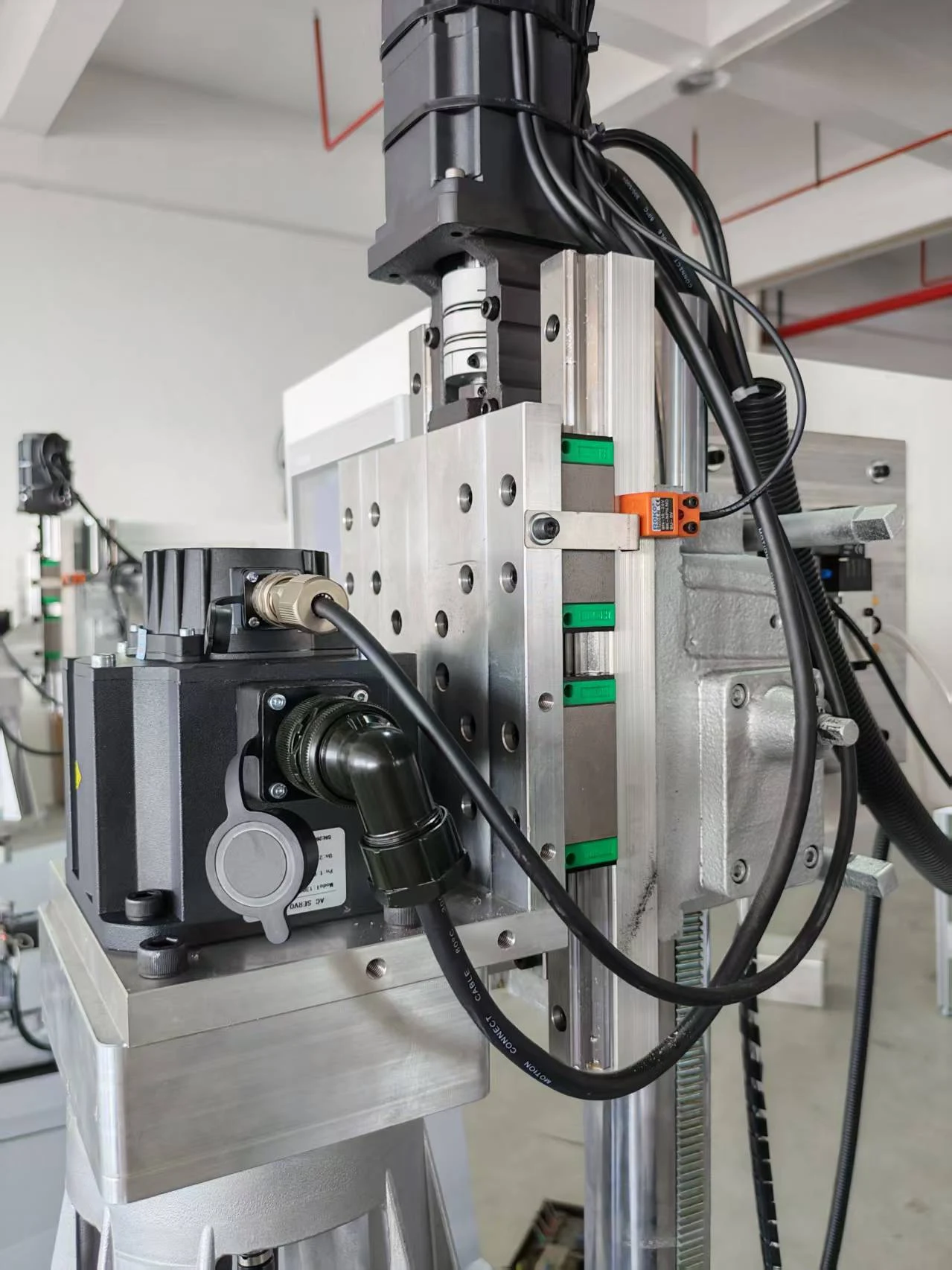
Separate spindle and feed drives
A 1.5 kW servo drives the spindle, while a separate 0.75 kW servo drives feed along the guide rails.
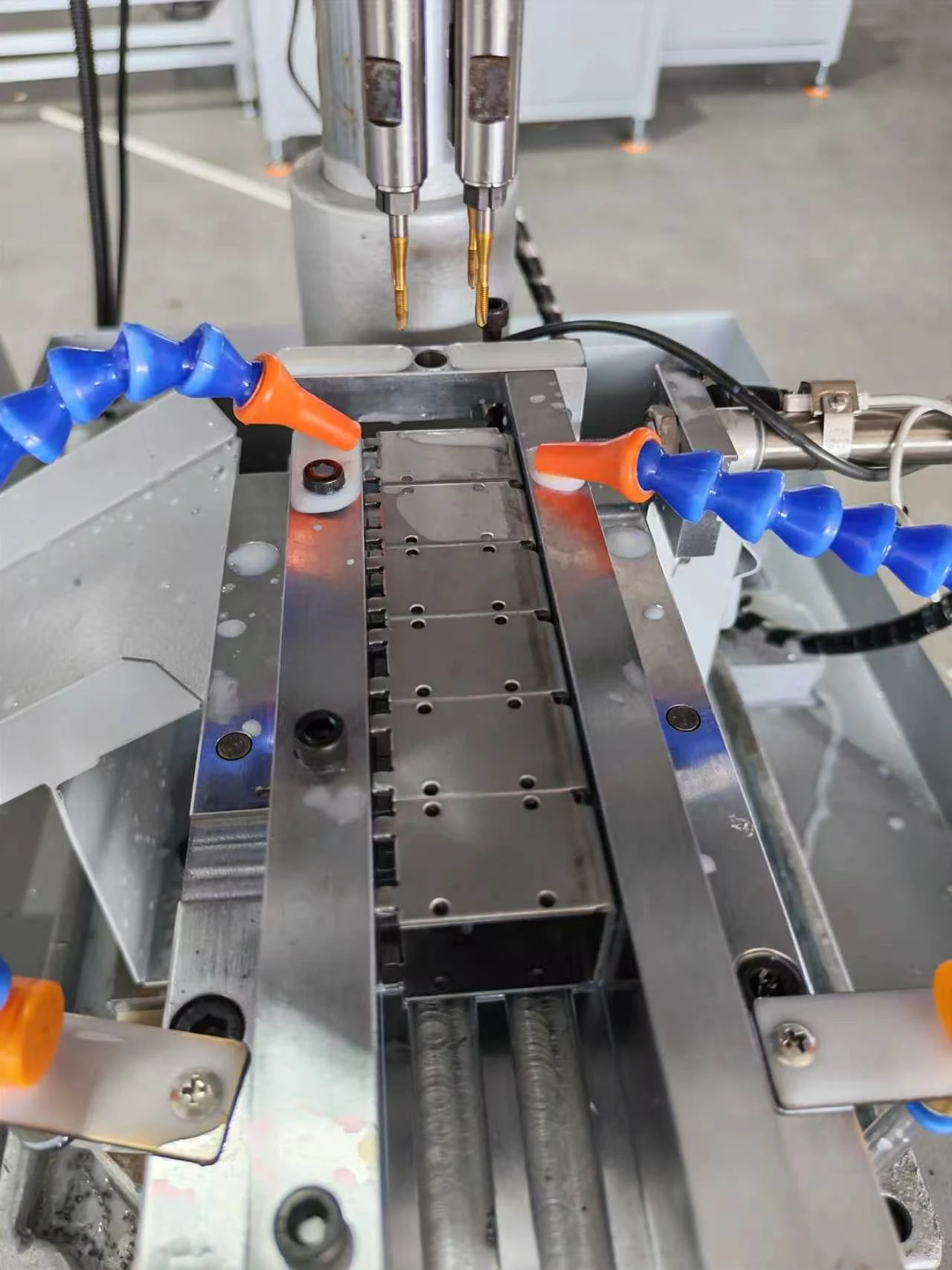 View full-size image
Manual part entry
The operator pushes each housing to its locating position. No additional fixing operation is required before the automatic tapping operation.
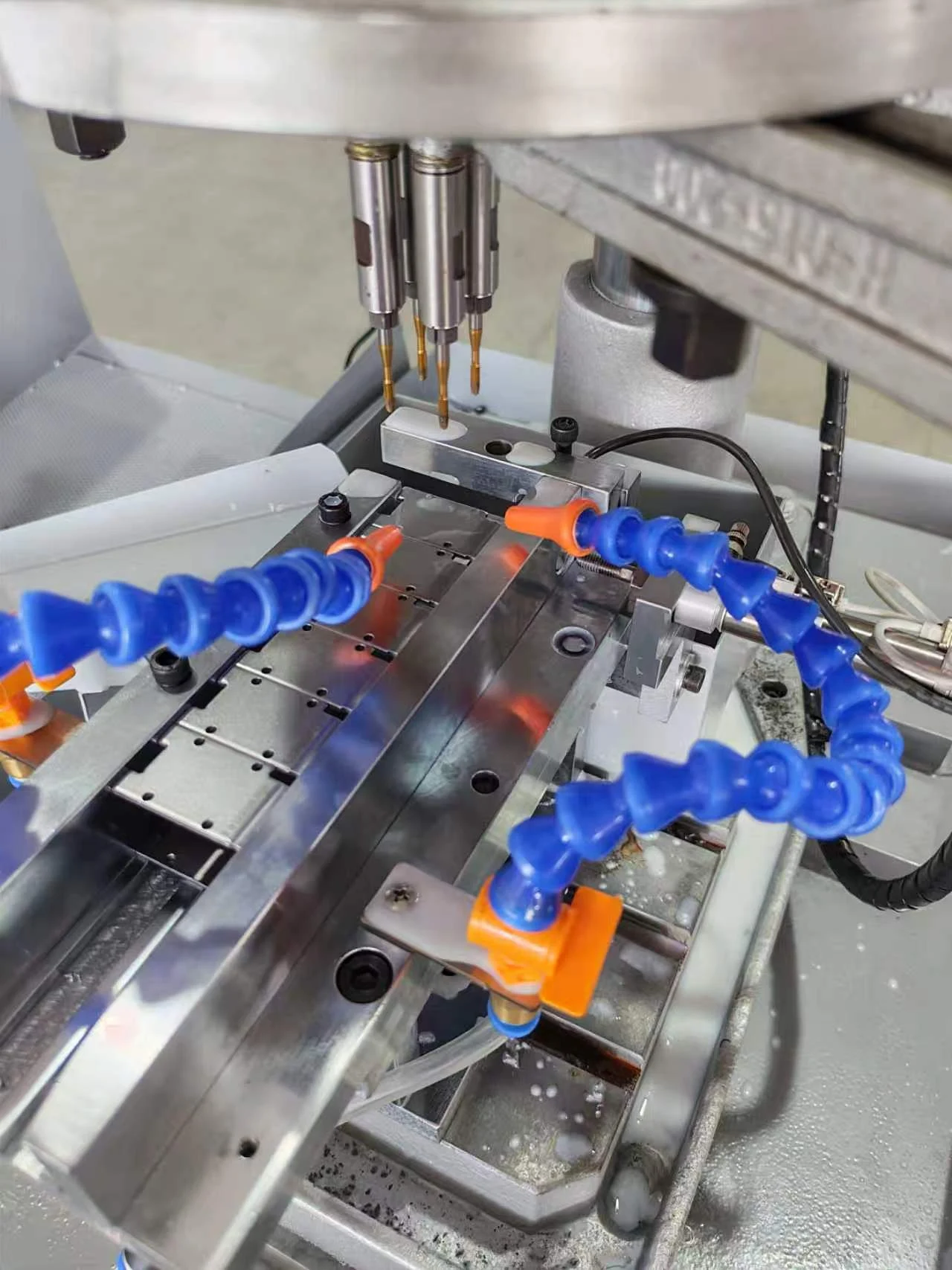 View full-size image
Fixture and tapping area
The part-specific fixture positions the housing under the four-spindle CT5 head.
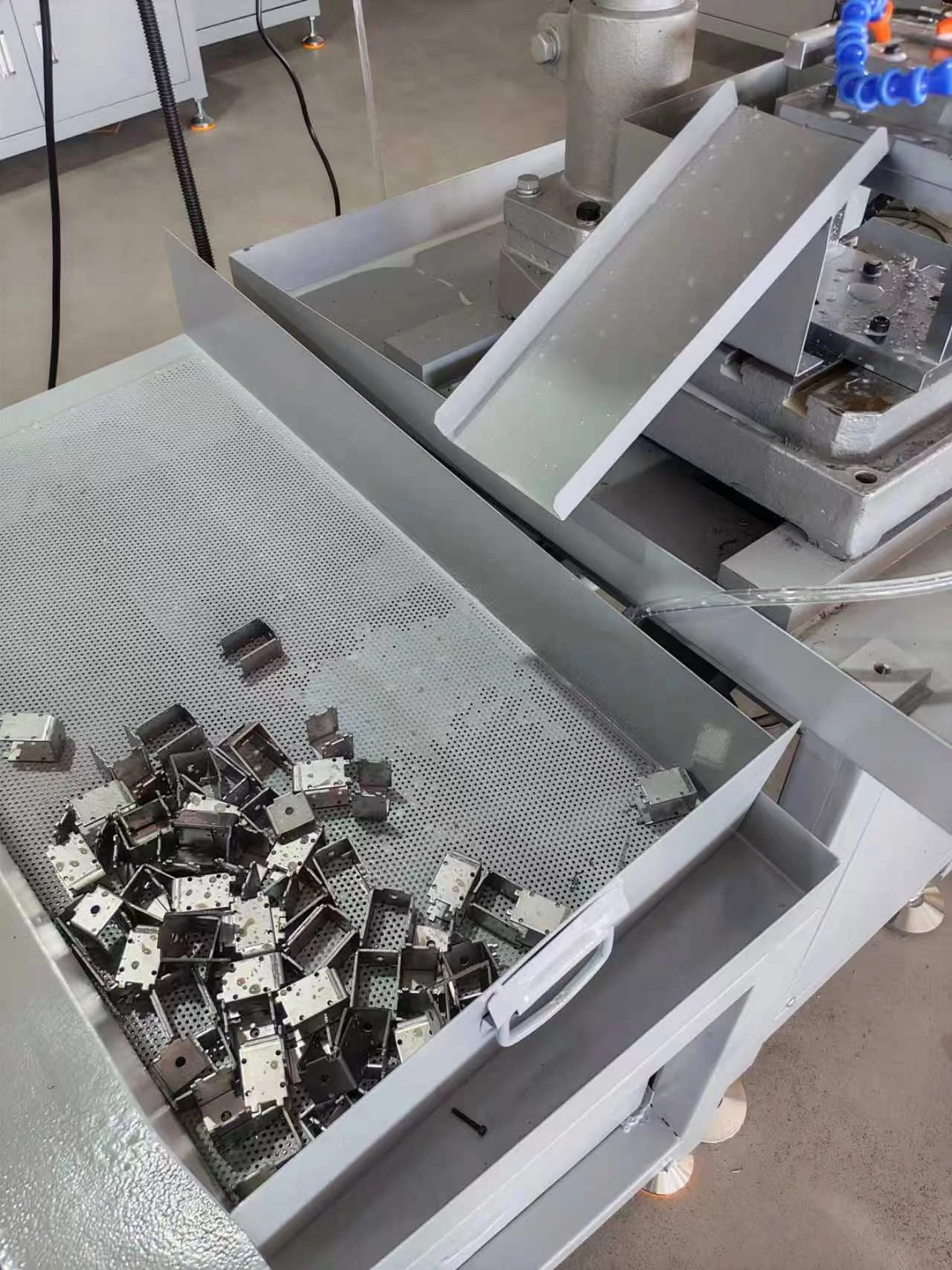 View full-size image
Pneumatic discharge and collection
After tapping, the pneumatic mechanism pushes the finished housing into the collection chute, removing the need to pick it out by hand.
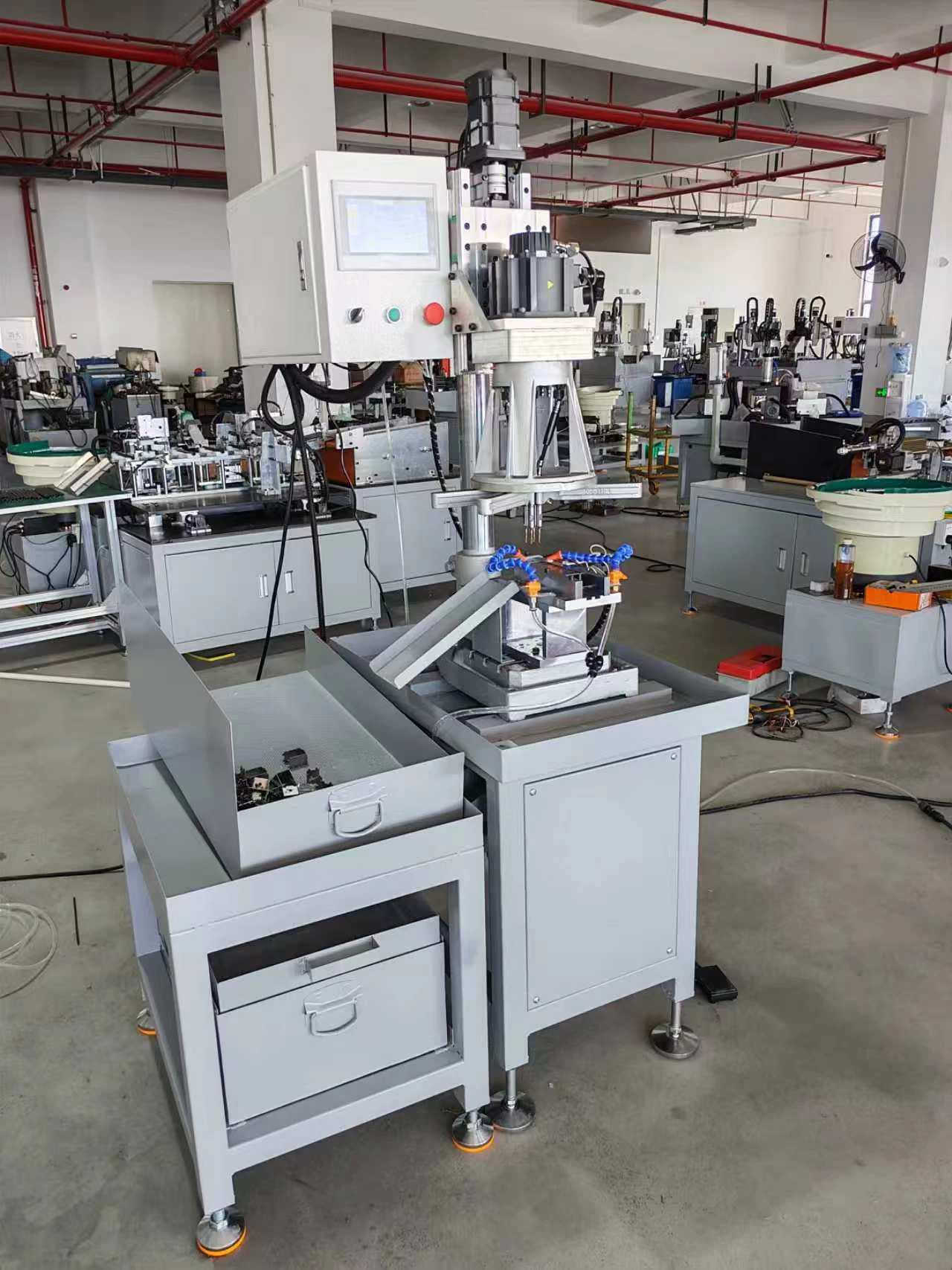 View full-size image
Touchscreen controls
The touchscreen provides the operator interface for the servo and PLC control system.
Operation videos
See the part-handling sequence and tapping detail
Play either view to inspect the delivered machine in operation.
Manual feed and automatic discharge
The operator pushes the housing into position. The machine taps four holes and pneumatically ejects the finished part into the collection chute.
Four-spindle tapping close-up
A closer view of the fixture and simultaneous four-hole tapping operation.
Plan your application
Need several small threads tapped in one operation?
A drawing is useful, but clear part photos and a description are enough to start the conversation.
Discuss Your PartUseful details to share
- Part drawing or clear housing photos
- Material and sheet thickness
- Thread size, hole count and hole spacing
- Target cycle and preferred part-handling method
The selected machine or solution will be included in your inquiry.
Related solutions