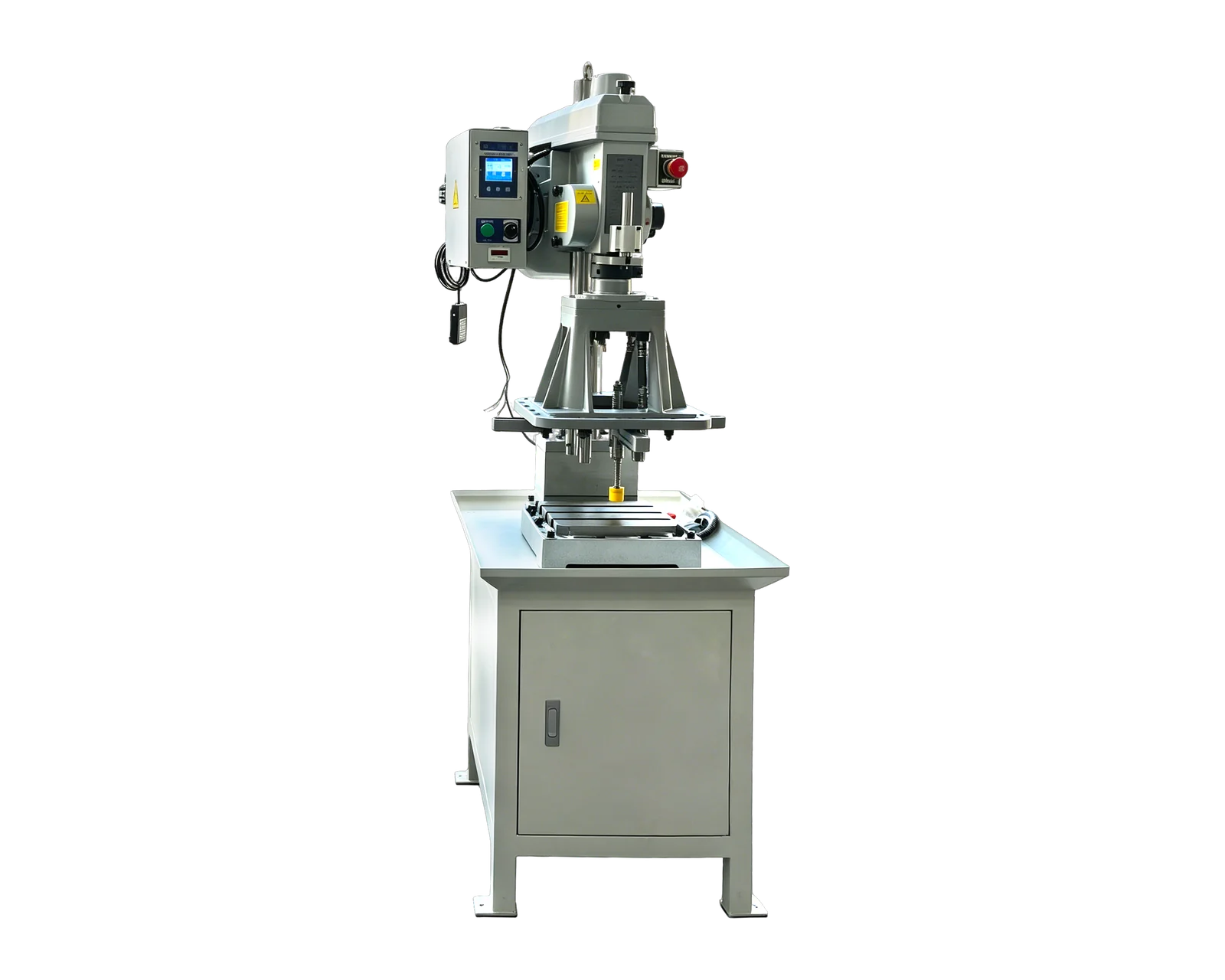
Explore equipment for your inquiry
Dual-Servo Multi-Spindle Drilling & Tapping Machine →Review the published specifications and configuration options against your part drawing before requesting a quote.
Compare the same good-part requirement
Specify the part family, delivery period and accepted output before choosing a shift pattern. Count a complete operating cycle, including the loading and unloading time that actually occupies the machine. If several good parts leave one cycle, document that quantity. The example below assumes one attempted part per cycle. It does not represent a catalog cycle time or a guarantee of unattended production.
This is a scheduling worksheet rather than a recommendation to extend working hours. A second shift requires a feasible staffing and support plan. Confirm the availability of qualified operators, inspection, replenishment and fault response under the site's applicable arrangements. Equipment availability and human coverage are different inputs; neither should be inferred from a machine's nominal operating speed.
Subtract time losses once, using defined categories
For an original hypothetical example, use 20 working days per month and eight scheduled hours per shift. Each shift has 30 minutes of planned time when the machine does not run. The one-shift plan also reserves 20 machine-hours per month for setup and maintenance, plus 10 hours for other interruptions. The two-shift plan reserves 28 and 20 hours respectively. Assume a measured two-minute complete cycle and 98% accepted-part yield.
The planned non-running allowance must match actual operation: if a machine demonstrably continues during a particular break, do not subtract that break as stopped time. Keep setup and maintenance outside the per-shift allowance in this example, and keep the other-interruption bucket separate. Do not subsequently multiply by a general efficiency factor containing the same losses.
Recalculate machine count, then check the practical margin
One-shift productive time is 160 − 10 − 20 − 10 = 120 hours. Good-part capacity is 120 × 60 ÷ 2 × 0.98 = 3,528. Two-shift productive time is 320 − 20 − 28 − 20 = 252 hours, giving 252 × 60 ÷ 2 × 0.98 = 7,408.8 expected good parts. The decimal is a planning expectation, not a fractional deliverable part; actual output is counted in whole accepted pieces.
For demand of 6,500 good parts, round 6,500 ÷ 3,528 upward to two machines under the one-shift plan. Round 6,500 ÷ 7,408.8 upward to one machine under the two-shift plan. Two one-shift machines have combined expected capacity of 7,056 good parts. These results assume that shared people, tools and incoming material do not impose an additional bottleneck.
Add the resources that the capacity arithmetic cannot supply
Prepare a separate coverage table for each option. State who loads, replenishes, changes tools, inspects and resolves faults in each operating period. Two machines running in parallel may compete for one operator or a shared fixture. One machine running two shifts needs coverage across both periods and an agreed handover. Neither layout can be released solely because the monthly arithmetic fits.
Review delivery dates within the month and the mix of variants. Averages can hide a long changeover before a short urgent order. A single machine also concentrates the consequences of an extended outage, while two machines only provide useful alternative capacity when the required tooling, fixtures and process coverage are available. Record the recovery assumptions without presenting either arrangement as inherently redundant.
Translate both schedules into comparable quotation requests
Ask for equipment proposals against the same drawing and accepted output. Separately compare installed outlay, actual staffing costs, recurring costs and site work for each schedule. The capacity model does not determine which proposal has the lower total cost. Use measured cycle and loss data where available; mark estimates and request evidence for the inputs that control the machine count.
Before placing an order, replace the illustrative figures with a representative production plan and a practical allowance agreed by the buyer. State the expected shift schedule in the inquiry so that the supplier can discuss the relevant scope and maintenance requirements. Keep the calculation editable: changes in yield, setup frequency or staffing may alter the answer even when the component drawing stays the same.