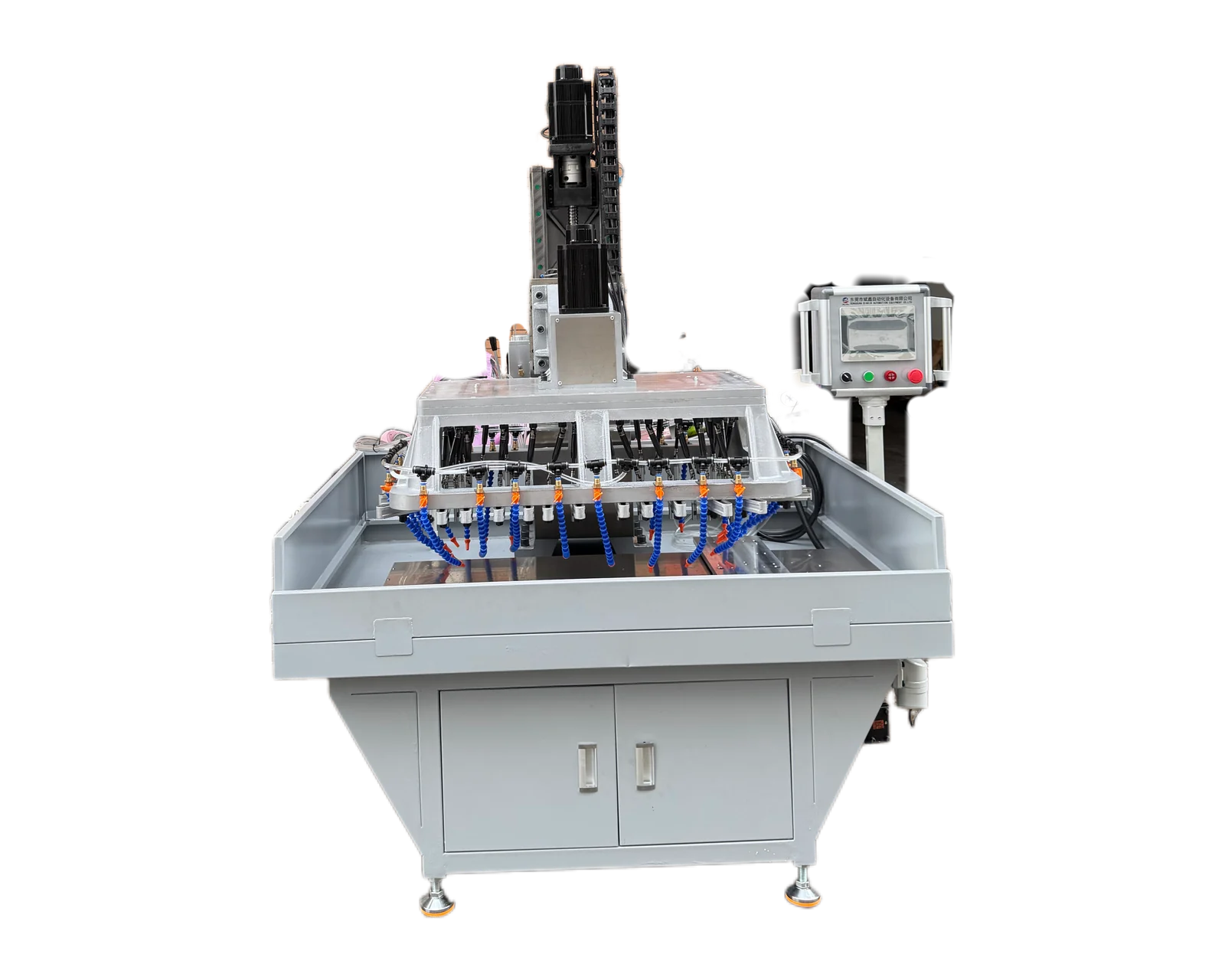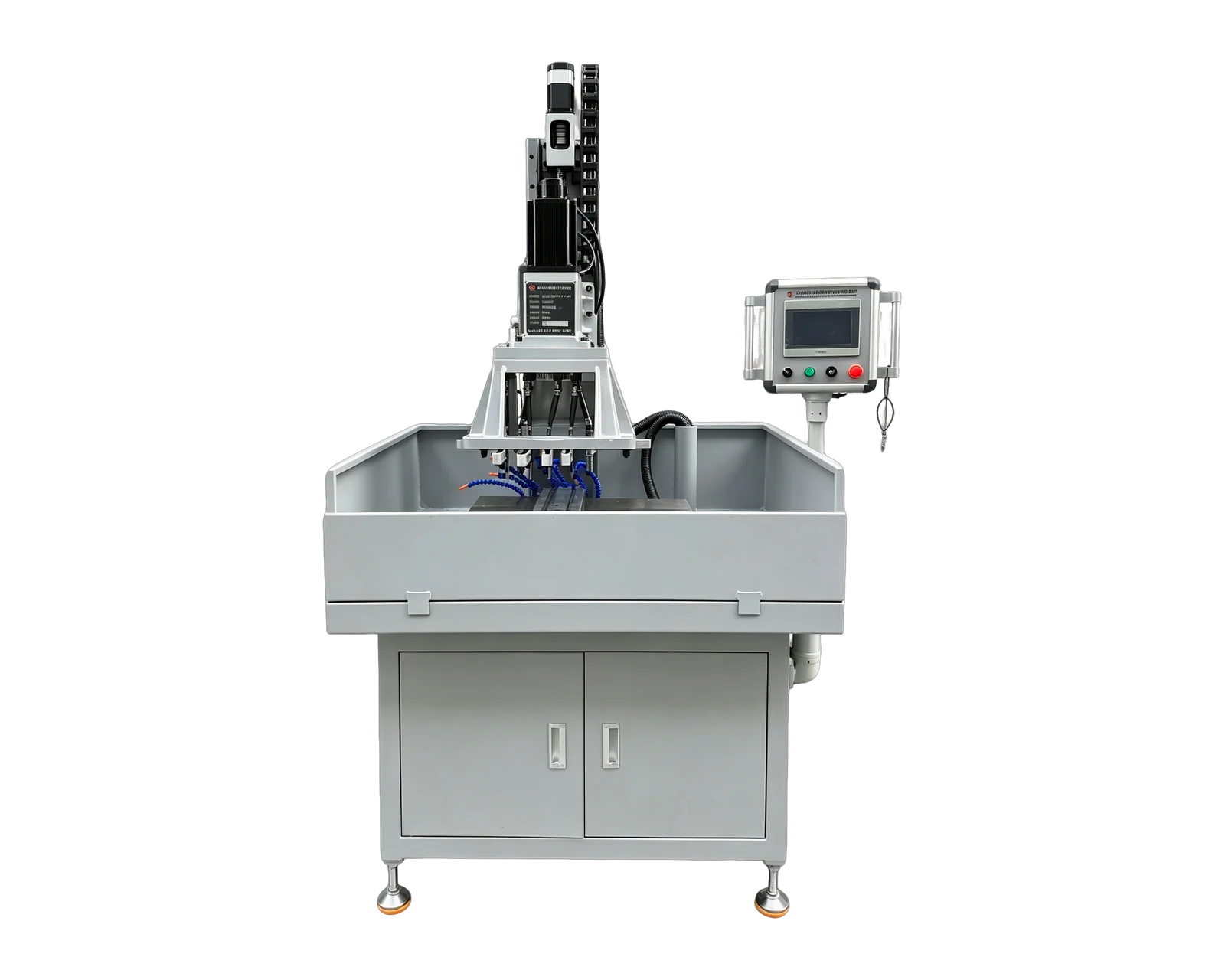
Explore equipment for your inquiry
Dual-Servo Multi-Spindle Drilling & Tapping Machine →Review the published specifications and configuration options against your part drawing before requesting a quote.
Identify the cold plate as it reaches the operation
State whether the workpiece is an unfinished component, a joined assembly or a completed plate undergoing secondary machining. Provide controlled section views of internal passages, closures and relevant interfaces. An exterior model alone may not identify the construction beneath a mounting feature. Mark the revision of both external and internal geometry so the equipment review uses a consistent design.
Boyd's liquid-cooling material describes different fabrication methods and testing as part of its product offering. The useful procurement lesson is to establish the actual construction and verification route for your part. It does not establish a universal machining allowance or show that a BINSING platform has been qualified for a particular cold plate.
Let the design owner define the permitted machining region
For every proposed hole, identify the reference face, drill direction, required hole geometry and required usable thread. Ask the design owner to mark the approved machining boundary relative to nearby passages and joints. Do not calculate a clearance from an exterior photograph or treat nominal thread depth as the complete tool envelope.
The process reviewer should connect that boundary to the proposed tooling and operation sequence. Where the drawing does not resolve the relationship, record an open design question before trial machining. A machine's nominal travel or depth setting cannot substitute for approved feature geometry, and this article provides no minimum wall thickness or pressure design rule.
Use one feature register across design, machining and testing
This original register helps expose missing ownership. It is not a cold-plate qualification protocol. The responsible engineers must define actual limits, methods and sequence, including which checks must be repeated after secondary operations and what constitutes release of the completed plate.
Distinguish a feature trial from a finished-plate qualification
A solid coupon may help investigate a proposed thread operation, but it does not reproduce a finished plate's passages, joints or assembly state. Identify what the sample represents and what it cannot establish. If the trial uses actual plates, retain their revision, manufacturing history and prior-test records alongside the machining results.
In a hypothetical review, mounting threads meet the drawing after machining, but the agreed final leak test has not been performed. The report should state that dimensional results are available and completed-plate verification remains open. Conversely, a recorded leak-test pass does not by itself show that every mounting thread was inspected or meets its dimensional requirement.
Ask for a bounded proposal and a complete handoff
Identify protected contact faces, permitted fixture regions and any cleanliness requirements supplied by the design owner. Include handling, cleaning and inspection responsibilities in the quotation comparison. If leak testing belongs to another workstation or supplier, specify the handoff condition and records without implying that it is included in the drilling machine price.
Send BINSING the feature register, controlled sections, material and incoming-stage information to discuss a possible machining arrangement. Ask which features can be evaluated, which require further information and which operations fall outside the proposal. Suitability requires application review; neither a sample hole nor equipment imagery establishes the cold plate's sealing, electrical or thermal performance.