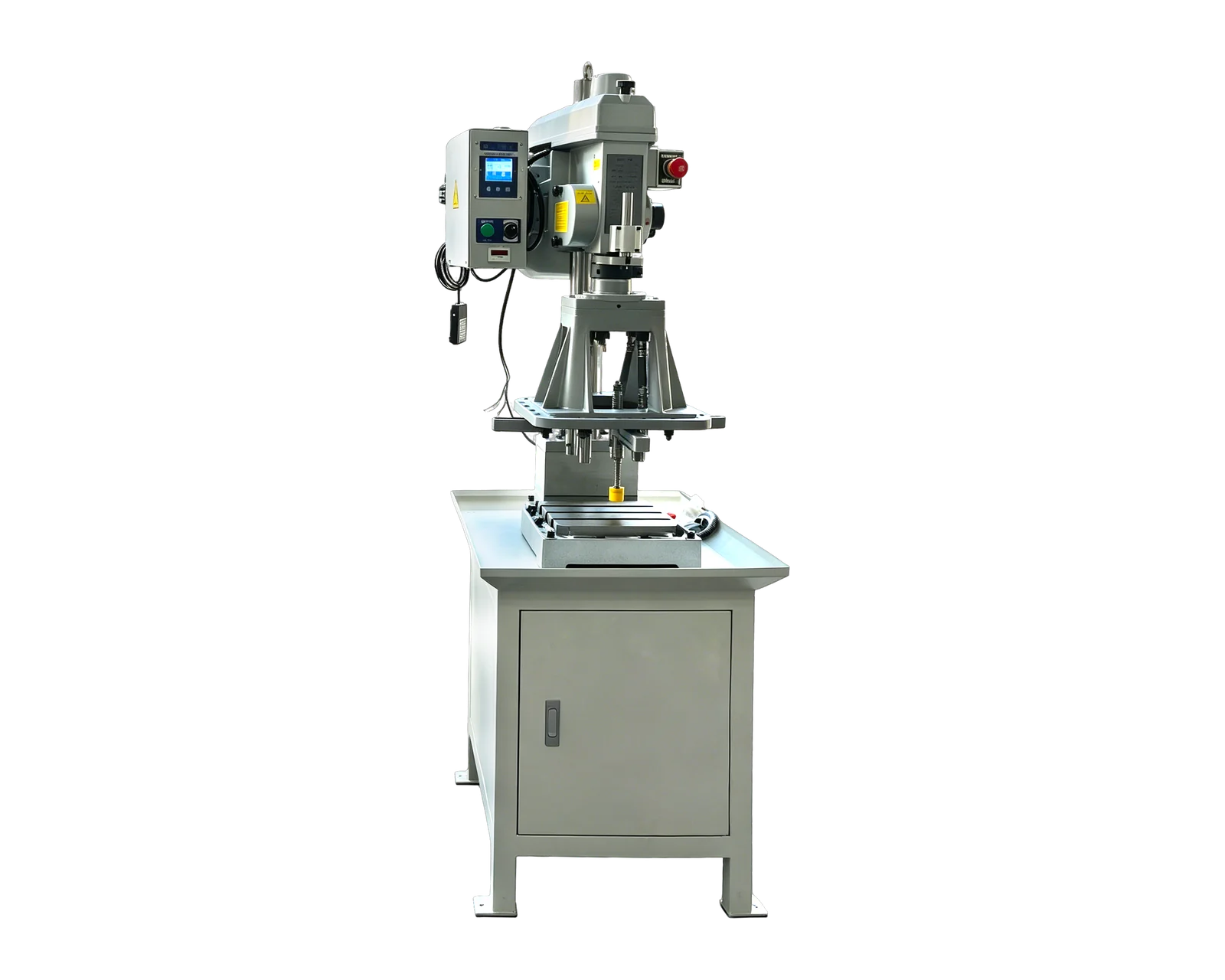
Explore equipment for your inquiry
Dual-Servo Multi-Spindle Drilling & Tapping Machine →Review the published specifications and configuration options against your part drawing before requesting a quote.
Identify the face from which each depth is defined
Begin with the controlled component drawing and mark the relevant section view. Record whether the stated depth starts at the incoming face, a finished face, a counterbore shoulder or another specified reference. These descriptions are not interchangeable. If the face is changed by another process before or after the proposed machine operation, include that process stage in the inquiry.
For a family of parts, repeat the reference identification for each version rather than copying the same note across the list. Two parts can share a thread designation while using different entrance geometry. The supplier needs the requirement for each configuration, and purchasing needs to know which versions the response actually covers.
Give each dimension an explicit meaning
Create a feature register using the drawing's own terminology. The table below is a clarification structure, not a specification for a hole. Leave unresolved entries visibly open and assign them to the drawing owner. Do not calculate an assumed relationship between a drilled endpoint and usable thread depth to fill missing requirements.
Separate an entrance recess from the thread requirement
Consider a hypothetical component with a recessed entrance above a threaded feature. The purchase team describes the requirement as thread depth from the top, while a section view references the lower shoulder. The immediate task is to resolve the origin with the drawing owner. Requesting a deeper setting does not resolve the disagreement and may change the intended component requirement.
Keep the question linked to the exact hole label and revision. A useful clarification response identifies the controlling reference, the required endpoint and any revised document. It should also say whether other holes are affected. This prevents a local explanation from being applied to every threaded feature on a part without review.
Agree the evidence before comparing trial results
Ask the responsible quality team to define how compliance with the specified depth requirement will be assessed. Record the inspection reference, sample identity and reporting convention. A report saying depth passed is difficult to use if it does not identify the origin, feature and criterion. Keep the inspection requirement separate from the equipment supplier's proposed machining arrangement.
If measurements from two teams disagree, first compare their reference definitions and part stages. A reading taken from an incoming surface may not describe the same requirement as one taken from a subsequently finished face. Resolve that difference through the approved documentation rather than averaging results or treating a successful assembly demonstration as a substitute for the stated drawing requirement.
Send a defined requirement for configuration review
The inquiry package should contain the marked drawing, material and incoming condition, feature register and inspection reference. Identify whether drilling and tapping are both requested or whether the machine will receive previously drilled parts. When preparation is outside the quoted scope, describe its required output so the tapping review has a clear starting point.
For a BINSING discussion, email that package with your intended part mix and any unresolved depth questions. Request a response identifying the reviewed features and assumptions. Tool selection and machining details belong in the application review; the buyer's first contribution is a consistent statement of what the component must meet and how the parties will recognize that result.