Explore equipment for your inquiry
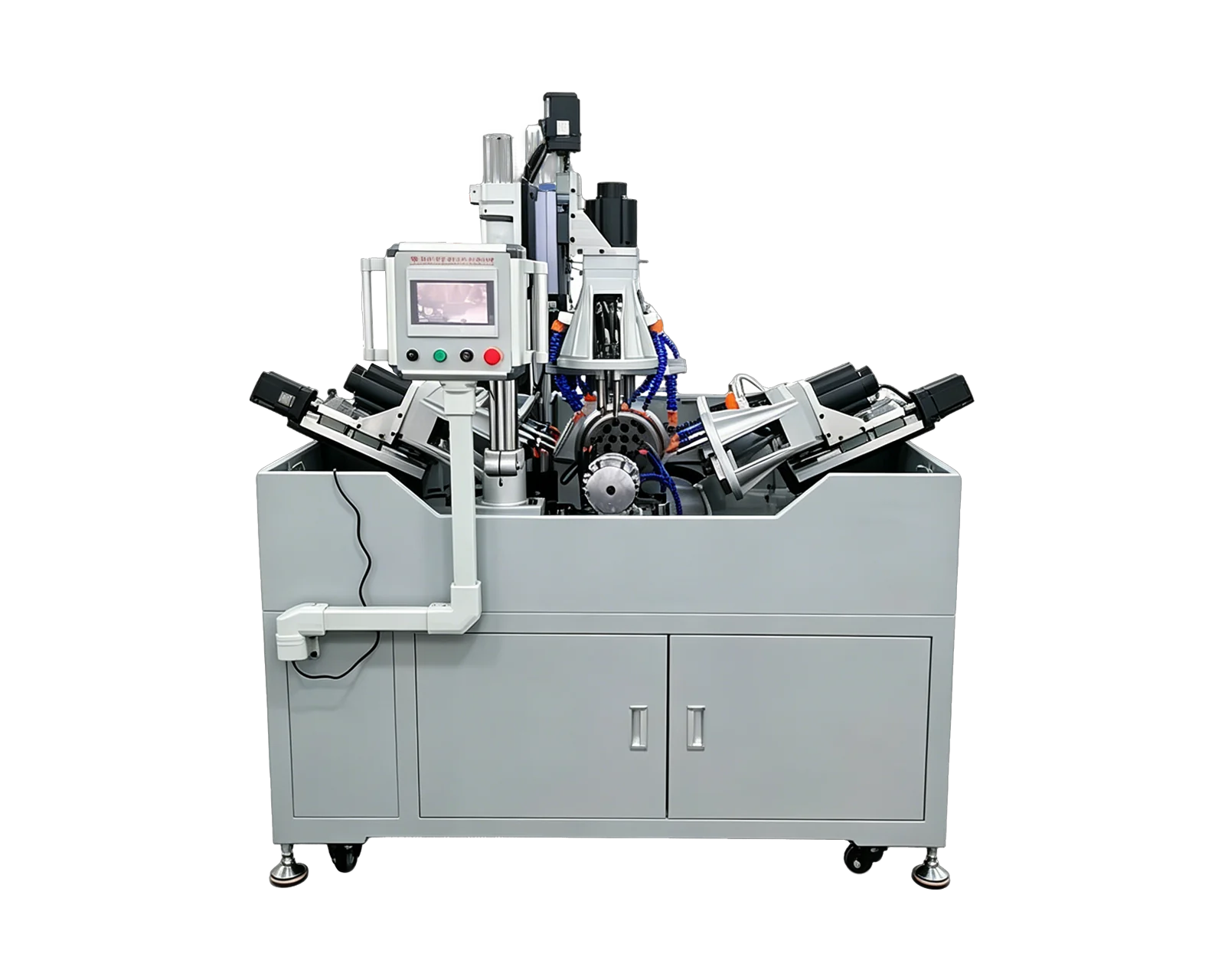
Dual-Servo Multi-Spindle Drilling & Tapping Machine →Review the published specifications and configuration options against your part drawing before requesting a quote.
1. Identify whether the workpiece is a hub or a complete pulley
Start with the item that will be loaded, not only the name of the finished product. Supply the drawing and incoming-stage photographs for a separate hub, an integrated pulley or an assembled component, as applicable. Identify the material specification, revision and existing manufacturing operations. Show the surrounding shape relevant to access even if the requested hole is located only in the hub.
Mark the center bore, keyway and any existing radial features. State which arrive complete and which are produced elsewhere later in the route. An equipment inquiry limited to radial drilling and tapping should not silently include finishing the bore, making the keyway or manufacturing the pulley profile. Each additional operation needs its own definition and explicit review.
2. Define radial features with controlled references
A description such as a screw hole beside the keyway leaves the angular relationship open to interpretation. Use the drawing to define the reference, direction and feature identity. If no keyway is present, identify the reference actually specified by the design rather than inventing a substitute for the supplier.
3. Match the process order to the evidence supplied
Record whether the bore and keyway are available during the proposed operation. A trial that uses an existing keyway as an orientation reference does not directly demonstrate a production route where the keyway is made afterward. Identify this difference before accepting an equipment concept. Ask the supplier to state the assumed locating references in the response and identify any missing incoming requirements.
Also distinguish the machining endpoint from later component preparation. Where the radial feature meets an existing opening, assign the drawing-required edge condition and outgoing cleanliness checks to named responsibilities. Request review of the requirement rather than prescribing a tool or removal method. These boundaries help compare proposals that otherwise use the same phrase radial tapping while including different finishing and checking work.
4. Keep angular variants separate from size variants
Hypothetical purchasing example: two pulley versions share a bore and outside shape, but their released drawings place the radial thread differently relative to the keyway. A buyer initially groups them under one pulley size. A version matrix reveals that the angular requirement differs even though the gross dimensions appear identical. Both versions need explicit coverage in the equipment inquiry.
The buyer supplies labeled samples, the individual drawings and quantities for each version, then asks how the proposed setup distinguishes them. Any proposed identification or verification feature must be described and agreed; it should not be assumed to exist in a catalog machine. This is a scope illustration, not a recommendation for a particular screw location and not evidence of a BINSING pulley application.
5. Ask for machining evidence without expanding the claim
Define the trial evidence around the requested radial hole, thread and reference relationships. Record which incoming version was tested and the checks performed on it. Where the buyer requires a later assembly check, identify its purpose, mating item and responsible party separately. Keep any balancing or transmission-performance requirements in the appropriate product process rather than treating drilling and tapping evidence as their substitute.
Email BINSING the controlled drawings, incoming-stage views, radial-feature list and production mix. Request an assessment of the relevant standard platform or custom arrangement with a clear list of included operations. Ask for unresolved access, workholding and inspection questions to be listed before finalizing coverage. The useful output is a bounded proposal for producing specified features on identified parts, with downstream responsibilities visible to both teams.