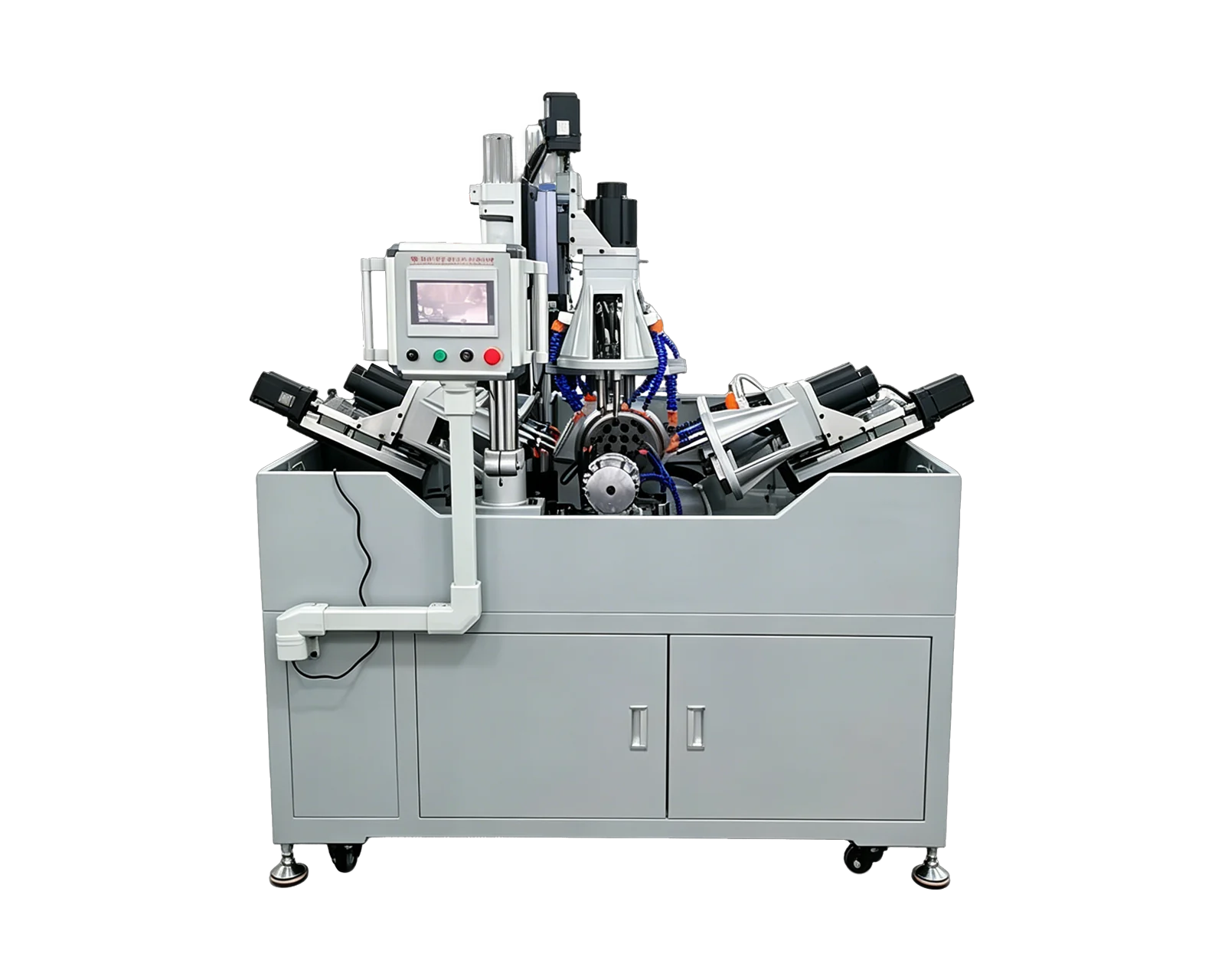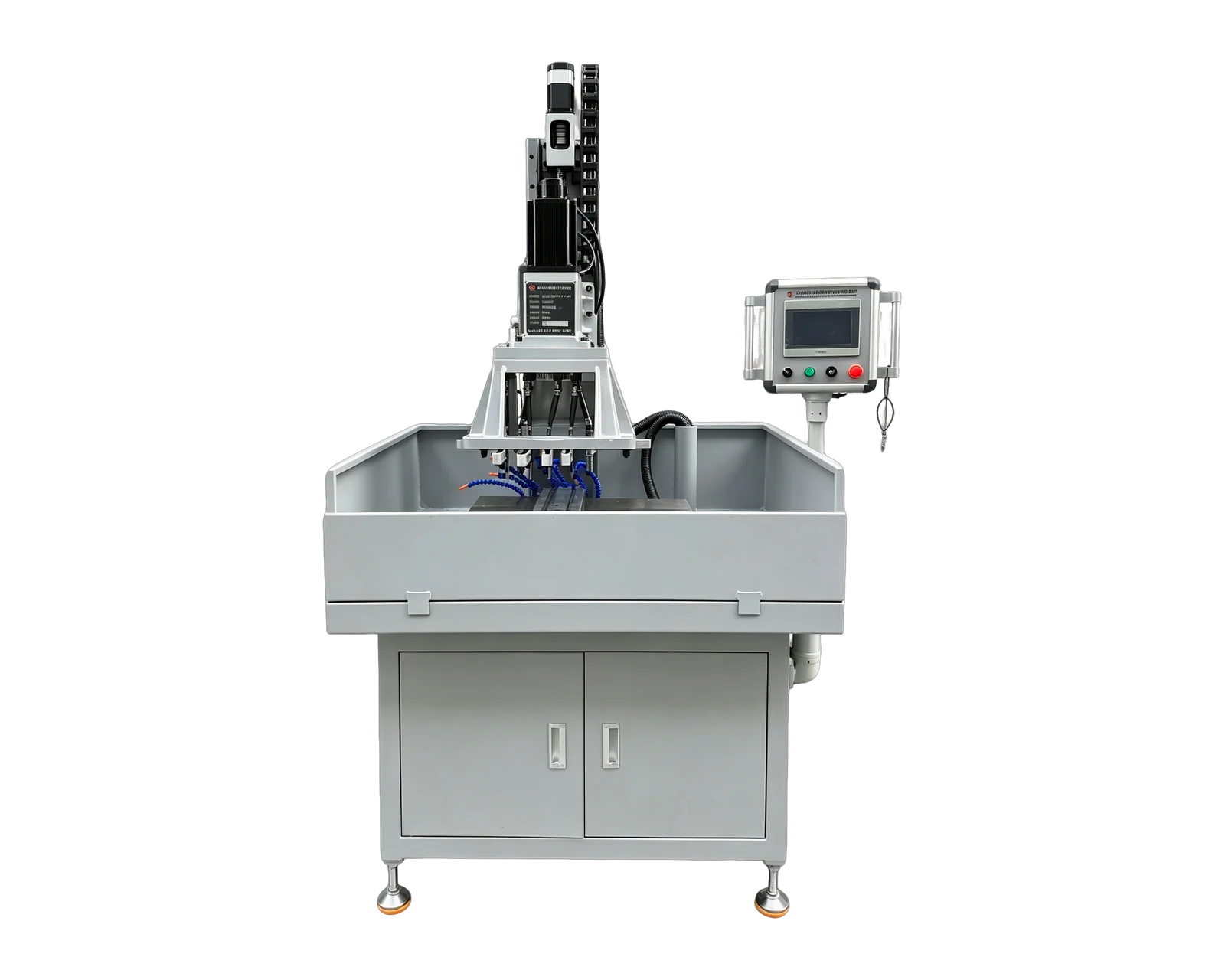
Explore equipment for your inquiry
Dual-Servo Multi-Spindle Drilling & Tapping Machine →Review the published specifications and configuration options against your part drawing before requesting a quote.
Draw a boundary around the operations being considered
Mark each operation on the current route: rough preparation, reference surfaces, holes, threads, finishing and inspection. Identify the exact features proposed for transfer. A part that still requires milling does not necessarily need every hole made on the CNC, but moving a hole is a process change that must be reviewed against its relationships to the other features. Include drawing revision and incoming condition in the proposal.
This review assumes that the CNC remains in production. Its question is whether a limited operation transfer improves the route while retaining the required feature relationships. Use the dedicated-machine-versus-CNC guide for a complete route-selection decision. A repeated group of holes or threads is a candidate for review, not proof that a particular platform supports the material, geometry or inspection requirement.
Make the handoff visible on one sheet
Use the following original example as a handoff worksheet, not a proposed machining order for your component. Name a process owner for each row and confirm which locating references exist at that point. The separate shared-fixture versus separate-setups guide addresses datum transfer in detail; this map records who supplies the incoming condition and who accepts the outgoing work.
Identify parts that leave the dedicated station for another CNC operation, as well as parts that finish there. Record the part number, drawing revision and completed-operation status at each handoff. Define how interrupted or uncertain parts are separated and reviewed, so a downstream operator does not mistake an incomplete part for ready work.
Calculate released hours separately from new capacity
In a hypothetical monthly plan, 1,200 parts each occupy the CNC for eight minutes. Suppose an observed revised route reduces CNC occupancy to five minutes per part. The gross release is 1,200 × (8 − 5) ÷ 60 = 60 CNC hours. If additional CNC fixture preparation and verification for the split route consume six hours that month, the net release is 54 hours. These invented values illustrate accounting boundaries, not BINSING cycle times.
The secondary station still has to complete its share. If its illustrated requirement is four minutes per part plus eight hours of monthly setup and checks, it needs 88 hours. That is a separate load, not a subtraction from the 54 released CNC hours. Include transfer work and operator availability in the production plan. A dedicated station with available machine time may still wait for a shared person or incomplete incoming parts.
Lean Enterprise Institute describes process-capacity sheets and combination tables that distinguish machine, manual and walking time. Apply that distinction when measuring the current and revised routes. The calculations here are original examples. Do not convert the released 54 hours into sales revenue or cash savings without a credible job schedule and a separate financial assessment.
Prove the transferred route before scaling the plan
Ask for sample parts representing the actual state at transfer, including the reference surfaces created upstream. Inspect the transferred features and the completed component against the original drawing requirements. Assign any changes to CNC programs, station fixtures, intermediate identification and the inspection plan explicitly. Obtain agreement from the owners of the retained CNC work as well as the proposed station.
Compare the original and revised routes over the same planning period and job mix. Record waiting between processes, batch transfer, shared operators, setup and required checks. State whether the CNC and secondary station can work concurrently or must wait for the same person, fixture or batch. Do not add isolated machine times and call the result the complete cycle when that sequence has not been established.
List the jobs intended to use the released CNC hours and check that their tooling, material and staffing are available in that period. A low-volume variant may reasonably remain on the original route. Show those exceptions and the fallback route if the secondary station is unavailable. The review should establish what moves, what stays and how accepted parts reach the next operation before any capacity benefit is claimed.