
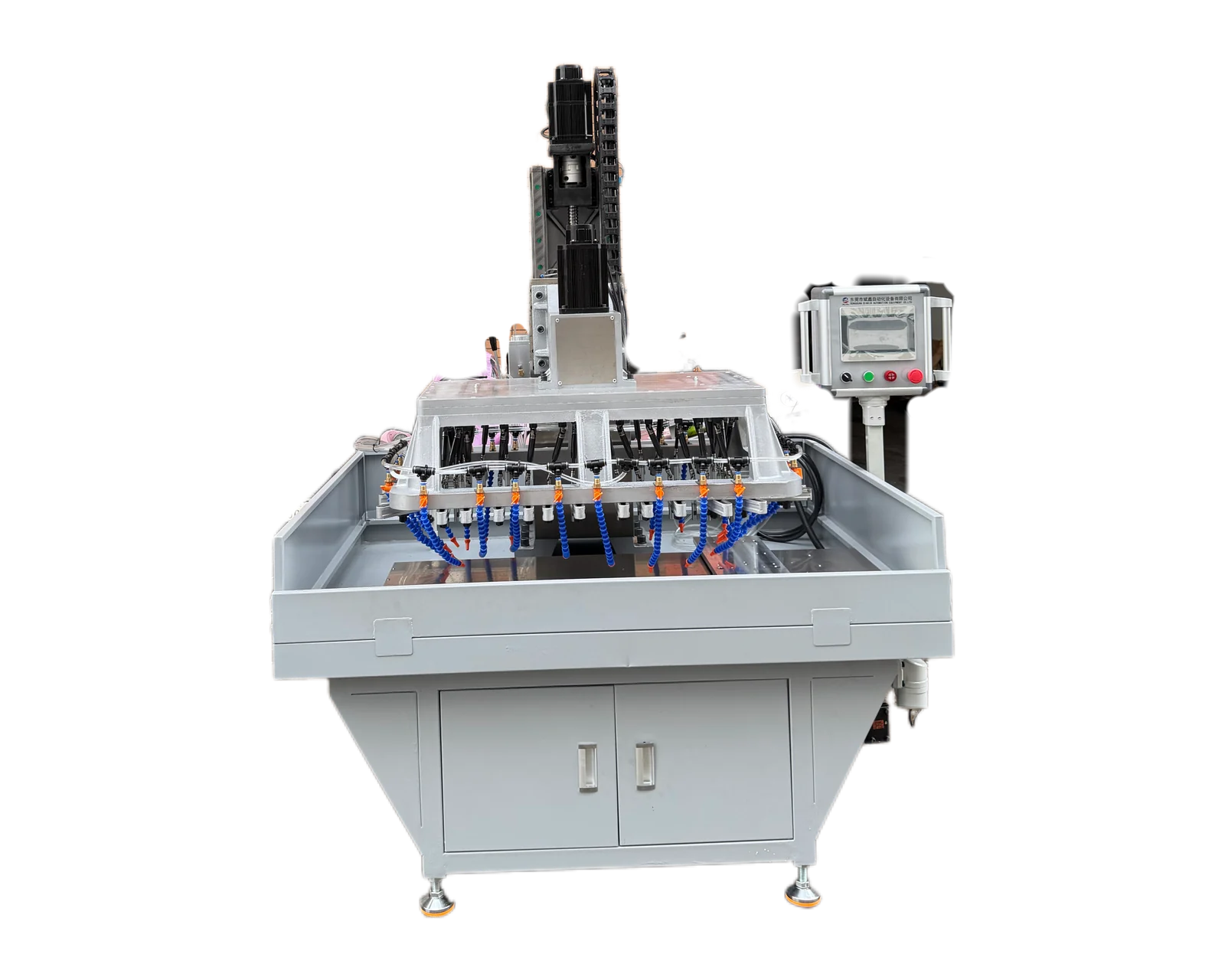
Explore equipment for your inquiry
Servo Traverse Multi-Spindle Drilling & Tapping Machine →Review the published specifications and configuration options against your part drawing before requesting a quote.
Define the family as an explicit part list
A machine inquiry describing a family of brackets leaves the coverage boundary uncertain. Begin with part numbers and drawing revisions, then identify the operations requested on each. Include expected production parts and identify future concepts separately. A proposal covering released drawings should not acquire unlimited future variant coverage through a broad product-family name.
List the differences that could change the machine arrangement. Useful columns include the actual locating faces, approach direction, thread designations, hole layout, material condition and protected surfaces. The objective is not to reproduce every drawing dimension in a spreadsheet. It is to show where a variant changes a decision about holding, reaching, machining or checking the part.
The largest component may not be the hardest one
Overall size endpoints are useful, but they do not represent every constraint. In a hypothetical family, the shortest component might have the least useful locating surface, while a middle-sized component places a thread close to an obstruction. The largest part could be straightforward in both respects. Selecting only the smallest and largest parts would leave the access issue unexamined.
Ask the supplier which variants challenge each proposed design decision and why. Several parts may be needed to represent different constraints. Mark combined conditions too: a feature that is simple on one body can become difficult when paired with another variant's wall geometry or incoming condition. Do not assume that separately reviewed differences are automatically covered in every combination.
Build evidence into the coverage matrix
This illustrative matrix organizes review work without claiming any particular platform can process the example parts. Replace the labels with controlled part references. Keep configuration identity and evidence status visible so a successful trial on one arrangement does not imply approval of a different fixture or machining layout.
Distinguish supported, provisional and excluded variants
Give each listed part a coverage status supported by a reference: reviewed proposal, agreed trial evidence, unresolved question or exclusion. If a result is extended from one representative part to another, ask for the technical basis and any conditions attached. This is more informative than marking the entire family approved after a single demonstration.
Identify fixtures, heads or other configuration items required for each row. Shared equipment does not mean identical setups, and separate configuration items should remain visible in the quotation. This matrix defines which parts are included; the detailed procedure for changing between them can be agreed separately. Avoid mixing capability coverage with a promise about changeover time.
Use the matrix at inquiry, review and final scope agreement
Start with your complete part list, even if only some drawings are ready. Mark missing information and ask which representative parts should be reviewed first. After technical discussion, update the matrix with the proposed configuration references and outstanding evidence. The review sequence can prioritize uncertainties while preserving visibility of variants that have not yet been assessed.
Before ordering, reconcile the matrix with the quoted inclusions and acceptance plan. Later variants should receive their own review rather than inheriting approval from a similar name. For a BINSING discussion, email the family list and highlight the differences your production team already knows cause difficulty. Those details help establish an equipment scope that can be evaluated part by part.
