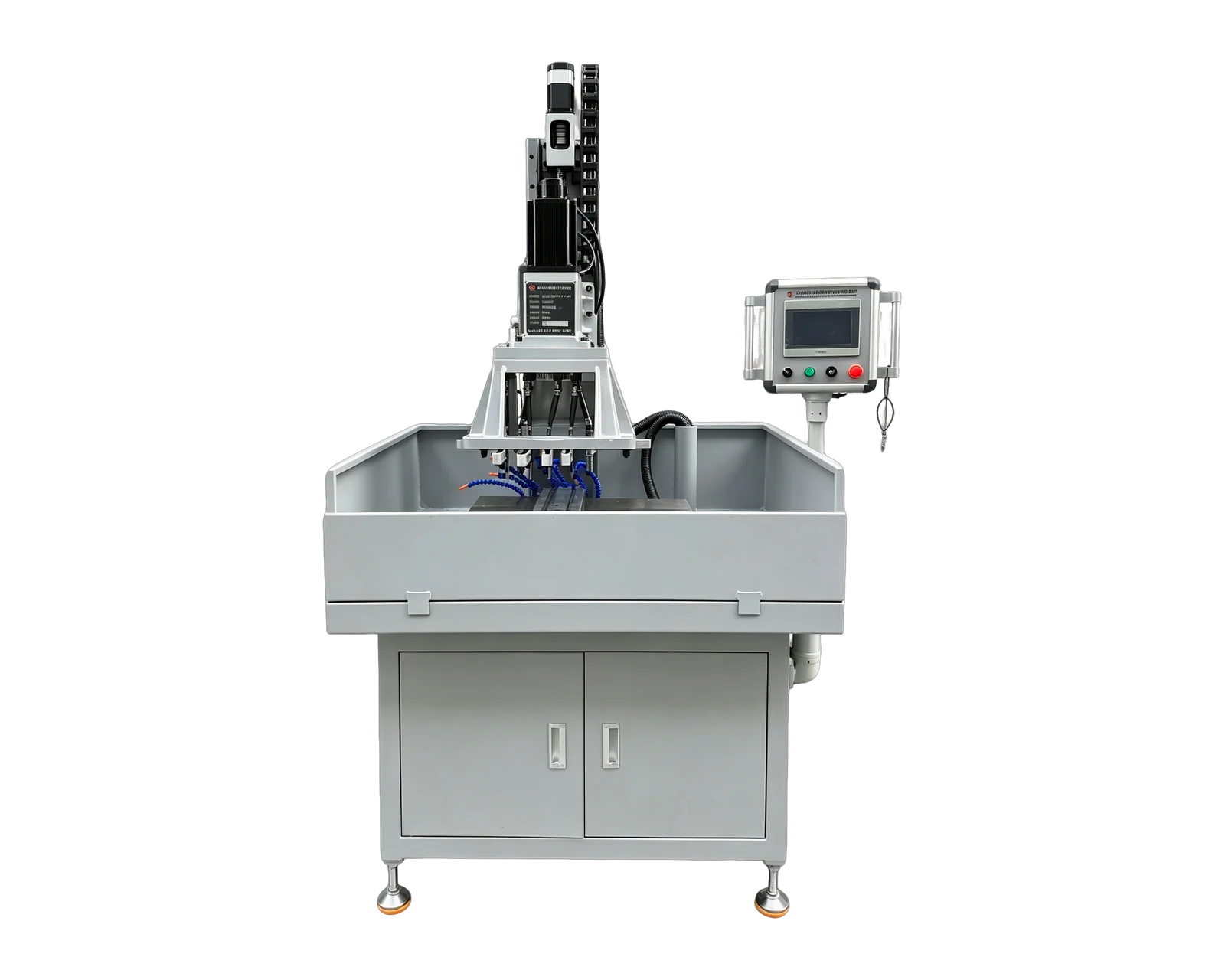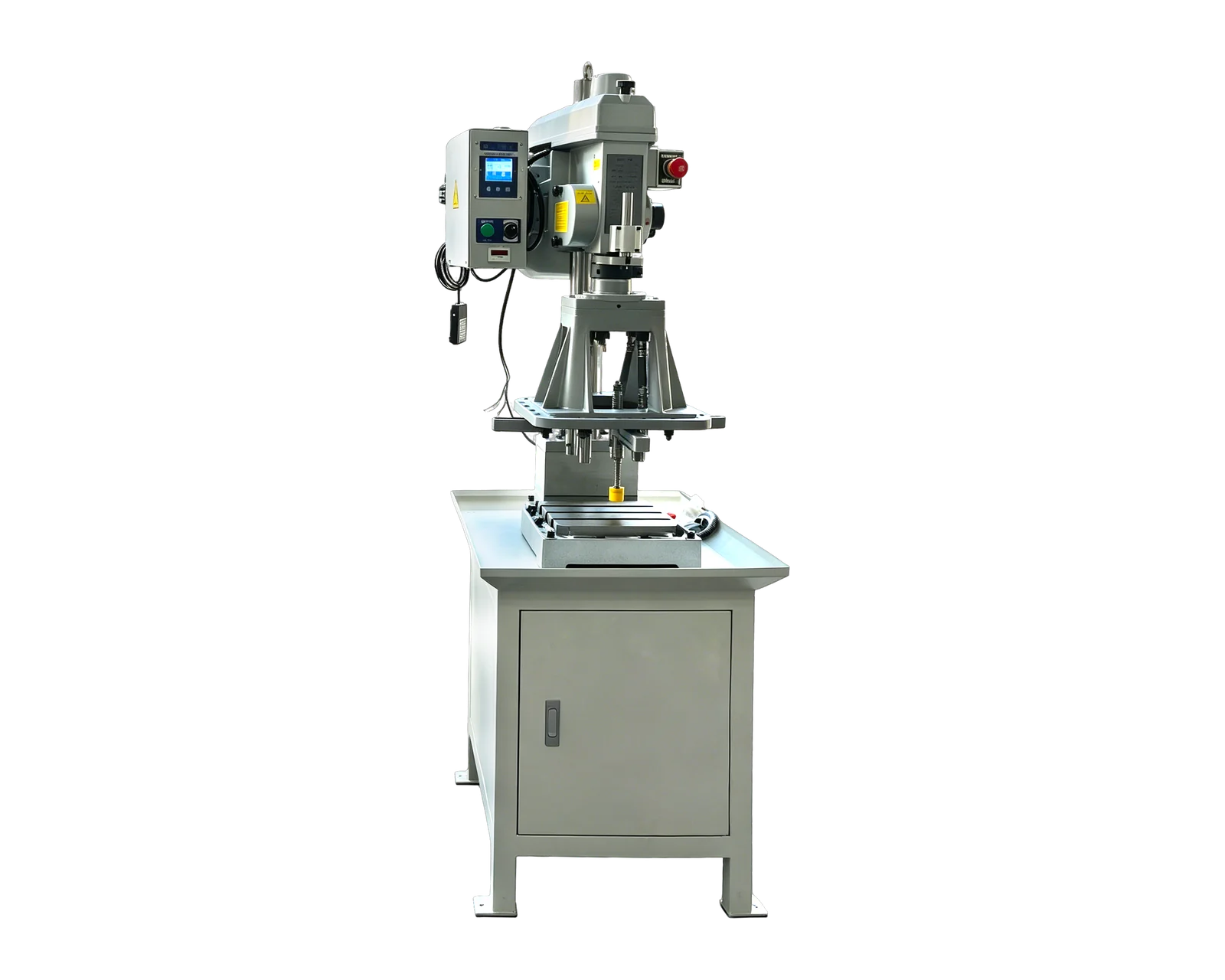
Explore equipment for your inquiry
4508 Gear-Driven Automatic Tapping Machine →Review the published specifications and configuration options against your part drawing before requesting a quote.
Use the equipment view to identify setup interfaces
The linked published video is associated with the 4508 gear-tapping family. A reviewed source frame shows the vertical head above a dedicated workholding arrangement, the operator control area and the machine stand. These visible interfaces provide a practical starting point for discussing access and fixture exchange. They do not document a change from one production part to another.
The BX-4508V catalog describes a gear-driven tapping platform with pitch gearing, tooling and workholding selected for the application. Treat that information as a configuration discussion. Ask the supplier to identify the offered build and the changes required by your parts; do not assume that a family label means the reference equipment has the exact spindle arrangement or setup features being quoted.
Name the two parts and the difference between them
Use a part-pair sheet rather than asking whether the machine changes over quickly. Put the current and next drawing revisions side by side. Identify changes in thread size, pitch, depth, hole positions, incoming prepared holes and locating faces. Keep material condition visible even if the outside dimensions are similar. Each difference should receive a supplier response describing the configuration review it requires.
For a hypothetical pair of brackets, the outside profile might stay constant while one thread specification changes. That does not establish whether the same tooling or feed arrangement applies. Conversely, a changed outside profile might require a new locator even if the threads remain identical. The review should explain the actual changed interfaces instead of grouping every task under a single setup-time allowance.
Request a recorded changeover with defined endpoints
This original request sheet uses the last accepted part of the outgoing setup and the first accepted part of the incoming setup as commercial review endpoints. Agree the exact definition with the supplier, including what is prepared away from the machine. Qualified personnel should carry out setup work under the machine's approved procedures; the sheet is an evidence request, not a maintenance instruction.
Separate machine downtime from preparation and approval
A recorded fixture exchange is only one part of a changeover. List tool preparation, locating verification, trial pieces and inspection release as separate activities, with the people and resources they require. State which activities overlap and which hold the machine. This avoids comparing a supplier's mechanical exchange interval with a buyer's complete production interruption as though they were the same measure.
If the proposal includes spare prepared tooling or a second fixture, show that investment beside the time assumption. Ask what happens when a required item is unavailable or the first piece needs adjustment. The quotation should explain the normal setup route and the response to an exception, without treating an uninterrupted demonstration as a guarantee for every future changeover.
Choose a representative transition for the trial
For a family of parts, choose the proposed transition that exposes the important setup differences. Explain why it was selected and which other transitions it represents. Do not describe every family member as covered merely because two samples were run. Keep an unresolved-transition list for changes in thread specification, hole layout, workholding or material that have not been evaluated.
Send BINSING both drawings, production lot sizes, expected change frequency and the first-piece acceptance requirements. Request a proposed setup matrix and a recorded transition if needed for the buying decision. Use the published video as a shared reference for the equipment arrangement, then review the actual configuration and supporting evidence offered for your part pair.