
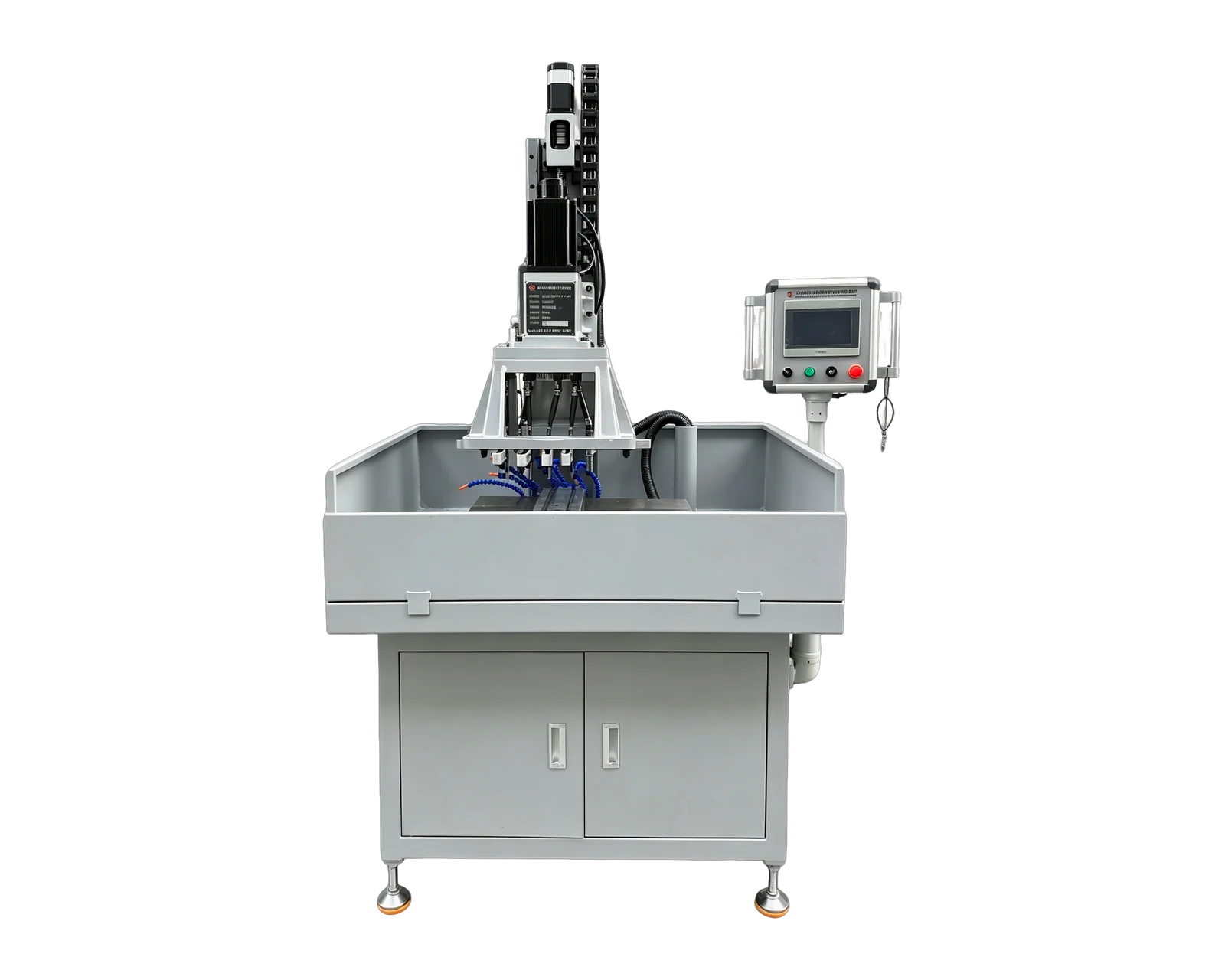
Explore equipment for your inquiry
Multi-Spindle Drilling & Tapping Heads →Compare head arrangements and prepare the host-machine and hole-pattern information for a configuration review.
What the head changes, and what it leaves to the host
A multi-spindle head distributes the drive to more than one tool. It does not by itself replace the host's feed mechanism, table, workholding or complete control arrangement. AutoDrill's official head catalog distinguishes spindle spacing, tool interfaces and drill-press adapters. That is useful evidence that compatibility involves a specific head and host combination, rather than a universal accessory selected only by hole count. The source link below describes AutoDrill products, not BINSING retrofit availability.
Start the comparison with one drawing revision, one incoming part condition and the same required finished holes. Photograph the existing machine nameplate, spindle connection, head mounting area and table. Include its manual and any modifications. A supplier cannot reliably approve an installation from a front-view photograph or motor rating alone. If the machine's condition is unknown, identify who will assess it before treating reuse as a saving.
Use an interface matrix before requesting a retrofit price
The matrix below is an inquiry worksheet, not an instruction to install an attachment. Ask the responsible supplier or integrator to replace each open item with a drawing, specification or inspection result. The complete-machine proposal should answer the same part-level requirements, even though it packages the interfaces differently.
Compare the installed scope, including lost availability
Create two columns for expenditure and a separate column for schedule impact. The retrofit column can include the head, adapters, integration, fixture changes and validation. The complete-machine column can include the machine, fixture, installation and validation. Enter only confirmed scope; a blank field means unresolved, not free. Keep buyer labor and external supplier charges identifiable so the same integration activity is not counted twice.
If the host currently makes another product, record what happens to that work during conversion and afterward. A technically compatible retrofit may still remove useful capacity from another route. Conversely, a dedicated host already standing idle may change the comparison. Neither circumstance proves which option wins: it defines a cost or capacity assumption that the buyer should explicitly review.
A decision example with a clear stopping point
Imagine a buyer with a repeated two-hole bracket and an existing drill. The head supplier accepts the hole pattern but requests spindle-interface dimensions. The buyer has not supplied those dimensions, and no one has accepted responsibility for the controls and workholding changes. The correct status is an incomplete retrofit assessment. It is too early to call the retrofit cheaper or technically suitable.
In this hypothetical example, obtain the missing interface review and a written integration scope, then compare a representative trial and total installation cost with the complete-machine offer. If the host cannot satisfy a necessary condition, stop the retrofit comparison at that specific constraint. Do not compensate for a failed compatibility check by assuming a slower operating rate will make the installation acceptable.