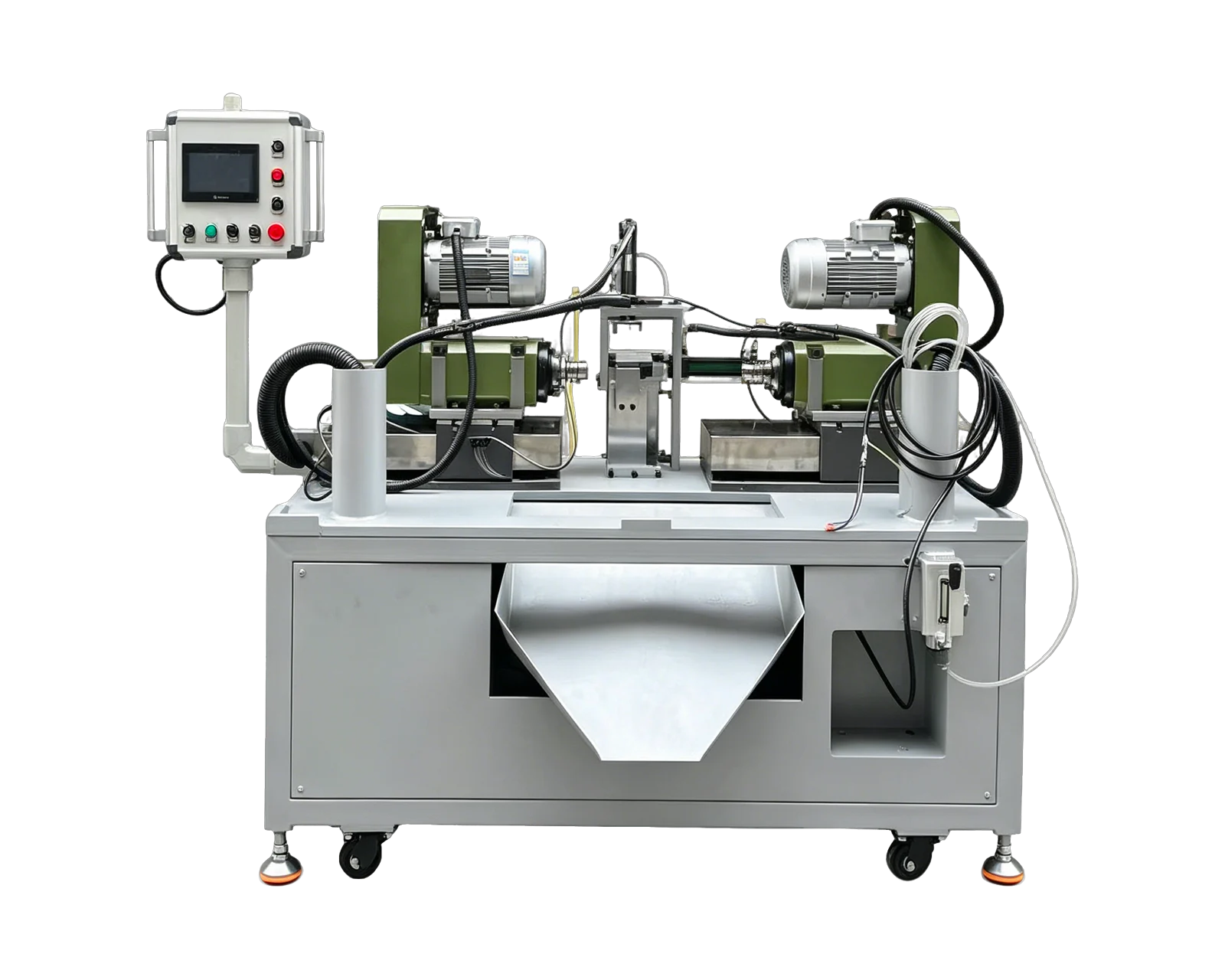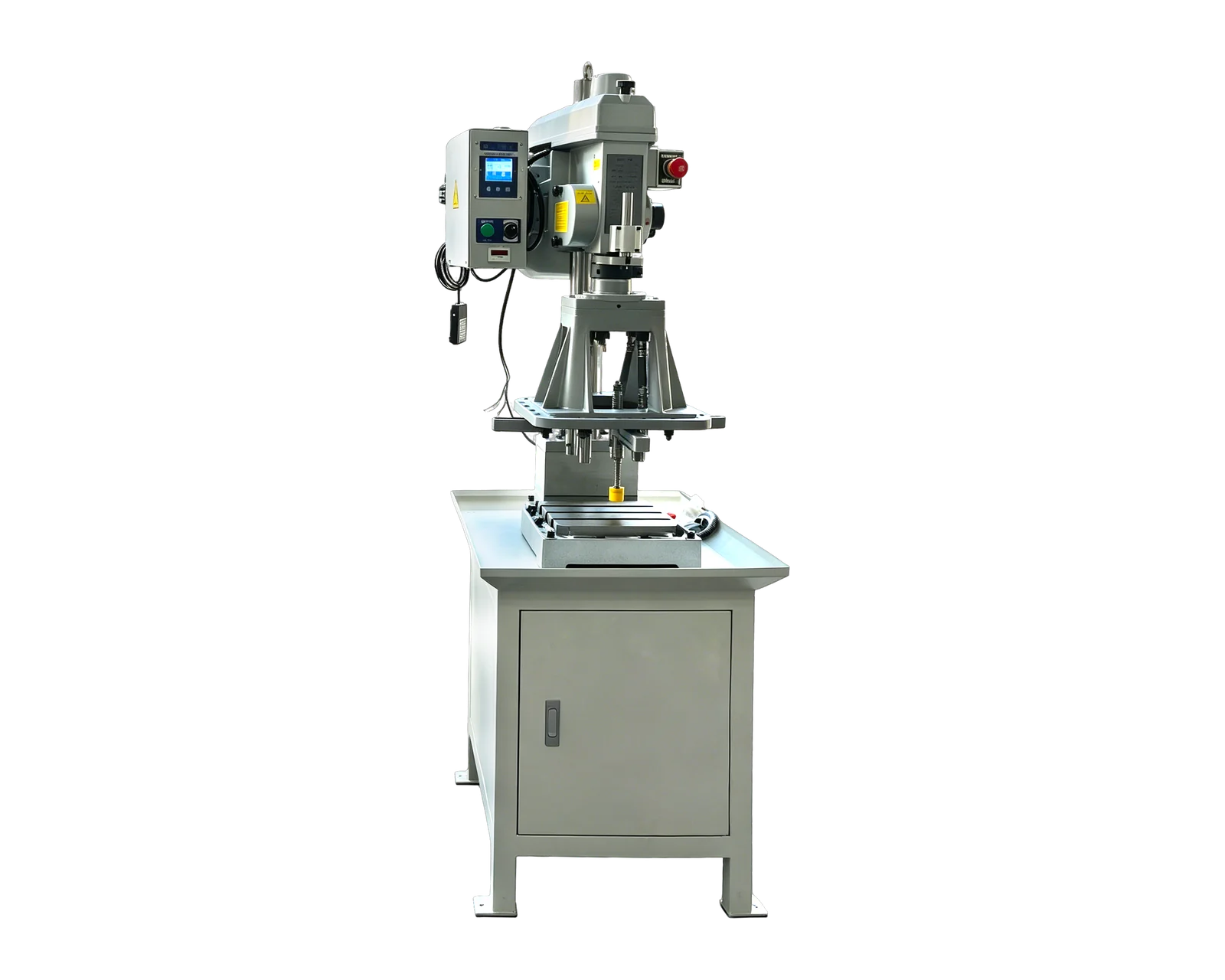
Explore equipment for your inquiry
4508 Gear-Driven Automatic Tapping Machine →Review the published specifications and configuration options against your part drawing before requesting a quote.
Define the two arrangements precisely
Tapping machine is sometimes used as a broad name that includes tapping arms. Here, dedicated station means a machine with an application-defined fixture and operating sequence; arm means an articulated tool-support arrangement used within its specified reach. ROSCAMAT's manufacturer catalog identifies electric and pneumatic articulated tapping arms and workstation accessories. Its product ranges illustrate why the exact model, orientation and workstation must be identified before comparison.
The BINSING BX-4508V catalog describes a gear-driven tapping platform with tooling and workholding selected for the part. That does not establish suitability for every material or thread in a nominal size range. Give both suppliers the same thread designation, depth, material and incoming hole condition. If drilling is also needed, define where it happens rather than treating a tapping-only comparison as a complete manufacturing route.
Follow the part and tool through the workstation
Sketch the incoming container, machining position, inspection location and outgoing container. Mark what the operator moves and how often. A large part that stays on a supported work surface raises different questions from small components repeatedly placed into a fixture. The table describes questions to test, not universal performance claims about either category.
Request a demonstration that includes the work between holes
Use representative incoming parts and document the inspection method. Observe a complete sequence from an incoming piece to an outgoing piece, including locating, repositioning and checks. Record any preparation performed before filming. A close-up of one successful thread can show an operation, but it cannot establish sustained throughput for a production route.
For repeated small parts, ask how the fixture supports consistent presentation and how finished and unfinished pieces remain distinguishable. For a large workpiece with dispersed holes, ask whether all locations and orientations are accessible without an unplanned move. If the comparison includes multiple product variants, demonstrate the transition as well as steady running. Record the actual operator tasks instead of assuming they disappear when spindle motion is powered.
Use your product mix to interpret the result
Consider two hypothetical jobs. One has many accessible threads on a large component made occasionally; the other has a stable small part made repeatedly. The first invites investigation of moving the tool around the work. The second invites investigation of a repeatable fixture and station sequence. These are starting questions, not product recommendations: access, tool selection and trial evidence may change either conclusion.
Reject a comparison that credits one option with inspection and handling time but ignores those activities for the other. Separate the investment, occupied space, operator involvement and verified output. A buyer may keep an arm for changing jobs and investigate a dedicated station for one stable operation. The inquiry should explain which workload is being moved and which remains on the existing route, so the supplier can address the intended boundary.