
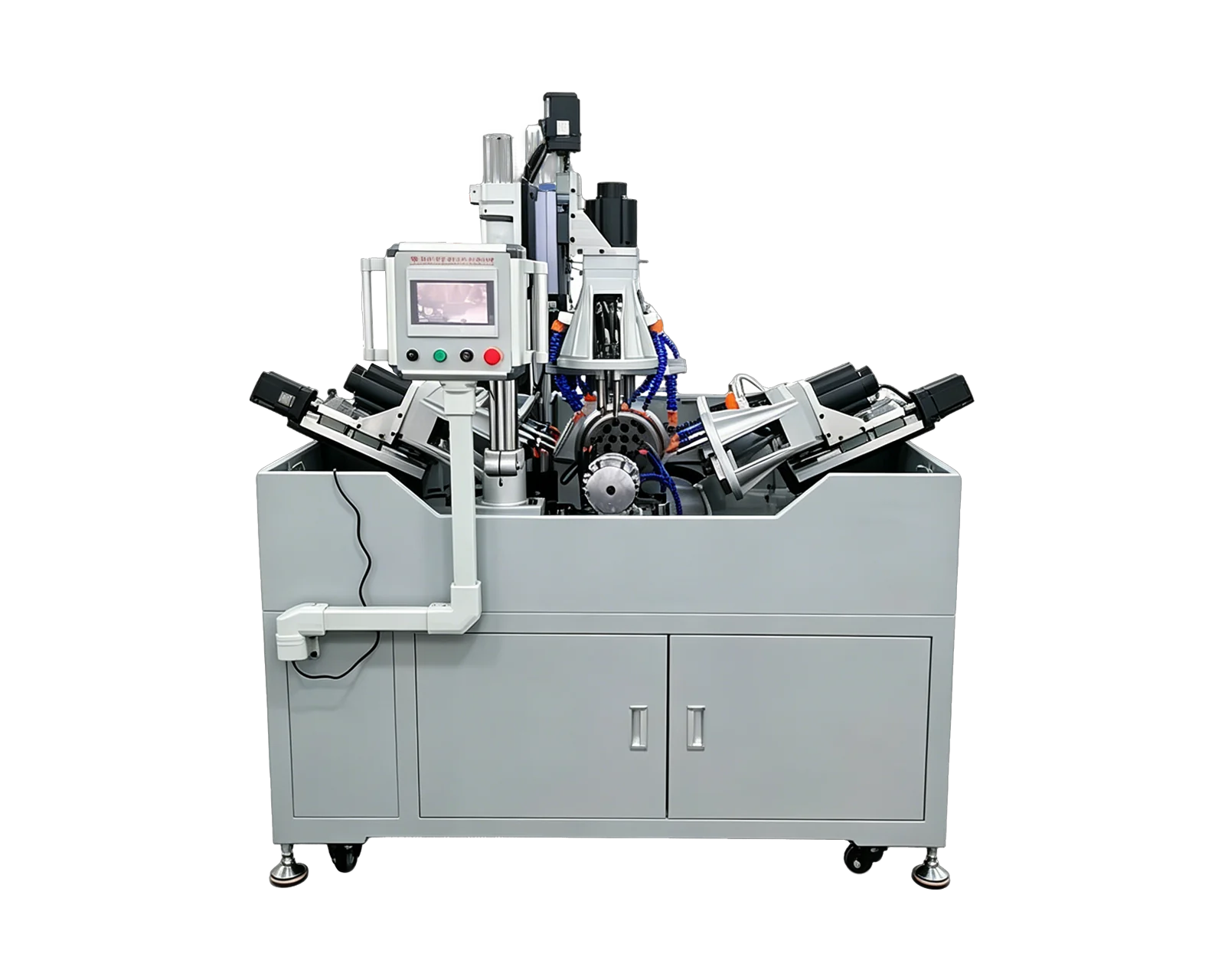
Explore equipment for your inquiry
Multi-Side Drilling & Tapping →Review the layout options and required part information to define the scope of a custom equipment inquiry.
1. Describe the axis in an unambiguous reference system
Supply the controlled drawing and relevant model, identifying which document governs if they differ. Mark the angled feature and retain the drawing references used to define its orientation and location. An angle measured from a nearby outside surface may not fully describe the intended axis. Ask the product owner to resolve missing definitions rather than letting each machine supplier create a different interpretation of the same requirement.
Include the complete feature designation, entrance and exit regions, depth requirements and any associated thread or spotface. If the component has several angled features, assign each an identifier and show their relationships. The inquiry should let a reviewer trace every requested operation to a finished feature without treating a perspective illustration as the dimensional authority.
2. Separate product requirements from machine proposals
Describe what the component requires before specifying how a machine must achieve it. The equipment proposal may involve a reviewed part orientation, a dedicated arrangement or an alternative process, but its suitability needs confirmation for the actual geometry. Ask suppliers to state the proposed concept, the basis of their assessment and what remains to be demonstrated. Do not infer angular positioning capability from the number of visible machining heads.
3. Connect the locating concept to the finished requirement
Ask the proposal to show how the part is referenced in the machining arrangement. Identify surfaces that are unfinished, variable or unavailable for contact in the supplied condition. If the component arrives after another operation, include that incoming drawing and its inspection status. This gives the application reviewer a clear distinction between a product datum and a physical surface that is actually available for locating the incoming piece.
Review tool access using the entire part and surrounding workholding concept. Nearby walls, flanges and existing features can affect the proposed approach. Where the supplier requests more geometry, assign that action before approving the configuration.
4. List variations instead of assuming adjustment
Hypothetical purchasing example: a buyer has two similar brackets whose holes enter the same visible face but use different axis definitions relative to the mounting datums. A quotation covering one bracket does not establish coverage of the second. Supply both revisions and ask what changes in the proposed equipment, fixture, tooling and verification scope. The answer may identify separate configuration items or require a different application review.
If future angle variants are expected, provide the approved range or identify them as undefined future work. Ask suppliers to distinguish included variants from potential later adaptations. Compare offers on the current parts that each commits to review and supply. A general statement about flexibility is less useful than a list linking part identifiers to the arrangement and evidence covered by the order.
5. Agree how the reviewed feature will be demonstrated
Have the responsible quality team define the required inspection evidence for the axis, size and related drawing characteristics. Identify who provides inspection equipment, who measures the sample and which report accompanies the demonstration. Connect that report to the drawing revision and equipment configuration used. A close-up video of machining may explain the concept but does not establish the finished geometric result by itself.
BINSING multi-side layouts can provide a starting point for a conversation about machining directions; suitability for an angled feature must be reviewed separately. Email the drawing, model, incoming condition and production requirements. Request a clear response identifying the assessed concept and open questions before a machine commitment. This keeps the inquiry useful even if the review concludes that a different arrangement is needed.
