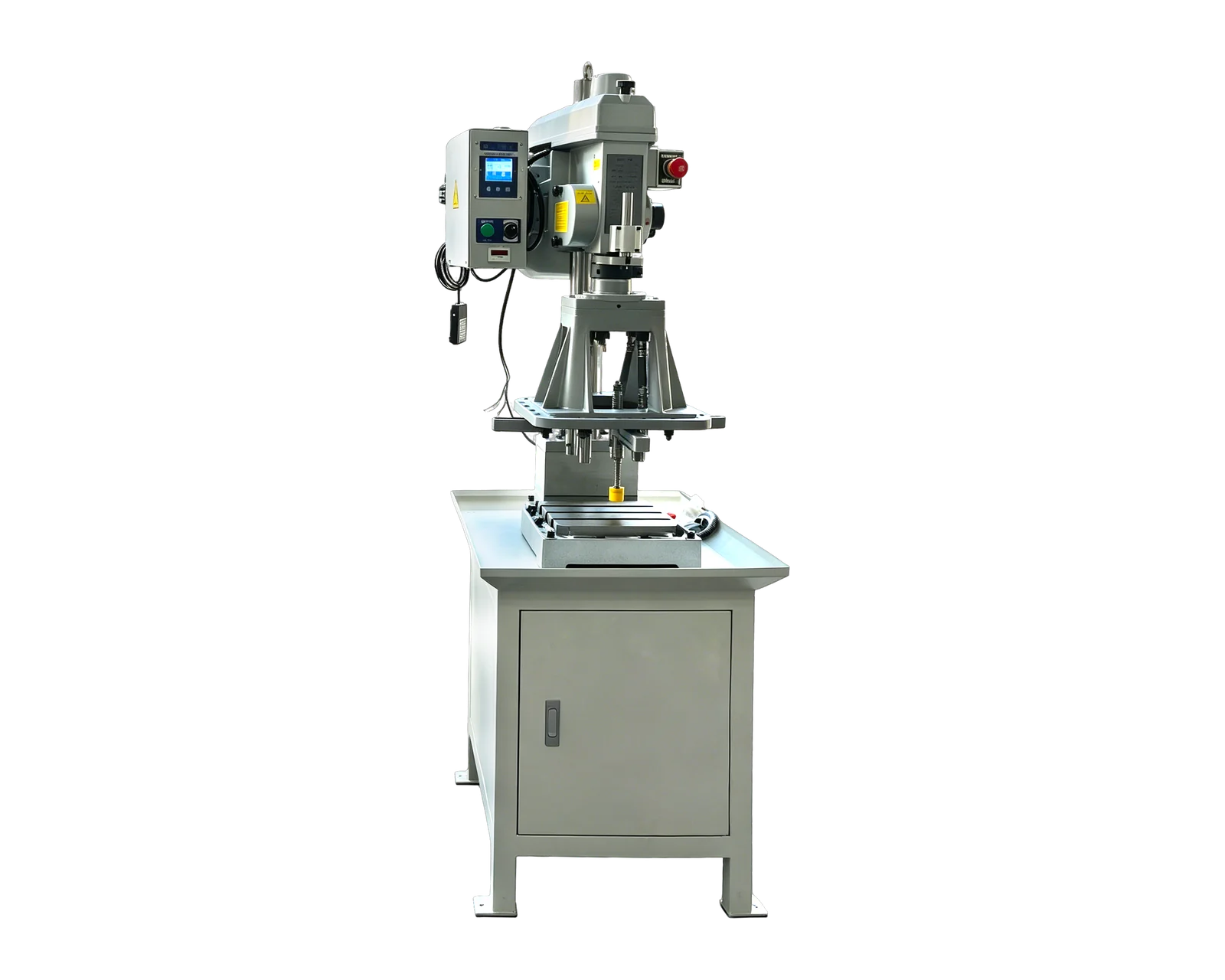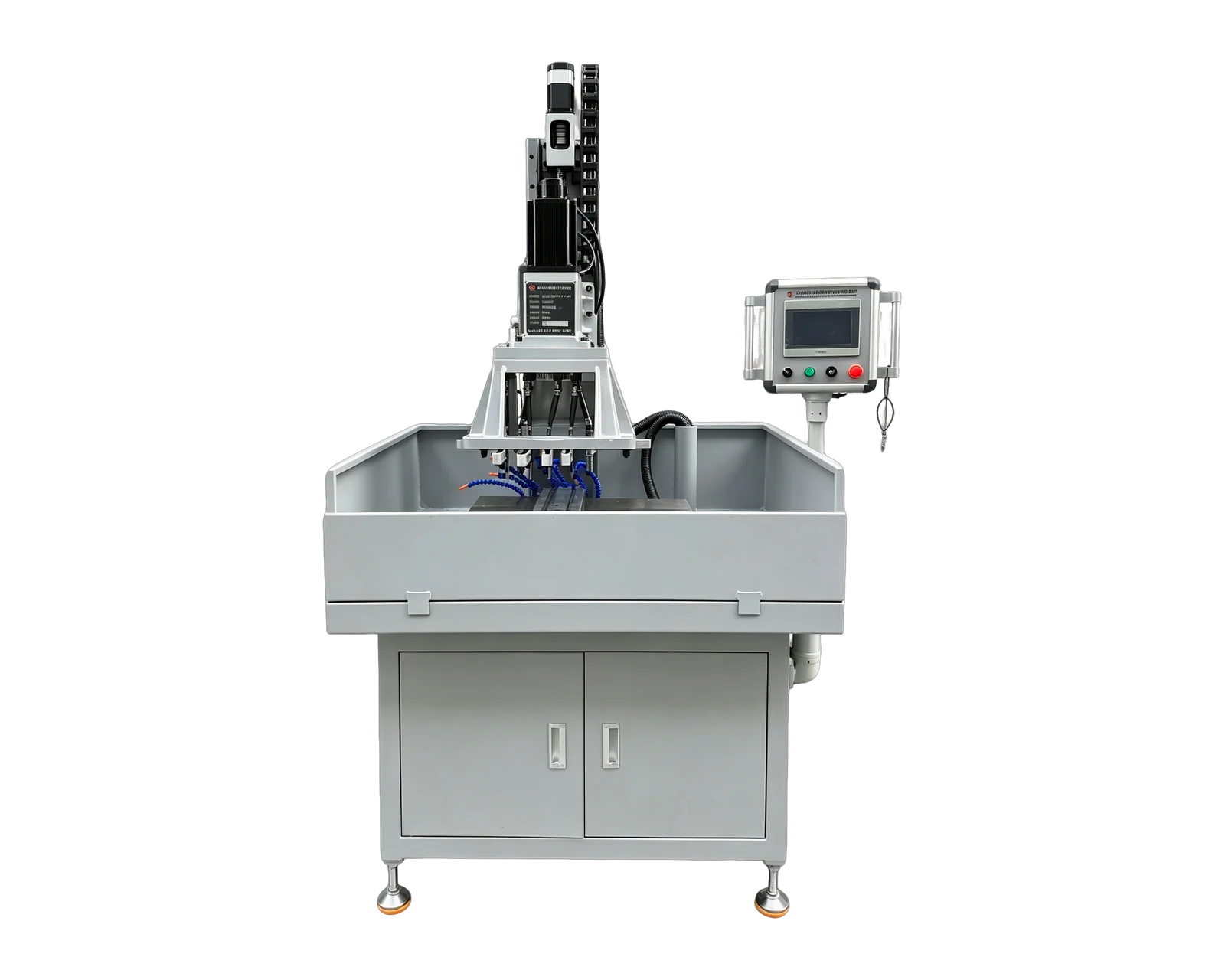
Explore equipment for your inquiry
Dual-Servo Multi-Spindle Drilling & Tapping Machine →Review the published specifications and configuration options against your part drawing before requesting a quote.
1. Provide the complete pattern definition
Send the controlled part drawing and relevant model, identifying the governing document if they differ. Include the references defining the pattern center, hole positions and orientation relative to the rest of the part. If a feature such as a slot, flat or separate opening establishes orientation, retain that relationship in the inquiry. A photograph of an apparently regular ring of holes does not establish the dimensional requirement.
Identify every hole or thread type within the pattern. State which features already exist when the part arrives and which must be created by the proposed equipment. Include associated finished details where they are in scope. If the drawing leaves a position or reference ambiguous, have the product owner resolve it before comparing offers built on different interpretations of an apparently simple circular layout.
2. Distinguish patterns that look almost identical
Build a variant table using controlled part identifiers. Record changes in hole count, locations, feature type, part thickness and orientation references, together with the expected production mix. Small visual differences can still represent different equipment or tooling requirements. Ask how each proposed arrangement identifies the intended configuration and which changeover items are included; do not assume that one sample represents the complete flange family.
3. Compare the proposed machining method explicitly
A multi-spindle proposal should identify the features addressed by its head arrangement and the scope of any additional operations. Ask about the reviewed pattern coverage and the configuration changes needed for other variants. A sequential proposal should identify how the required positions are presented to the tools and what locating or positioning concept is included. Compare these descriptions against the same part list, production mix and finished requirements.
Do not equate a circular hole pattern with a requirement for a particular machine axis. Likewise, a rotary indexing layout that moves work between stations does not by itself establish how a flange pattern is produced within a station. Ask the supplier to describe the actual proposed method and its application evidence. Catalog photographs introduce arrangements; they do not confirm a rotary axis or a specific positioning capability on an offered machine.
4. Test the comparison with a realistic variant pair
Hypothetical purchasing example: two flanges share the same outside shape and hole count, but their patterns have different relationships to an orientation slot. A purchasing sheet listing only outside diameter and hole count would make them appear interchangeable. The controlled drawings reveal that the equipment review must cover two distinct configurations and explain how the intended version is selected and checked.
For that pair, ask each supplier to name the included fixtures, tooling or configuration items and the work needed to change between them. If one offer covers only the first variant, make that visible in the comparison. Assess expected output using the stated production mix and loading assumptions rather than accepting a general claim that one arrangement is always faster for every circular pattern.
5. Request evidence for the whole pattern
Agree how the finished pattern will be assessed against the drawing, including its relationship to the part references and any mixed feature requirements. A close-up showing one completed hole cannot establish the entire pattern. Identify the part revision used in a trial and connect the resulting records to that sample. Where several variants are proposed, specify which evidence supports each and which remain subject to further review.
For a BINSING inquiry, email the flange drawings, labeled pattern comparison and expected batch mix. Ask for a proposed machining arrangement with explicit configuration coverage, loading assumptions and inspection responsibilities. This gives purchasing a basis for comparing a dedicated multi-spindle concept with another reviewed approach without assuming capabilities that have not been defined in the offer.