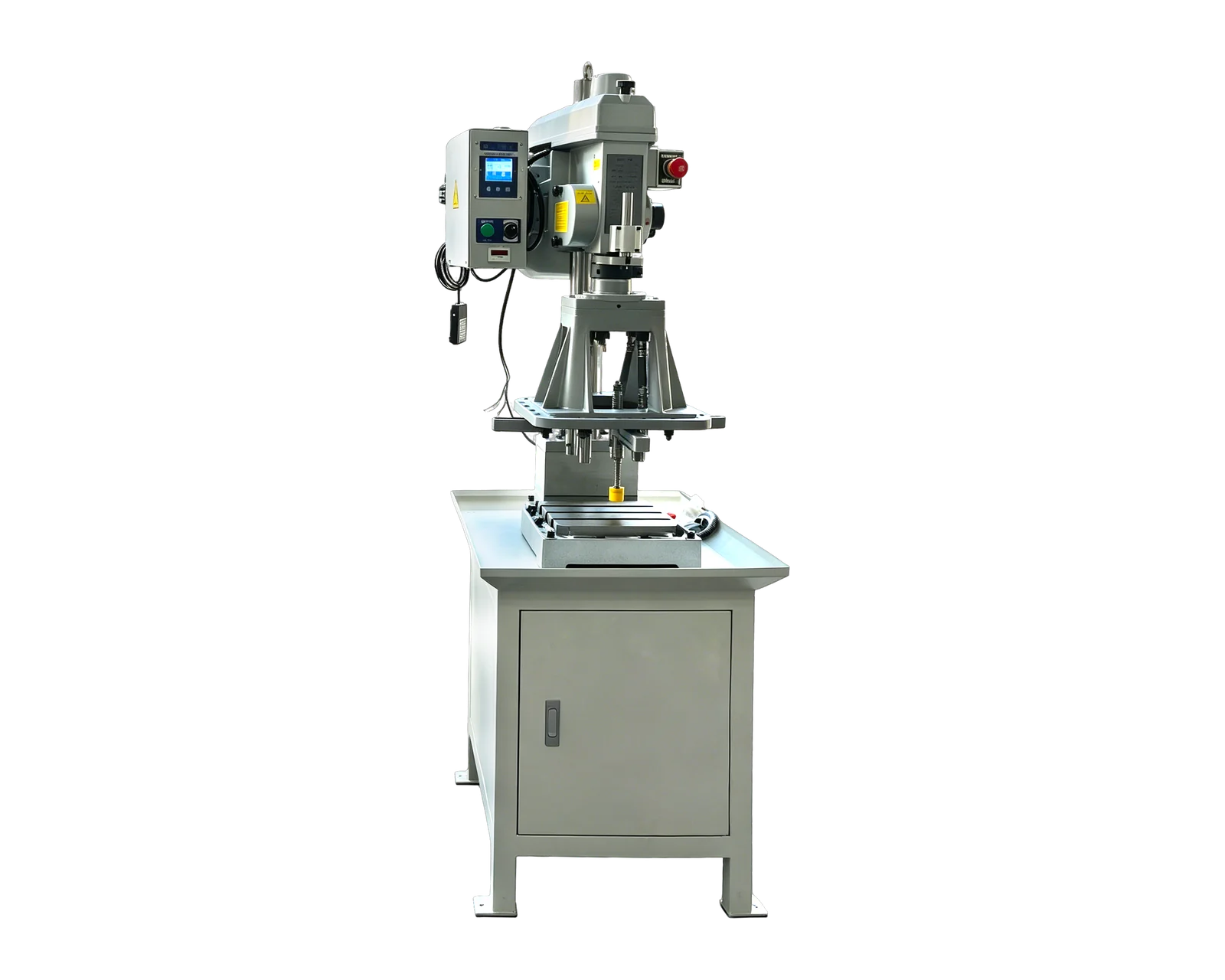
Explore equipment for your inquiry
Dual-Servo Multi-Spindle Drilling & Tapping Machine →Review the published specifications and configuration options against your part drawing before requesting a quote.
A stack of parts and a laminated conductor are different inputs
Send the part drawing and supplied-state description together. Include material designation, bar thickness, existing bends, coatings and any insulation already present. If separate rigid bars are temporarily stacked to increase output, state that explicitly. Do not describe the stack only by its total thickness: identify the number of separate items and the required result on every item.
nVent's Flexibar handbook describes fabrication sequencing for its laminated flexible conductor and the need to preserve laminate movement during forming. That product-specific guidance illustrates why a manufactured conductor cannot simply inherit a process proposed for loose rigid bars. Obtain the applicable conductor manufacturer's requirements before choosing a fabrication route for such a product.
Locate drilling in the actual route
Show whether the bar arrives straight or formed and whether drilling precedes or follows the specified coating process. Mark existing contact faces, insulated regions and the permitted fixture-contact zones. Ask the product and coating owners to define the required condition of hole edges and newly exposed surfaces; do not assume a visually clean drilled edge satisfies that requirement.
Keep bending, drilling, edge finishing, cleaning, coating and final inspection as named steps even if some belong to another supplier. This makes scope comparable. A quotation for drilling bare straight bar differs from one that receives coated formed parts and must preserve their supplied condition. Neither route should silently inherit the other's acceptance evidence.
Evaluate each layer when stack drilling is proposed
The following original trial record is intended for buyer and supplier review. It does not recommend a stack size or a drilling method. Have the technical team establish whether stacking is suitable and how individual pieces will be inspected after separation. Keep the loading and separation work in any comparison of output.
Count accepted pieces after the agreed finishing stage
In a hypothetical comparison, a stacked trial produces several drilled bars in one machine cycle, but the parts still need separation, edge work and inspection. Compare accepted output after those operations rather than multiplying the machine cycle by the number of layers. Retain the identity of the layer positions so a good outer part does not stand in for an unexamined inner one.
Record the coating state used in the trial. A bare sample may help investigate geometry, but it does not demonstrate that a coated production part can be held and processed without unacceptable marks. If representative samples are unavailable, label the missing coverage and define what evidence is still required before accepting the proposed route.
Keep electrical approval with the connection design owner
The completed connection has requirements beyond a drilled pattern. Ask the electrical and product owners to specify their separate checks and approval responsibilities. This machining inquiry does not establish current rating, contact performance, installation suitability or compliance of an assembled busbar system. Do not derive those conclusions from successful hole inspection.
For BINSING, provide the supplied and finished drawings, construction description, coating sequence, proposed stacking arrangement and part-level inspection requirements. Request review of the drilling and handling scope for those inputs. A platform selection remains conditional on the actual dimensions, workholding and process evaluation; the article does not confirm a dedicated busbar capability for a catalog machine.