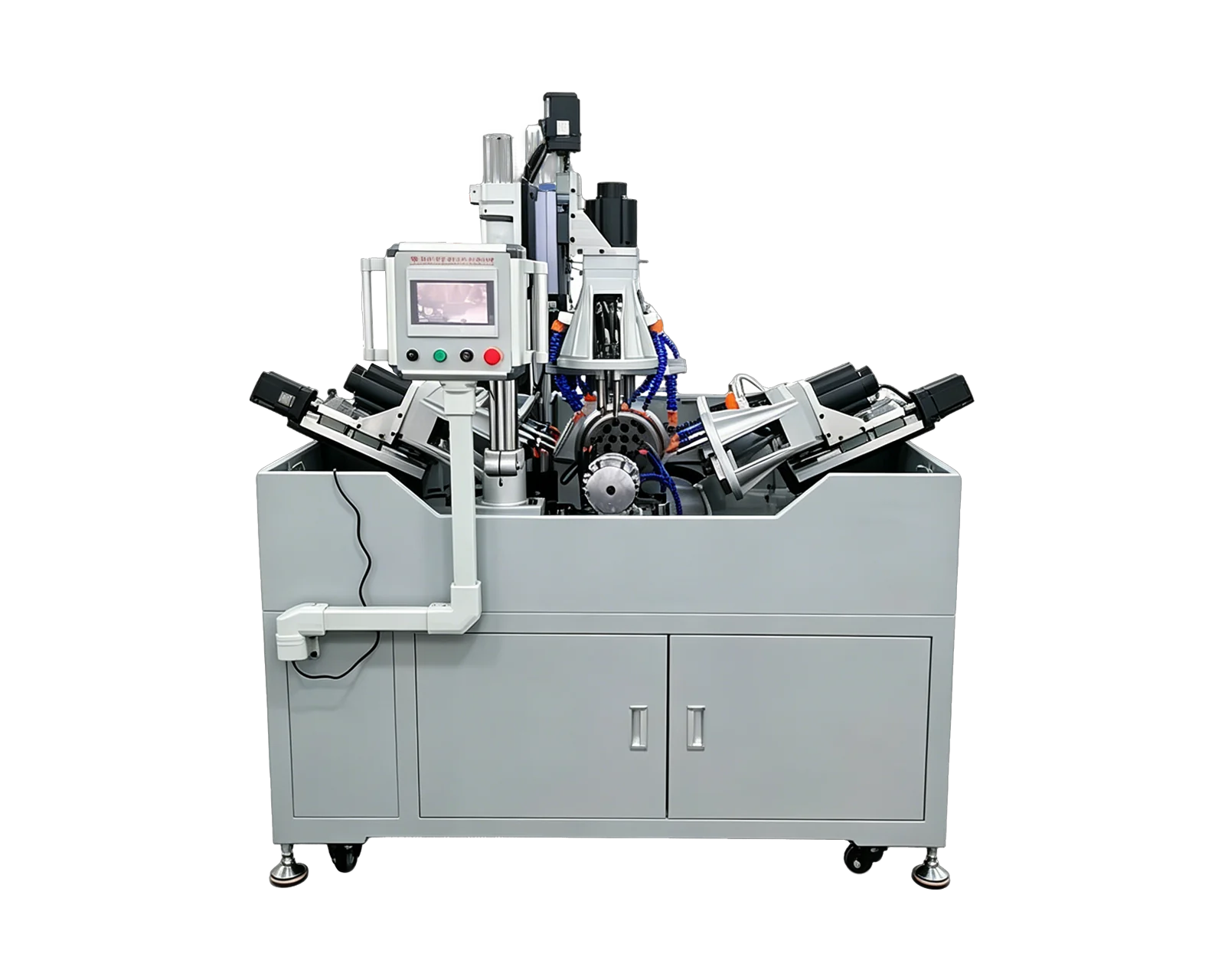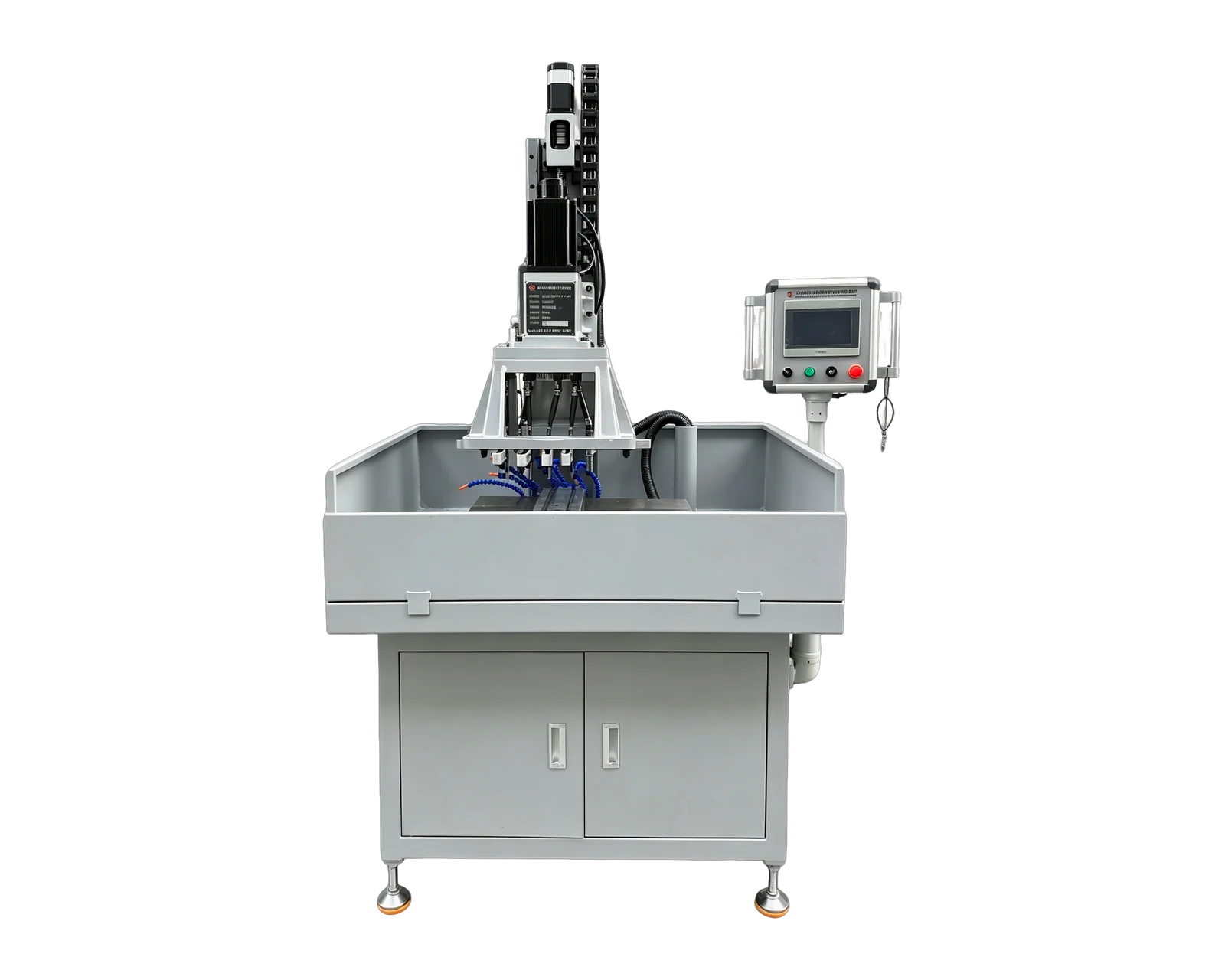
Explore equipment for your inquiry
Dual-Servo Multi-Spindle Drilling & Tapping Machine →Review the published specifications and configuration options against your part drawing before requesting a quote.
First decide which feature is being reported
A photograph can show an uneven rim, a burr, a chamfer or an opening viewed at an angle. It does not by itself measure the bore shape or locate its axis. Ask the inspection owner to identify the reported characteristic: entrance appearance, hole size at a stated depth, roundness or position. Keep those results separate even when they occur on the same part.
Show the entry face in a section view and mark the direction of drilling. Include any slope, curvature, step, cast surface or earlier opening encountered at entry. Record whether the shown surface is an intended feature or an incoming variation. A drawing of the finished flat face may conceal the rough condition that actually reaches the drilling operation.
Make initial engagement visible in the review
Sandvik Coromant explains that irregular drilling surfaces can create uneven forces on the cutting edges. Its guidance treats entrance shape as a tooling consideration. This supports documenting the real entry geometry; it does not prove that every irregular opening is drill wandering, or establish which remedy fits a particular tool and part.
Supply the tool designation, holder reference, setup identifier and any existing inspection record requested by the tooling specialist. Preserve photographs of the actual tool condition before replacement where practicable. Do not infer runout, wear or suitability solely from the tool's nominal diameter. Record unknown information as unknown so a comparison does not quietly depend on an assumed setup.
Use a record that separates observation from explanation
The following original review template connects the entrance evidence to the question it can help answer. It is not a measurement standard. The responsible reviewers should select inspection methods, limits and sample numbers, and approve any trial changes. Retain acceptable samples as well as rejected ones when they help establish a meaningful comparison.
Compare entrance conditions without losing the original requirement
In a hypothetical trial, one sample is drilled from the supplied surface and another receives an approved preparation operation first. If the second entrance improves, record the preparation as part of that route. The comparison does not demonstrate that the original route meets the requirement, nor that adding preparation is compatible with the final drawing or intended cycle.
Ask whether the proposed preparation changes a protected surface, adds handling or requires another machine. Keep those consequences in the quotation. If a trial also changes the tool and fixture, describe it as a combined-route comparison rather than attributing improvement to one intervention. This distinction helps the buyer understand what must actually be purchased and maintained.
Request evidence for the proposed route
The supplier response should identify which entrance conditions were evaluated and which remain open. A result on a flat sample is not coverage of a curved or cast production entrance. Agree how incoming variation will be represented before treating a successful demonstration as the basis for equipment selection.
For a BINSING discussion, send the marked section, entrance and bore evidence, tool references and current operation sequence. Ask for an application-specific proposal and a verification plan tied to the reported feature. Equipment configuration and process suitability require review of your actual part; the catalog image illustrates a platform rather than a confirmed solution to the observed problem.