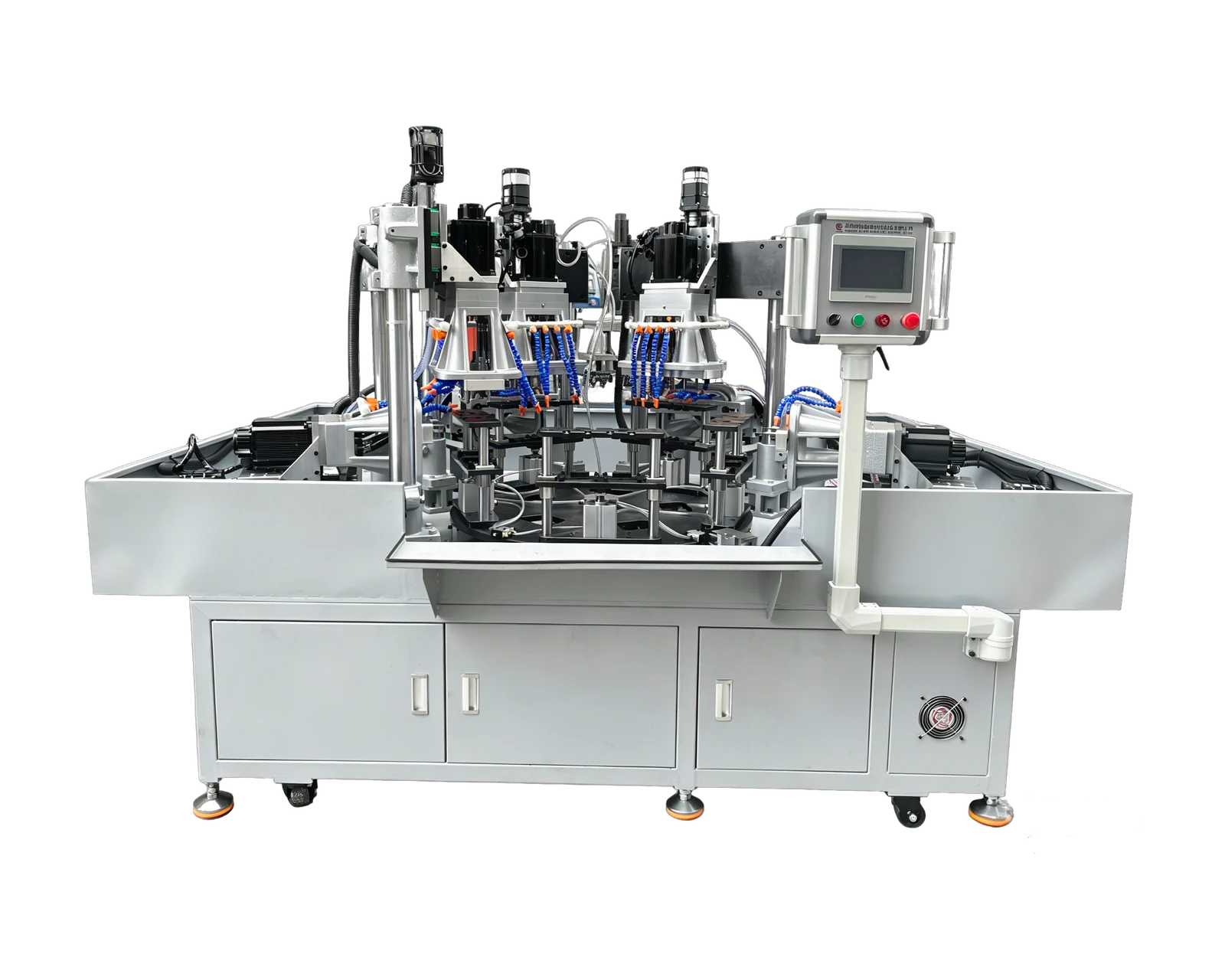
Explore equipment for your inquiry
Dual-Servo Multi-Spindle Drilling & Tapping Machine →Review the published specifications and configuration options against your part drawing before requesting a quote.
One diameter can hide four different requirements
A hole can be the required size while failing another drawing requirement. Diameter limits describe size; a surface-texture callout addresses a different property; geometric callouts may constrain form or the axis relative to datums. Ask the drawing owner to identify which requirements apply and how they will be evaluated. Do not replace an unspecified requirement with an assumed tolerance because a hole receives a pin or bearing.
For a first quotation review, make a separate line for each requirement on the same numbered hole. A supplier's response saying the diameter is achievable leaves the other lines unanswered. Conversely, if a documented drilling route already satisfies every required characteristic, an additional finishing step needs a stated purpose. This is a decision about the bore itself; entry chamfers and exit-edge treatment remain separate features.
Compare what each operation is being asked to do
Sandvik Coromant describes reaming as finishing with a multi-edge tool and a small cut, while its boring guide covers enlarging and improving existing holes through roughing and finishing. Those descriptions identify candidate processes, not a universal accuracy ranking. The original matrix below turns them into proposal questions. Any offered tolerance must apply to the actual tool, component and equipment configuration.
A reamer is not a promise to relocate the hole
Sandvik's reaming application guidance explicitly cautions against expecting reaming to correct position or straightness errors in the prepared hole. Therefore, if the concern is an off-location axis, asking only for a larger or more precise reamer does not answer the problem. The proposal must address how the hole is established relative to the drawing datums and whether a different preparation or machining route is required.
Consider an invented quotation comparison: both offers include drilling and reaming a locating hole, but one only demonstrates the finished diameter. The drawing also constrains the axis to a reference face. Neither the added operation nor a passing diameter result closes that second requirement. Ask for its own verification evidence. This example illustrates an unanswered requirement, not a failed production case or a prescribed repair method.
Define the prepared hole as an intermediate deliverable
For reaming, the incoming diameter is part of the process design. Sandvik's general reaming guidance warns that insufficient stock can cause rubbing and that excessive stock is also undesirable. Use the actual reamer manufacturer's recommendations for the material and tool, with the allowance clearly identified as radial or diametral. This article intentionally supplies no universal undersize value.
If drilling and finishing are supplied by different stations or companies, put the intermediate requirement into both scopes. Identify who controls the prepared hole, who measures it and who accepts deviations before finishing. Ask the finishing supplier to state the incoming condition it needs rather than quietly assuming that any drilled opening is acceptable. A rejected intermediate batch should have an agreed disposition owner before production begins.
Treat boring as a defined route, not an automatic upgrade
Sandvik's boring guidance calls for reviewing diameter, depth, tolerance, surface, position and straightness alongside machine stability and tooling. For a proposed boring route, request the intended axis reference and access arrangement. Whether an existing bore can be brought to the required geometry depends on the available material and the complete setup. Boring should not be represented as a guaranteed recovery operation for every misplaced hole.
Compare offers at the same completed-part boundary. List the finishing tool, any additional setup, tool setting and the agreed checks as explicit scope. Ask what happens if the part has to leave the proposed machine for finishing. A lower drilling-station price may simply exclude work that the other quote includes. Keep that commercial difference visible instead of using the operation names as a quality ranking.