
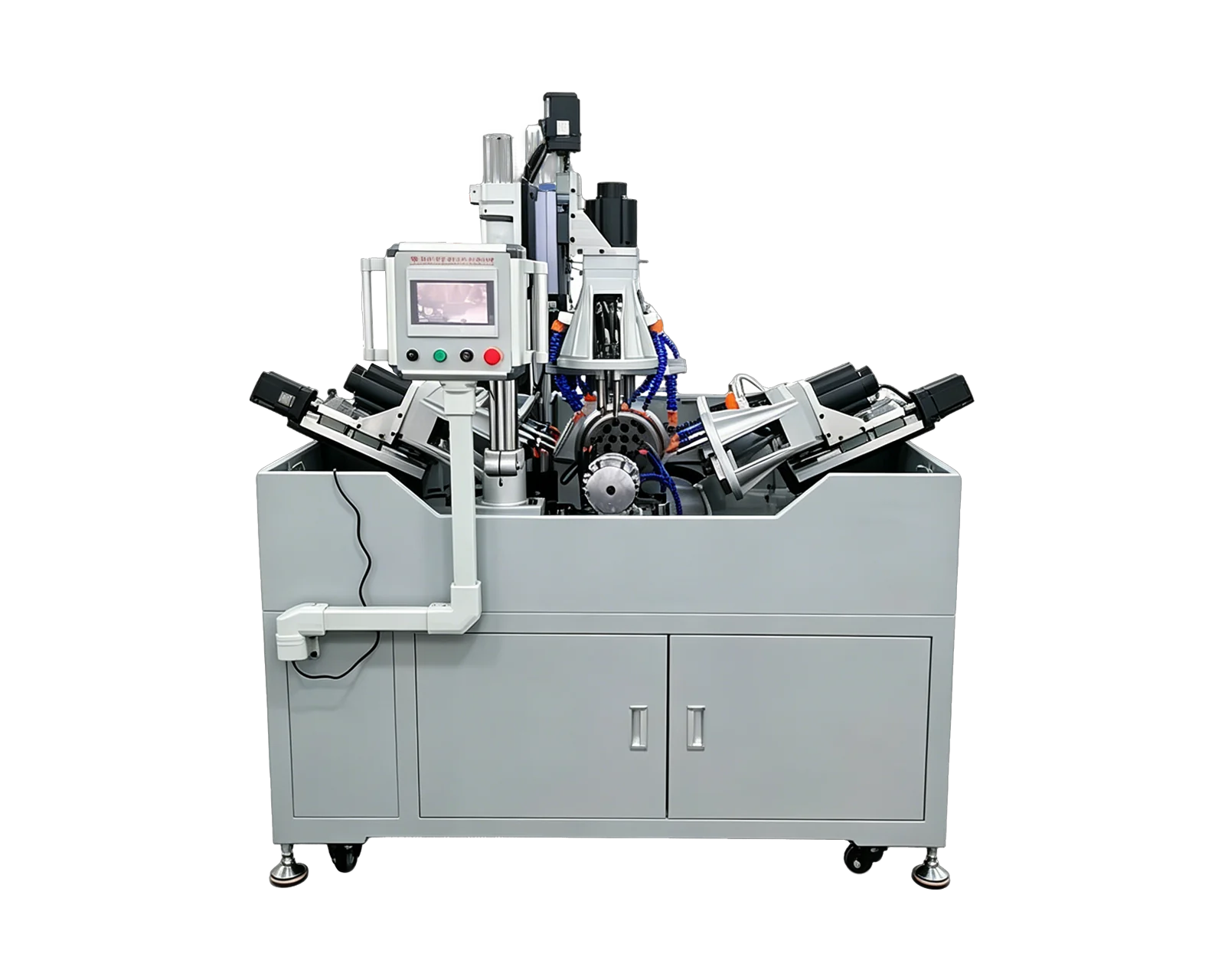
Explore equipment for your inquiry
Multi-Side Drilling & Tapping →Review the layout options and required part information to define the scope of a custom equipment inquiry.
1. Identify the purpose of each opening
Send the controlled block drawing with a numbered port list and the sections needed to interpret the internal passages. Record the material and actual incoming condition. Distinguish connection ports from openings used to manufacture passages and from ordinary mounting threads. A face with several circular features may contain different requirements even when those features look similar in an external view.
For each requested thread, retain the complete drawing designation and any associated face or recess requirements. Do not substitute a generic thread label for an approved connection definition. Identify existing passages separately from passages included in the equipment inquiry. The equipment supplier should be able to identify its work without deciding how the customer's fluid circuit ought to function.
2. Connect each port to its manufacturing endpoint
Use the register below alongside the drawing rather than as a replacement for it. Name the openings and passages using the customer's approved identifiers. Where a passage relationship is unclear, retain an open question for the drawing authority. Ask the quotation to mark each requested operation as included, excluded or awaiting clarification, including features that require work after the machining station.
3. Specify the condition before openings are closed
Identify which openings remain accessible at the proposed machine discharge point. State the required outgoing condition and how it will be assessed. If a later operation closes an opening, name the checks that must be completed before that handover. This connects machining, cleaning and assembly in the production route without assuming that they are all supplied by the machine vendor.
Ask the supplier to describe the included chip-handling scope and distinguish it from any final internal cleanliness requirement. Provide the customer's acceptance definition and assign the resources needed to verify it. A photograph of an exterior face cannot establish the condition of internal passages. Keep unresolved inspection access or cleaning questions visible in the quotation review instead of hiding them under a general request for a complete machine.
4. Review closure sequence changes as scope changes
Hypothetical purchasing example: a buyer requests identical port machining for two block versions, but one version is delivered to the next operation with construction openings still accessible while the other must leave with closure components installed. The hole list looks the same. The required outgoing product and the evidence needed before handover are different, so the offers cannot be compared by spindle arrangement alone.
Record the closure responsibility, component supply and required checks for each version. If the supplier offers machining only, show the remaining work in the buyer's route and cost comparison. Identify the version and closure state of any submitted samples. This example illustrates scope definition; it is not a claim about a BINSING manifold installation or a guarantee of leak resistance, pressure capability or circuit performance.
5. Request machining evidence and product evidence separately
Define acceptance evidence for the machined features against the controlled drawing. Keep any specified product test in its own scope with a responsible party, approved procedure and required record. Passing a dimensional or thread inspection does not by itself establish the assembled block's sealing performance. If testing equipment is requested, ask for an explicit response rather than assuming it is part of a multi-side machining arrangement.
Email BINSING the block drawing, port register, incoming-stage information and required discharge condition. Ask which faces and features the proposed arrangement covers and which operations remain outside it. Include production quantities by version so the review addresses the actual mix. A useful response identifies reviewed documents, included work and open decisions, giving purchasing a concrete basis for comparing the complete manufacturing route.