
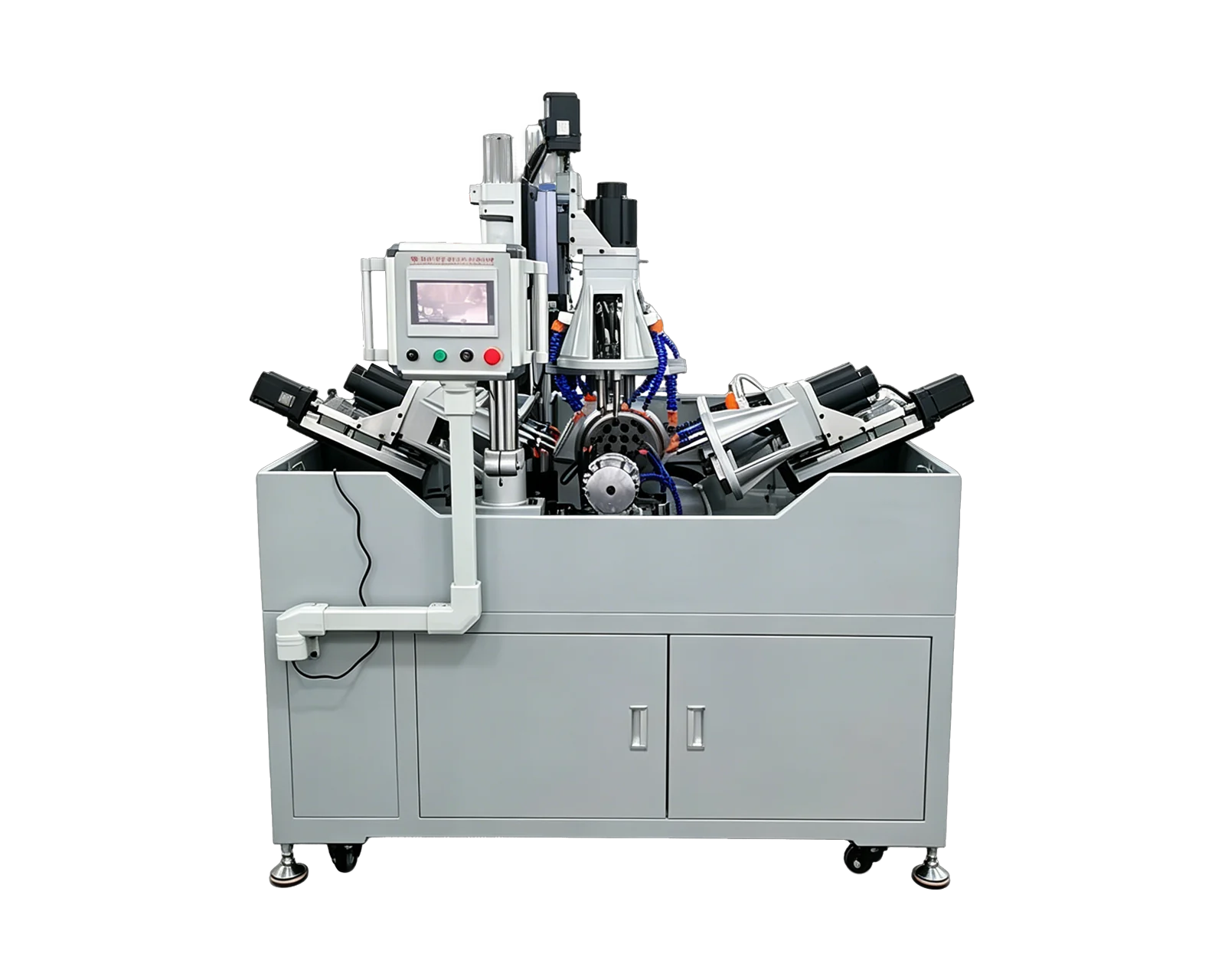
Explore equipment for your inquiry
Multi-Side Drilling & Tapping →Review the layout options and required part information to define the scope of a custom equipment inquiry.
1. Give each port and mounting feature its own record
Start with an annotated body drawing that assigns an identifier to each feature in the requested scope. Distinguish mounting holes from connection features, and distinguish finished features from openings that arrive partly completed. Include the full thread designation and drawing requirements for each threaded feature. Do not group visibly similar openings under a single description if their depths, reference surfaces or inspection requirements differ.
State the body material designation and the manufacturing condition delivered to the proposed station. Include the incoming drawing when it differs from the finished component drawing. If another supplier completes an internal passage or sealing feature, mark it as existing and identify its condition at handover. This creates a clear boundary between purchasing a drilling and tapping operation and purchasing a complete component manufacturing process.
2. Separate feature production from finished-product assessment
Use a scope table to connect drawing requirements with responsibility. Ask suppliers to respond against the same feature identifiers so a price comparison reveals missing operations. A proposed machine arrangement is only one part of this response; the buyer also needs to know which results will be measured and which activities remain elsewhere in the manufacturing route.
3. Show protected surfaces in the locating discussion
Mark surfaces that must retain their supplied condition, including any areas the product owner identifies as sealing or assembly references. Show permitted and prohibited fixture contact regions on the same drawing. Ask the supplier to explain the locating concept against these constraints. A convenient exterior surface should not replace the drawing datum without approval from the person responsible for the component design.
Provide views of all machining directions and the complete body envelope. If internal relationships affect the feature requirements, supply the relevant sections rather than relying on an exterior photograph. Where a proposal divides the work across setups, request a feature allocation for each setup and a corresponding verification plan. A common fixture may be worth reviewing, but it is not evidence that every feature is accessible or correctly referenced.
4. Keep cleaning and testing visible in the comparison
Hypothetical purchasing example: a buyer requests mounting threads and two connection features on an incoming body. One offer covers the specified machining only; another includes a separately described cleaning step. Neither offer states who assesses the required internal condition. Comparing the two machine prices without resolving that omission would leave a production responsibility unassigned.
In this example, the buyer should identify the required condition after machining, the evidence used to assess it and the party performing that assessment. Any product-level testing must have its own agreed scope. Do not treat a successful dimensional sample check as proof of valve performance. This article describes an inquiry scenario, not a BINSING valve application case or a statement that a particular configuration is suitable.
5. Request a bounded application response
Email the body drawing, feature register, material information and representative incoming-part records for review. State the expected mix of body versions and identify differences in ports, mounting patterns and protected areas. Ask the response to list reviewed revisions, proposed operations, unresolved inputs and excluded work. Keep later drawing changes attached to the same feature identifiers so their effect on the proposal can be traced.
Before selecting equipment, align the sample review with the intended incoming condition and agreed inspection responsibilities. Confirm which evidence is needed to progress from an initial concept to a defined quotation. BINSING equipment pages can introduce arrangement options for discussion; suitability must be assessed against the actual body, requested features and process boundary.