Explore equipment for your inquiry
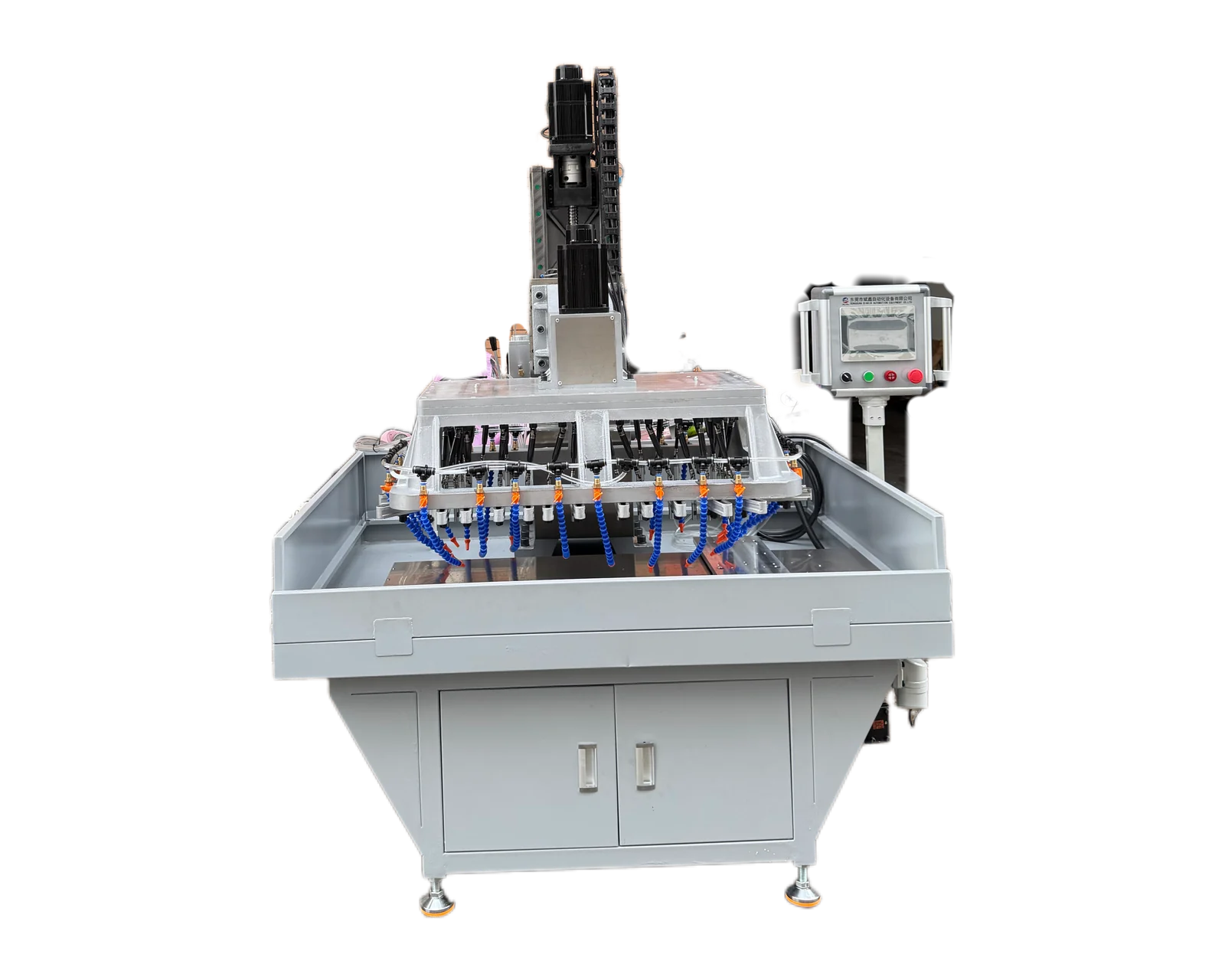
Dual-Servo Multi-Spindle Drilling & Tapping Machine →Review the published specifications and configuration options against your part drawing before requesting a quote.
1. Define the supplied unit before discussing holes
A split housing inquiry needs to say what arrives at the machine: one half, two loose halves or an assembled pair. Supply separate component identities and the relevant assembly reference. State whether halves can be exchanged freely or must remain together under a pair identifier. Make this requirement visible before discussing handling or quantities.
Describe the actual stage of each half, including joint faces, locating features and treatments already completed. Label photographs by member and pair where applicable. A finished assembly photograph cannot establish whether trial parts have the same joint-face condition as production parts. Identify temporary fastening or other assembly items supplied with samples and explain whether they also belong to the normal incoming arrangement.
2. Classify features by their relationship to the split
Mark which half contains each feature and whether its requirement refers to the other half or the assembled condition. A hole crossing a joint, a fastening thread confined to one member and a locating feature can require different scope decisions. The drawing owner should clarify these relationships. The table below captures purchasing questions; it does not prescribe a machining sequence or an assembly method.
3. Assign the assembly condition explicitly
When a feature requirement applies to an assembled pair, identify who defines that assembly condition and who provides any needed instructions or items. Ask the supplier to explain the proposed process against the approved requirement. Avoid assuming that separate-half processing and paired processing are equivalent. If the inquiry leaves this question open, list it as unresolved rather than accepting a cycle or inspection statement based on an unstated condition.
Separate housing assembly work from the drilling and tapping supply boundary. State who provides fasteners, locating items or other components needed for the agreed trial and who checks their identity. Any specified assembly procedure should come from the responsible owner; a machining inquiry is not a place to invent fastening settings. Record the condition used for inspection so the reported result can be interpreted against the same requirement later.
4. Keep pair identity attached to the evidence
Hypothetical purchasing example: a buyer supplies two labeled halves from a matched set and requests a feature whose requirement refers to the assembled housing. After the trial, one member is replaced by a visually similar half from another set. The earlier record no longer describes that new combination. The buyer should retain the original pair evidence and ask for review of the replacement condition rather than treating appearance as proof of equivalence.
If production instead uses interchangeable halves, state that requirement directly and define the evidence the responsible team requires. Do not infer interchangeability from unlabeled samples. List member variants and differences in joint references or hole entry faces. Ask which combinations the proposal and trial cover. Keep member and pair identities in the trial report.
5. Compare quotations at the same handover point
State whether output is counted as individual halves or completed pairs, and identify the required output condition. List drilling, tapping, separate finishing, assembly and inspection responsibilities without combining them into one undefined housing operation. Ask each supplier to state its assumptions about incoming pair identity, supplied assembly items and inspection condition. These details make scope differences visible before equipment prices or production statements are compared.
Email BINSING the member drawings, relevant assembly reference, incoming photographs and joint-feature register for an application review. Include the pairing rule and identify unresolved drawing questions. Request a response for the specified component operations and the evidence needed at handover. Final housing function, sealing or assembled product performance should remain subject to the separately defined evaluation owned by the responsible product team.