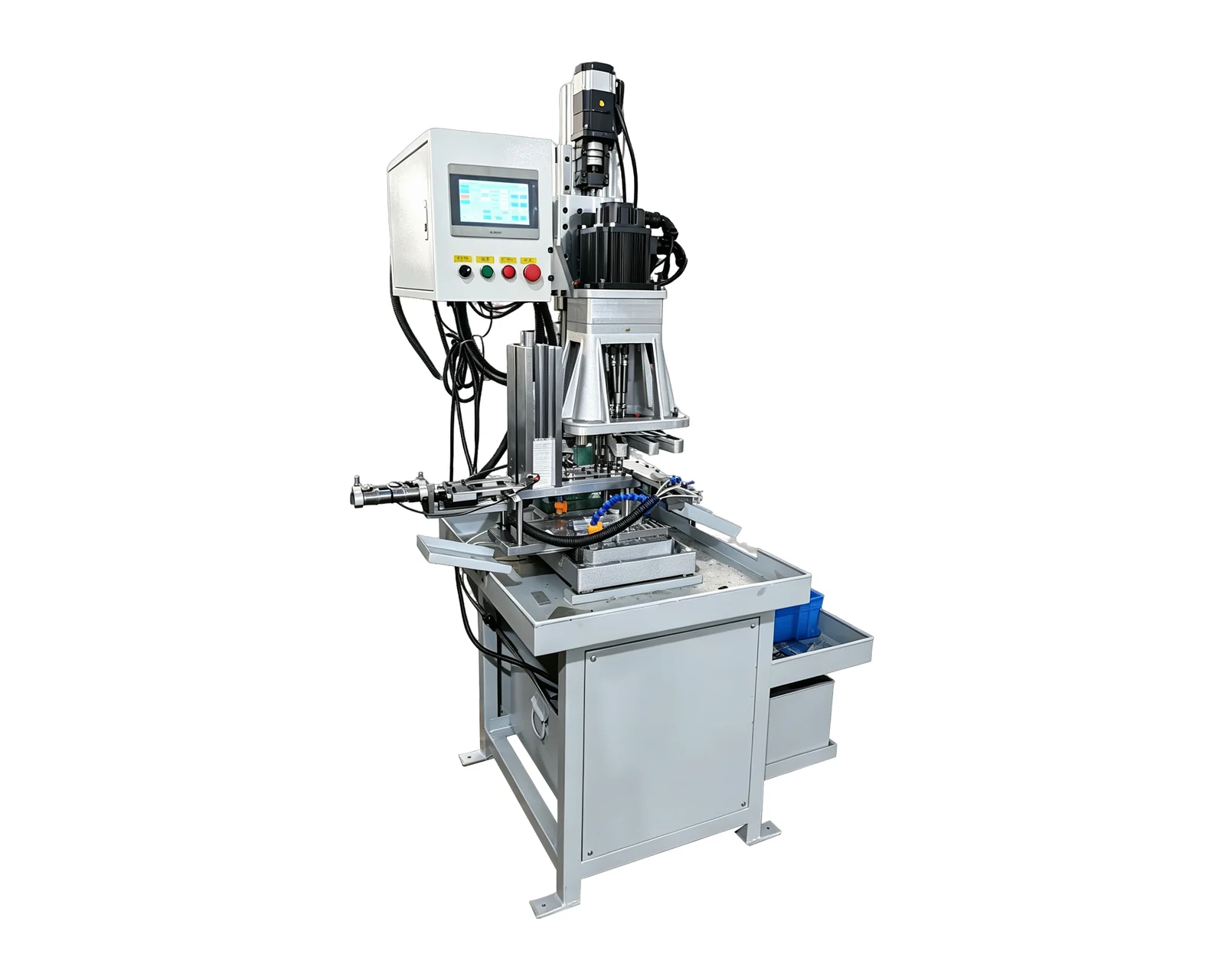
Explore equipment for your inquiry
Servo Traverse Multi-Spindle Drilling & Tapping Machine →Review the published specifications and configuration options against your part drawing before requesting a quote.
1. Quote the bracket in its actual shape
A flat development drawing and a formed bracket drawing describe different incoming workpieces. State which one represents the part loaded into the proposed equipment. Supply the applicable revision and show any bend, welded attachment or installed fastener already present. If a supplier receives only the flat view while production will use formed brackets, the inquiry has not yet defined the machining task adequately.
Label photographs with the same face names used on the drawing. For example, identify the cover-side flange and frame-side flange without relying on how a part happens to lie on a desk. Show the complete formed envelope in addition to close-ups of the holes.
2. Map mounting features to their component role
Use a feature schedule to distinguish clearance holes, threaded holes and supplied openings. Slots or formed details shown on the drawing need their own scope decision; their presence does not mean they are included in a drilling and tapping proposal. Record the inspection reference for each requested feature and identify the manufacturing state to which that requirement applies.
3. Keep finish and geometry requirements distinct
A cover bracket may have an appearance face that remains visible after assembly. Mark that face and state whether it arrives coated, polished or unfinished. Supply the buyer's applicable appearance criteria and explain when they are assessed. A photograph can locate the region, but an unqualified instruction to avoid marks does not establish an agreed acceptance method or a boundary for existing incoming blemishes.
Record the incoming condition of trial pieces before processing and retain their identities. If finishing occurs after machining, describe the handover state to the finishing supplier instead of reviewing a coated sample as though it represents production loading. Ask the machine supplier to identify any assumptions requiring confirmation. Keep the responsibility for coating application or touch-up explicit when those activities are outside the machining offer.
4. Treat a change in forming sequence as a review item
Hypothetical purchasing example: an early inquiry shows a flat bracket with two hole groups, while the revised route supplies a bent bracket for one remaining tapping operation. The exterior material designation has not changed, but the incoming shape, available faces and completed features have. The buyer should issue the revised stage information and request an updated scope review rather than assume the first proposal still covers the task.
Trial records should name the tested bracket revision and state whether it was flat or formed. Record the features processed and the checks completed on that condition. If a cover panel is supplied as context, label its role. A demonstration that one panel can be attached does not by itself establish coverage of all bracket variants or acceptance of the full enclosure arrangement.
5. Ask for a component-focused quotation
Send the bracket drawing, incoming-state photographs, finish requirements and demand by version. Ask for a response listing the hole groups covered, workholding assumptions, expected supplied features and proposed trial evidence. Separate bracket manufacture, nut or insert installation, coating and complete cover assembly into their assigned scopes. This makes differences between quotations visible before selecting the equipment arrangement.
Email BINSING the bracket package to discuss the drilling and tapping application. The inquiry should concern the specified component operations and inspection endpoint. Approval of machine guarding, access protection or safety compliance remains a separate responsibility for the complete equipment and its use. Do not describe a machining trial as certification of those functions; define the appropriate review with the responsible system team.