Explore equipment for your inquiry
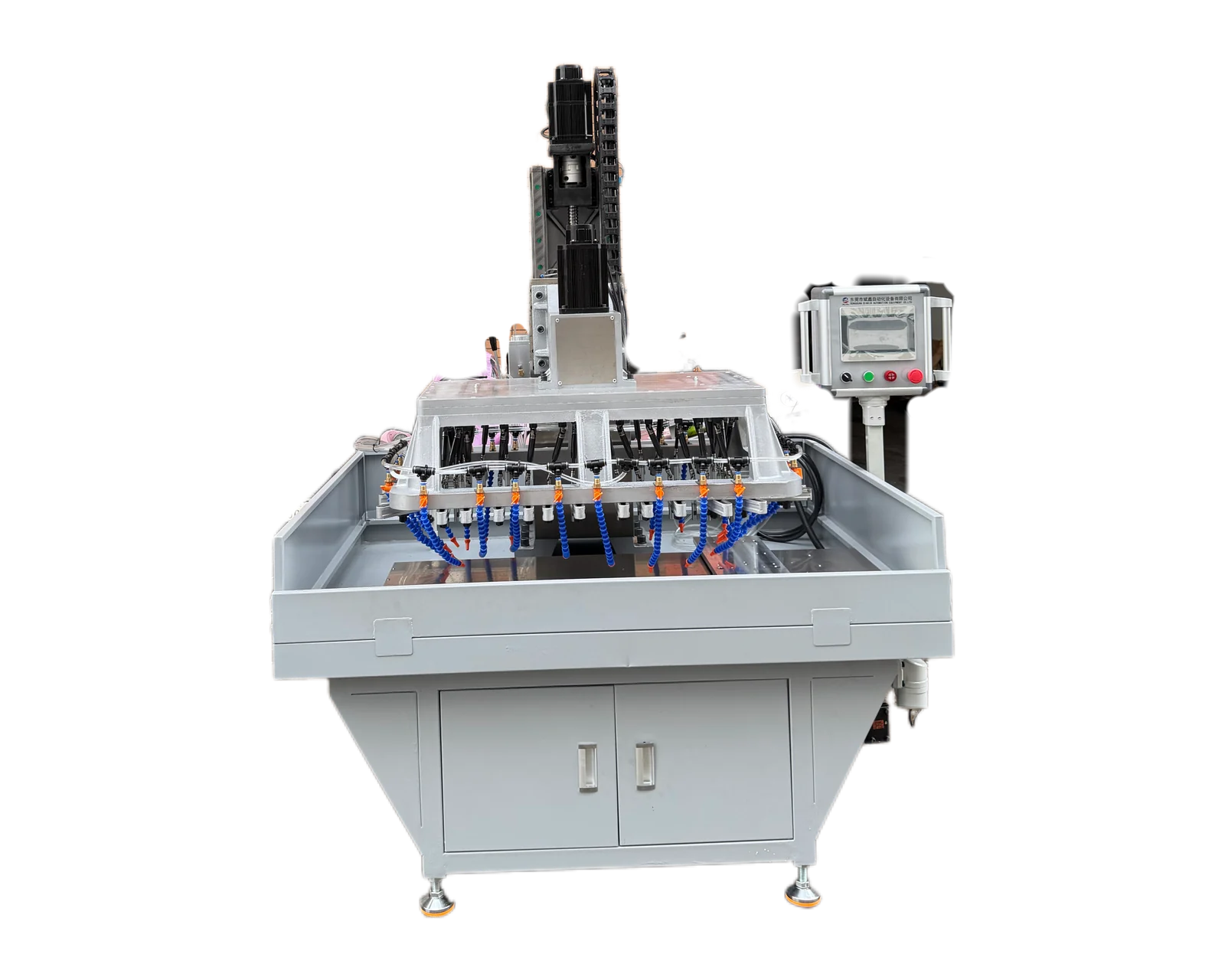
Dual-Servo Multi-Spindle Drilling & Tapping Machine →Review the published specifications and configuration options against your part drawing before requesting a quote.
Start with the layout the reference actually supports
The linked BINSING reference is titled Dual-Servo Multi-Spindle Drilling and Tapping Machine. Reviewed source frames show a vertical machine arrangement, a control panel, a tooling area above the worktable and a dedicated fixture. These are useful discussion points when your part requires several holes or threads in one setup. They are not a dimensional drawing of the offered equipment.
Mark the features of your component that would enter the fixture and identify the direction from which each tool must reach them. Keep the catalog platform, the reference configuration and your proposed configuration in separate columns. The same general arrangement can involve a different head, workholding or sequence, so the demonstration request should name the proposed scope instead of relying on visual similarity.
Define a cycle before asking how long it takes
Choose an observable boundary that includes the work required by the comparison. Ready for the next incoming part is often a more useful production boundary than tool enters the hole. Ask the supplier to state where loading, seating, clamping, machining, release and discharge occur. If some work happens outside the recorded interval, list it separately rather than leaving it out of the quotation discussion.
For a manually loaded proposal, identify the operator actions between successive parts. For a proposal with handling equipment, identify the incoming and outgoing interfaces. Neither arrangement follows automatically from a multi-spindle head. A short close-up can explain tool access while omitting the activities that govern staffing or accepted output; request the missing view explicitly.
Use a continuous-record request sheet
This original sheet turns a general request for a working video into a reviewable evidence request. Ask for a continuous view covering the agreed boundary, supplemented by close-ups where needed. Keep camera changes and separate trials labelled so reviewers do not combine unrelated sequences into one measured cycle.
Keep repeatability and accepted output in the same review
A single uninterrupted sequence helps define the operation, but a production proposal also needs an agreed observation period and a record of attempted and accepted parts. Ask which pauses, tool interventions and rejected pieces occurred during that period. Describe the sample condition and the loading arrangement. This lets the reviewer distinguish a successful demonstration from evidence supporting a production assumption.
For example, a hypothetical buyer comparing two proposals might receive one video that ends when the tools retract and another that ends after part removal. Those intervals are not directly comparable. Request a shared boundary and the missing handling record before using either in a capacity model. This example illustrates the review method; it supplies no measured cycle time for the reference machine.
Send a focused demonstration request with the inquiry
Include the drawing, material condition, incoming feature preparation, required operations and acceptance requirements. Highlight the faces used for locating and the features whose inspection must remain traceable to the demonstrated samples. Identify whether the purchase discussion concerns one part or a family, because a successful sequence for one configuration does not settle the setup requirements of another.
Ask BINSING to identify the proposed machine configuration and explain which reference-video features carry into it. Attach the completed cycle-boundary sheet to the quotation review. Record open items such as loading access or inspection responsibility with an owner and a required response. The useful outcome is a demonstration plan that supports a machine decision, with the assumptions visible before a purchase commitment.