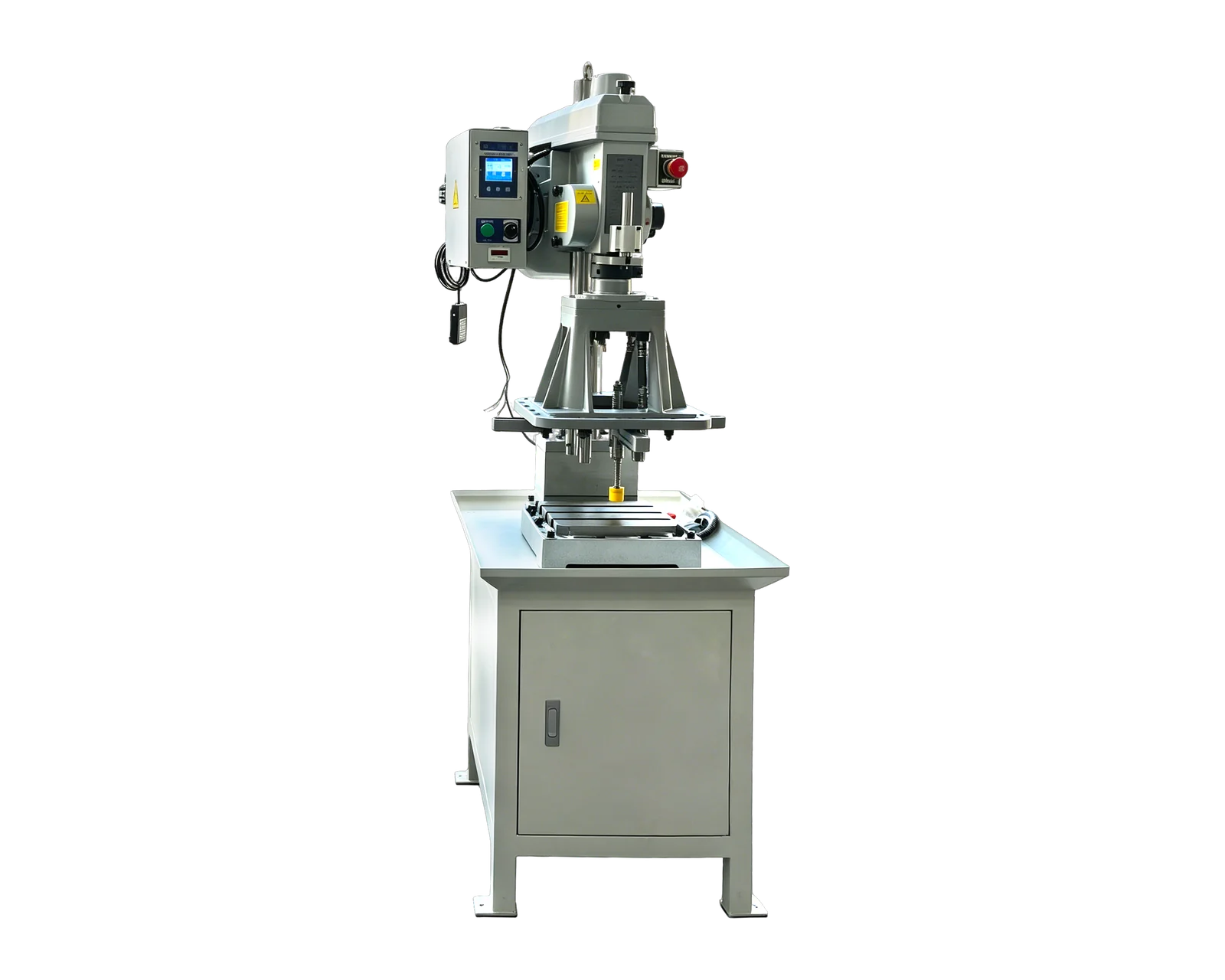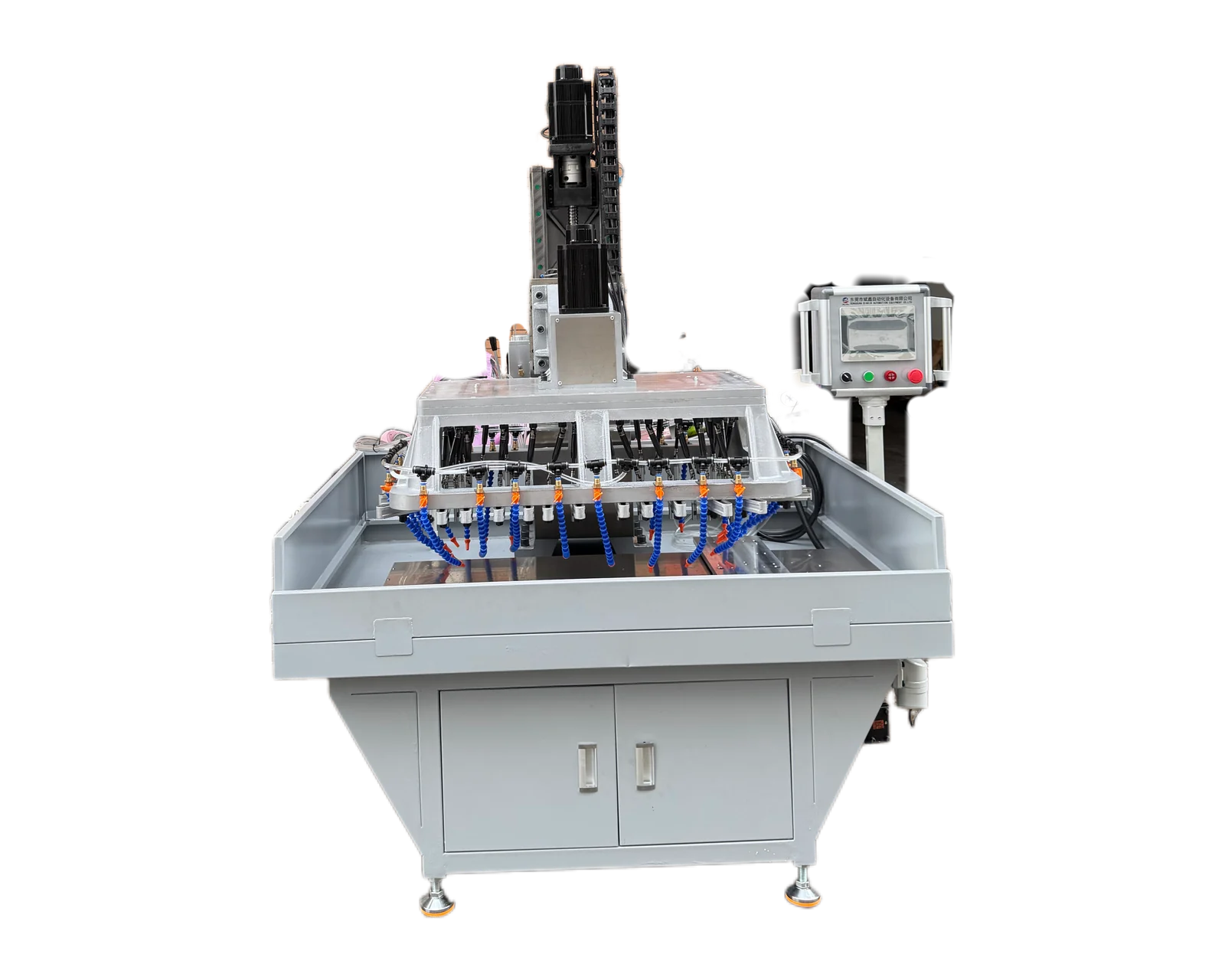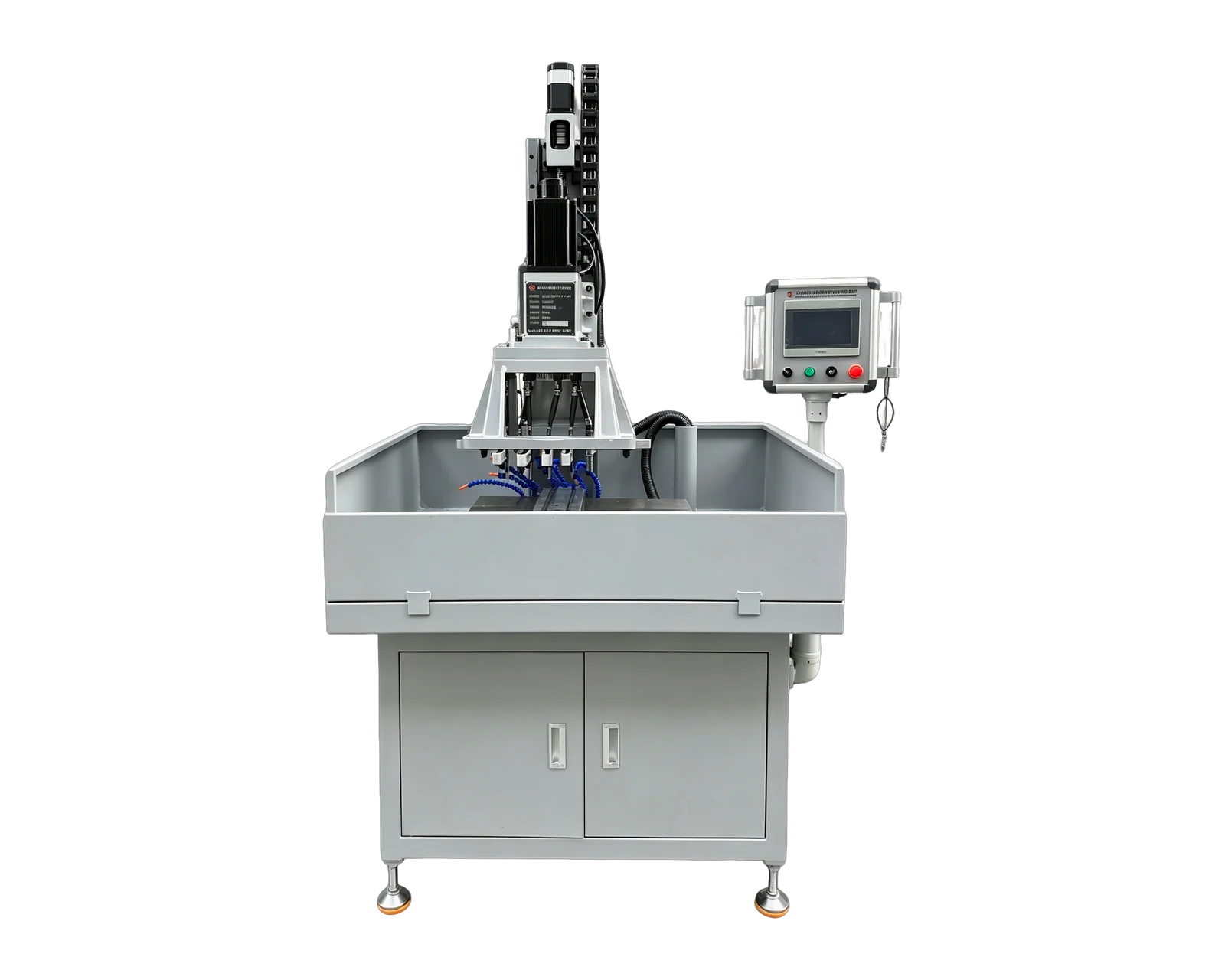
Explore equipment for your inquiry
Automatic Drilling & Tapping Machines →Compare standard platforms and custom layouts, then prepare the part and production requirements for your quote.
1. Define the part before choosing the platform
Mark every hole and thread on a current drawing. Include material, overall dimensions, hole depth, thread pitch and the faces to be machined. Distinguish a hole that arrives prepared for tapping from one that must be drilled on the proposed machine. These are different process scopes, even when the finished thread is identical.
If a complete drawing is unavailable, start with clear photographs and a marked sketch. Identify missing information explicitly. A preliminary discussion can establish a likely machine family; final tooling, fixture and capacity decisions need confirmed dimensions and requirements. Include all planned part variants rather than only the easiest example.
2. Match the machining layout to the task
Use the table as a starting point for a technical discussion. Several layouts may be possible for the same component. The useful comparison is between complete proposed processes, including the operations outside the machine, rather than between isolated machine specifications.
3. Check how the part is located and held
A fixture proposal should identify the locating surfaces, clamping areas and tool approach. Ask how the operator places the part correctly and how chips or remaining material are cleared before the next loading cycle. Include any surfaces that must not be marked and any variation in the incoming blank.
Do not treat workholding as a minor accessory to choose after the machine. It is part of the application assessment. If a proposed clamp occupies a machining face, or if the incoming part does not provide a reliable locating surface, the arrangement needs further review before a layout is accepted.
4. Define output and changeover in production terms
State the required finished parts per shift, working hours and expected product mix. Explain whether one part runs for weeks or several versions change within a day. Ask the supplier to describe loading, machining, unloading, checking and changeover separately in the proposed process.
A machine video demonstrates an arrangement, but it does not establish your production rate. Request an output assessment using your material, tooling, hole specification and handling method. Where performance is important to the purchase, agree the sample-part trial and acceptance method before placing an order.
5. Know when a standard platform needs a wider review
A standard platform is a useful starting point when the machining task, part envelope and workholding can be matched to it. It should not be selected solely because one listed hole diameter or thread size matches the drawing. Access, travel, spindle arrangement and the complete process still need confirmation.
A custom review is appropriate when feeding, multiple machining faces, unusual layouts or linked operations define the problem. For varied parts and frequent process changes, include other machining approaches in the comparison. Submit the actual production mix so the recommendation reflects how the equipment will be used.