
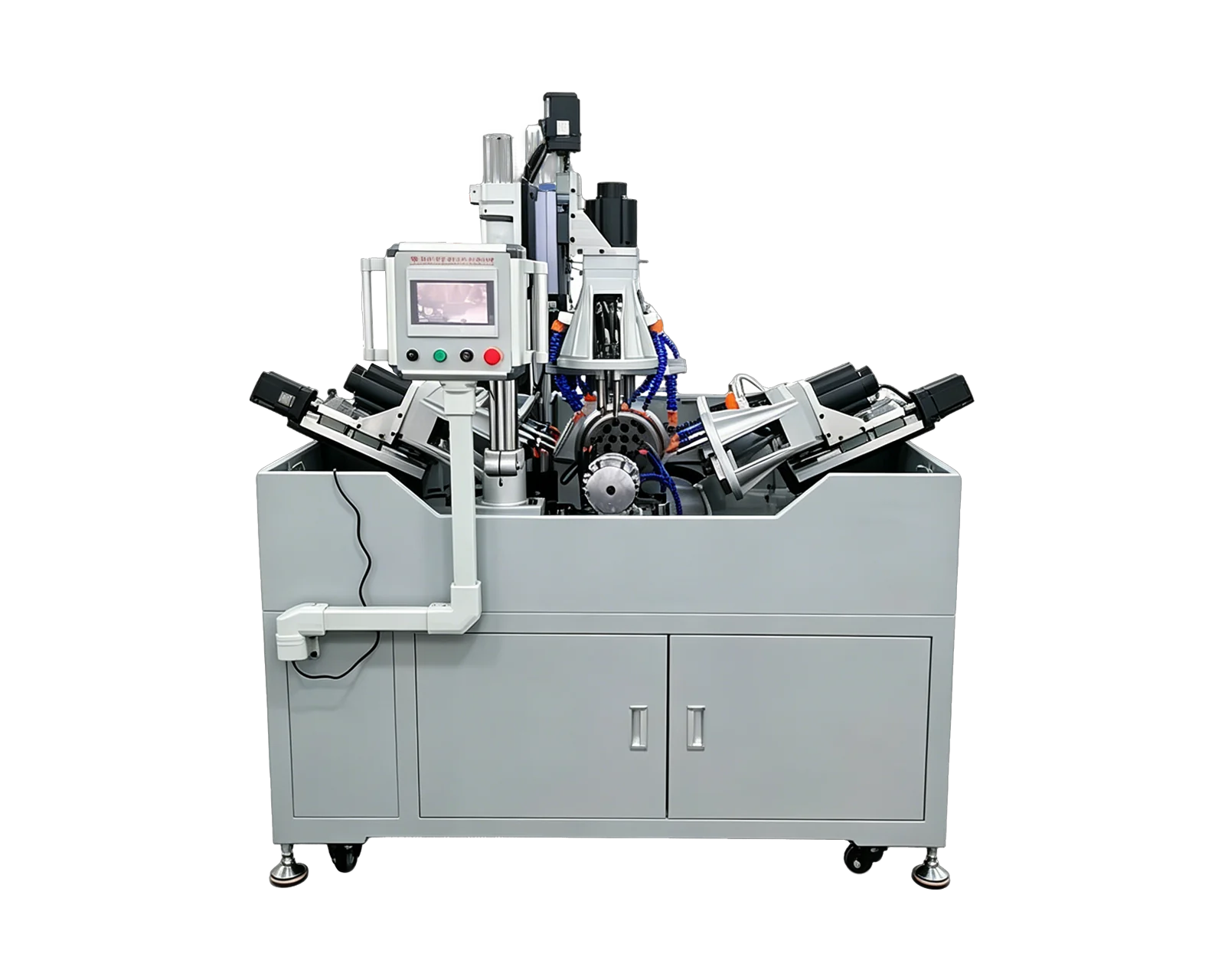
Explore equipment for your inquiry
Multi-Side Drilling & Tapping →Review the layout options and required part information to define the scope of a custom equipment inquiry.
1. Define the component before discussing the machine
Identify the precise coupling component, its material designation and drawing revision. An assembly name may describe multiple pieces with different incoming conditions and hole requirements. Mark which radial threads, axial holes or other specified features the proposed station must produce. Show completed geometry separately so the quotation does not accidentally include the manufacture of a bore or face that another operation already supplies.
Describe whether the component arrives alone or with other items attached, and include the complete loading envelope. Record the supplied condition of the bore and exterior surfaces, including approved restrictions on contact. The inquiry should establish the workpiece presented to the equipment. It should not ask a machinery supplier to infer component geometry, transmission requirements or assembly performance from a catalog image of a finished coupling.
2. Make the angular reference explicit
Where the drawing controls a radial feature's orientation relative to another feature, preserve that definition in the inquiry. Identify the relevant view, datum or approved reference and distinguish it from a convenient visual landmark. If the available drawing does not define an orientation that production considers necessary, refer that question to the drawing authority before treating it as an equipment requirement.
3. Separate bore protection from locating approval
A finished bore can be an important protected region without automatically being an approved locating surface. Ask the supplier to identify the references and contact regions assumed in the fixture concept. Provide any buyer-defined preservation checks separately from the requirements for the new holes. This keeps a proposal from silently treating a protected surface as available for unrestricted support or handling.
Include any existing slots, recesses or projections in the submitted geometry, and identify their actual condition at loading. Where chips or temporary protection affect the required handover condition, assign the relevant cleaning and handling tasks. Do not derive a fixture decision from diameter alone. The review needs the complete component, the controlled relationships and the permitted contact information for every version included in the quotation.
4. Check versions that share an outside shape
Hypothetical purchasing example: two coupling hubs have the same exterior envelope and radial thread size. Their drawings define different angular relationships between the radial thread and an existing reference feature. Purchasing sends one sample and lists both part numbers. The shared outline does not establish that the same reviewed arrangement covers both versions, because the required orientation is part of the machining scope.
Submit both controlled drawings and identify which version the sample represents. Ask whether the proposal includes separate locating provisions, a changeover requirement or an unresolved technical review. Keep the response linked to the relevant revision. This example concerns inquiry completeness, not a prescription for fixture construction or evidence of BINSING coupling production. It also makes no claim about balance, torque transmission or assembled service performance.
5. Agree evidence for the feature relationships
Define which newly machined characteristics require evidence and how any specified relationship to existing geometry will be assessed. Assign the inspection resources and responsibility. A successful thread check answers a different question from the verification of an angular relationship. Record any existing-characteristic preservation checks explicitly rather than assuming they are included because the bore appears in the same drawing.
Email BINSING the component drawings, radial and axial feature list, incoming bore condition and expected version mix. Ask for the proposed arrangement and its reference assumptions, included operations and open decisions. Where a standard platform is considered, request application review against the complete workpiece. Any later assembly assessment belongs in a separately agreed scope; a machining demonstration should be interpreted only against the characteristics it actually verifies.
