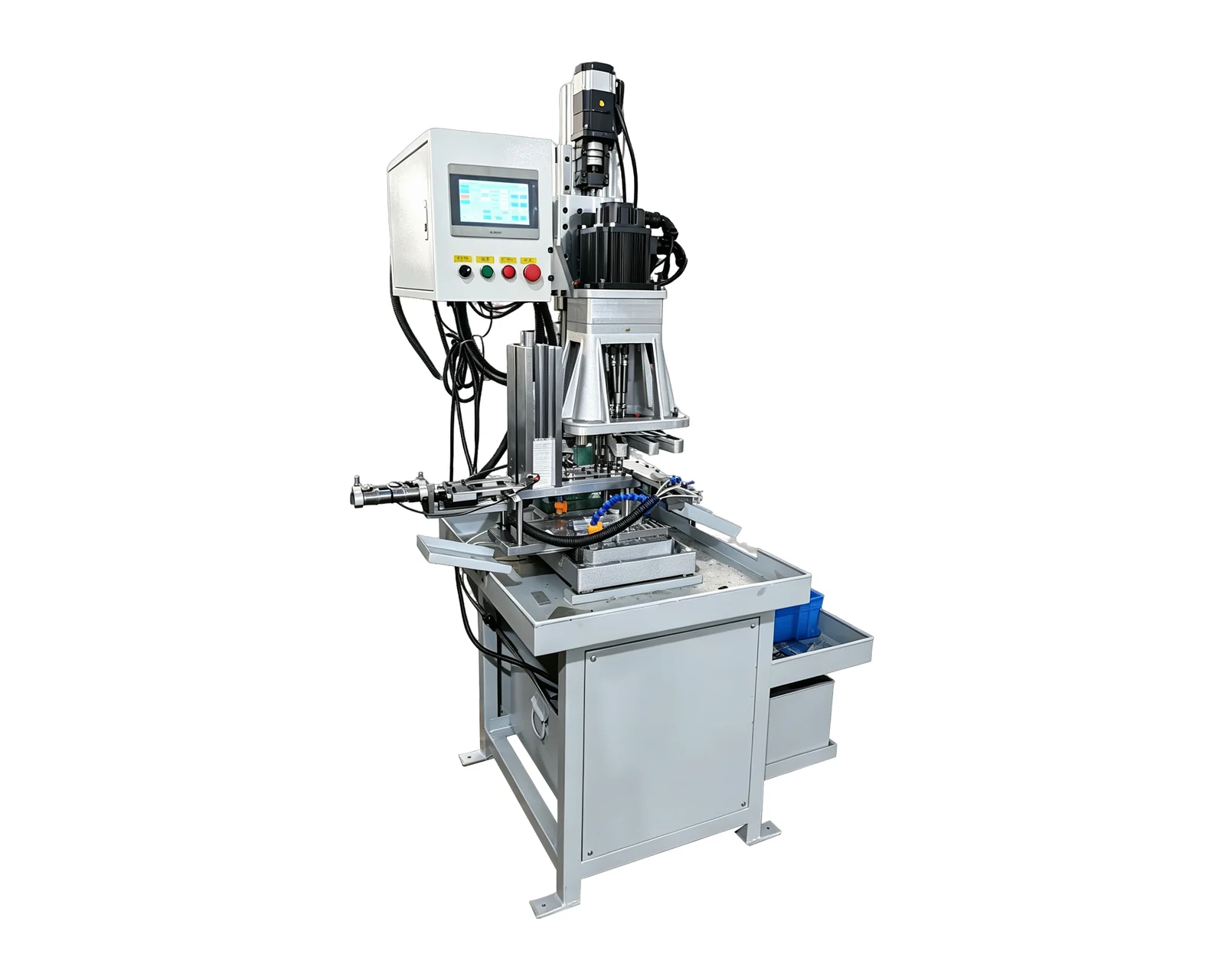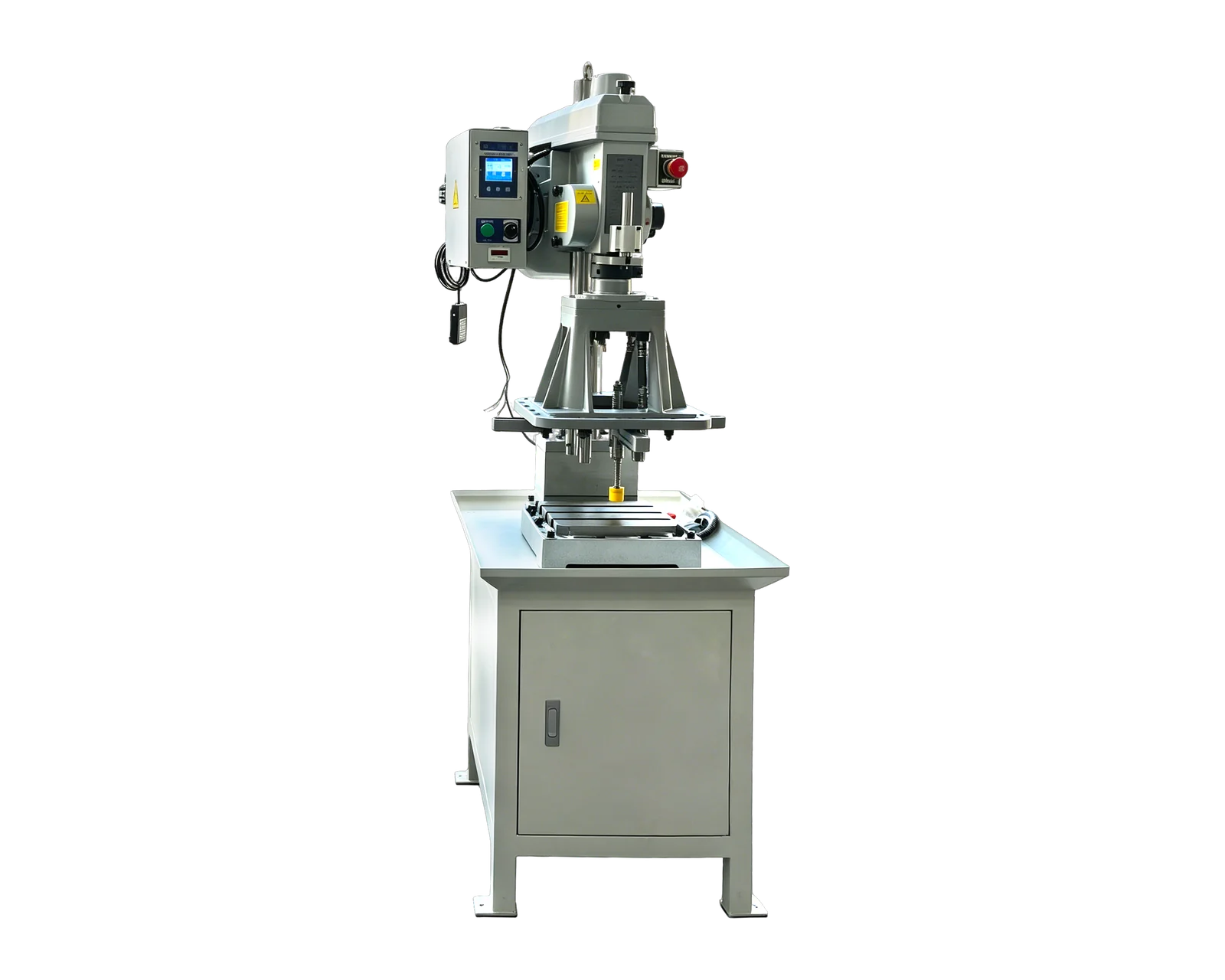
Explore equipment for your inquiry
4508 Gear-Driven Automatic Tapping Machine →Review the published specifications and configuration options against your part drawing before requesting a quote.
1. Separate the connector drawing from the kit description
A purchasing label such as cabinet connector kit may contain several different machined pieces. List the component part numbers, their drawing revisions and the quantity of each in a finished kit. State which components the proposed equipment must process. Include the material designation and incoming condition for each, even when the pieces appear similar in a sales photograph.
Record the assembly-hole relationships on the controlled component drawing or relevant approved reference. A supplier should not have to infer hole positions from a furniture assembly picture. Distinguish the requested drilling and tapping from any purchased fasteners, inserted elements or later assembly work. The equipment inquiry should describe the machining scope without creating new claims about installation strength or the performance of the assembled furniture.
2. Build a version map that purchasing can actually use
Use a version table that connects the commercial kit to the technical component definition. Keep finish and handedness visible even if the hole coordinates appear unchanged. Ask the quotation to identify covered versions and any separate tooling or change parts. A statement that the machine handles furniture fittings is not a substitute for a reviewed list of components.
3. Connect the finish condition to the handling boundary
State whether parts arrive before or after their specified surface treatment and identify any areas where contact marks are restricted. Provide representative photographs alongside the controlled acceptance description. Where parts can arrive loose or in trays, describe the actual supply arrangement rather than choosing a feeder from the component size alone. Include differences in presentation between suppliers if those differences are part of normal production.
Ask separately about machining, part orientation, collection and version segregation. An automatic tapping cycle does not establish that mixed connector versions can be separated or that finished pieces leave as complete kits. If a supplier proposes automatic feeding, request a review of the specified incoming condition and the versions included. Any remaining manual sorting or packing should stay visible in the staffing and output assumptions.
4. Check the unit behind an output target
Hypothetical purchasing example: a kit contains two pieces of one connector and one piece of another. The buyer requests a quantity of kits per shift, while an equipment offer describes individual tapped pieces per hour without identifying the version mix. Those figures cannot be compared directly. The buyer needs a component demand schedule that includes the ratio, batch sizes and approved working period.
The revised inquiry should show whether versions run in separate batches and where they become complete kits. Ask for changeover and collection responsibilities to be stated rather than assuming kit assembly is included. This example highlights a purchasing-unit mismatch; it is not a measured production result or a claim that BINSING supplies a particular furniture connector installation. Actual coverage requires review of the submitted parts.
5. Compare a defined tapping scope with a wider arrangement
If the incoming component already has the required hole, a tapping-platform review should include that hole's controlled incoming specification and inspection ownership. If drilling is also required, list it explicitly. For repeated patterns, ask whether the proposed arrangement covers the complete component or only a subset of features. Compare offers against the same operation list, handling endpoint and version schedule.
Email BINSING the component drawings, kit map, finish condition and required output basis. Request a response naming the reviewed versions, included fixtures, loading assumptions and acceptance checks. Equipment pages offer starting points for a discussion; they do not establish suitability for an unspecified connector family. Keep later changes to kit contents linked to component revisions so commercial renaming does not conceal a technical change.