Explore equipment for your inquiry
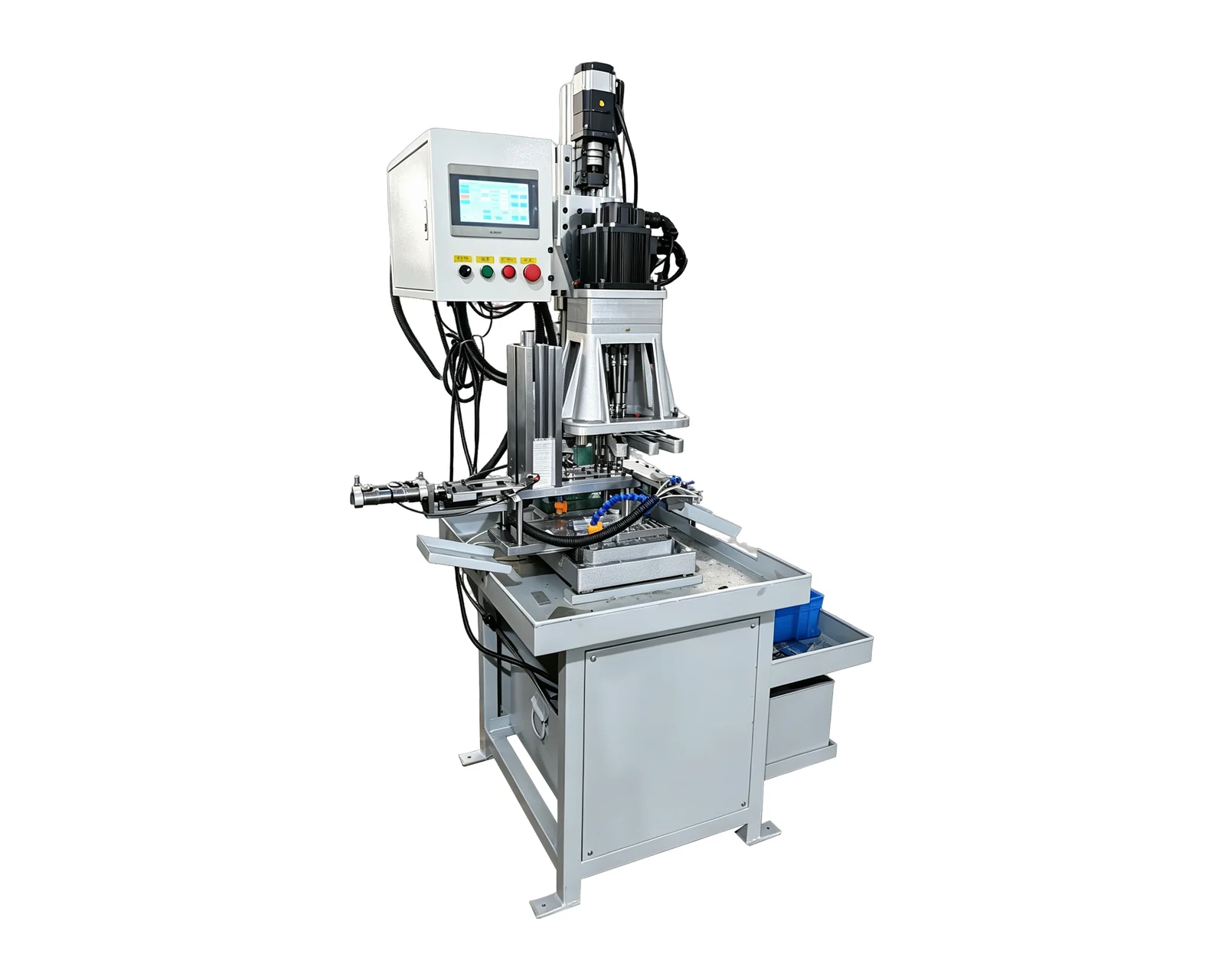
Dual-Servo Multi-Spindle Drilling & Tapping Machine →Review the published specifications and configuration options against your part drawing before requesting a quote.
1. Name the actual feature receiving the operation
A handwheel drawing can show a hub opening, a handle fixing location and other attachment features in one assembly view. Mark the exact holes and threads requested for the new equipment. Identify their component and feature numbers, directions and drawing references. Distinguish an existing opening from a hole to be drilled and a purchased threaded feature from one to be machined.
Supply the material specification of the item receiving the operation. If an insert is involved, identify whether it is already present and whether the requested work is on that insert or the surrounding component. Do not describe a mixed assembly only by the material of its visible rim. The supplier needs a clear definition of the workpiece presented at the station.
2. Separate hub work from handle and rim work
Use a feature register to avoid combining distinct operations under the phrase handwheel tapping. Keep the released drawing as the authority for each requirement. If a feature does not exist on the buyer's design, omit it rather than expanding the machining scope to match a generic example.
3. Define orientation without relying on appearance
State the approved references for locating the requested features. A visible spoke, decorative mark or handle position should not become a manufacturing reference unless the controlled requirement defines it that way. Use annotated photographs to explain the drawing orientation, including the face presented to the machine and any existing features relevant to the review.
Record areas where contact marks are restricted and provide the agreed surface-condition criteria. Distinguish those requirements from unapproved assumptions about how the part will be held. If the design includes different rim shapes or handle locations within one nominal size, list the versions and quantities separately. Ask the supplier to state which versions are covered and what changeover items or additional reviews are proposed.
4. Match a trial to the real assembly stage
Hypothetical purchasing example: a buyer sends a finished handwheel with a handle attached, but intends to machine the handle attachment feature before the handle is installed. The sample helps explain the finished product while representing the wrong incoming condition for that operation. Label its purpose and provide an unassembled sample or controlled incoming definition for the equipment review.
The reverse situation also needs attention: a trial on a bare component does not directly demonstrate work on a partly assembled handwheel. Record the intended production state and review any difference before accepting the trial as representative. This example does not recommend machining an assembled product. It illustrates why part identity and assembly stage must remain attached to the evidence used in a purchasing decision.
5. Specify component checks and a clear quotation package
Define the requested hole and thread checks by feature ID. Identify how existing finished areas will be assessed and which observations belong in the trial report. If a handle or mating component is used for a demonstration, name the item and the limited purpose of the check. Do not let an informal assembly demonstration replace the agreed dimensional or thread verification requirements.
Email BINSING the handwheel component drawings, feature register, incoming-stage photographs and version quantities. Request a review of the defined drilling and tapping work with included operations, exclusions and outstanding questions stated in the proposal. Handle assembly, finished handwheel suitability and checks within the equipment that later uses the handwheel should retain their own responsibilities. This keeps the inquiry focused on a specific machining deliverable that the buyer and supplier can both review.