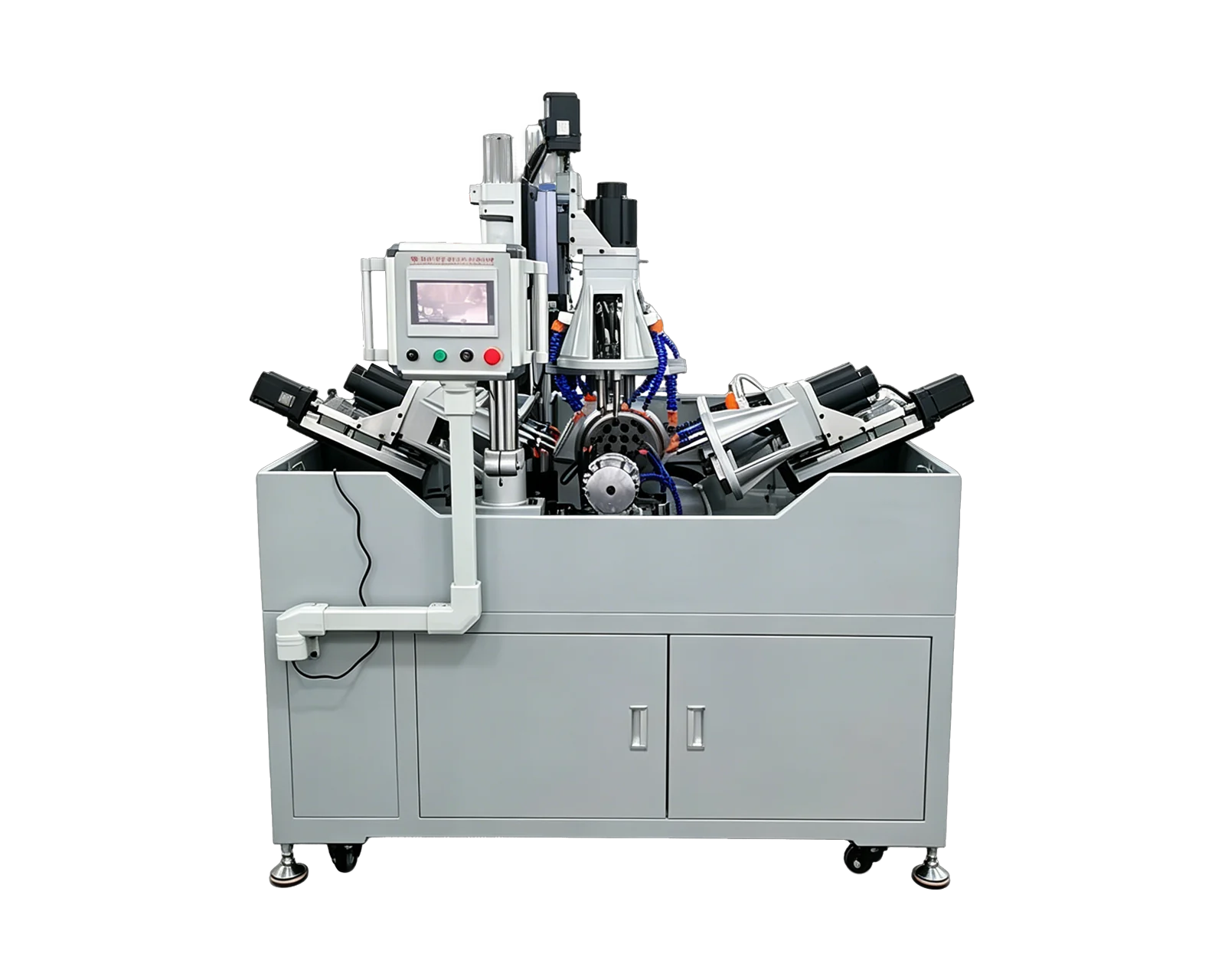
Explore equipment for your inquiry
Dual-Servo Multi-Spindle Drilling & Tapping Machine →Review the published specifications and configuration options against your part drawing before requesting a quote.
1. Start with the assembly relationship being purchased
List the holes and threads the new equipment is expected to produce and identify the drawing references controlling them. For example, a mounting pattern may relate to a finished face or another approved assembly reference rather than a nearby outside edge. Supply the controlled definition instead of asking a supplier to infer the intended relationship from a model or the component's use.
Separate the drilling and tapping scope from other housing operations. The presence of a bore on the finished drawing does not mean the proposed station must produce it. Mark whether each relevant feature is complete, unfinished or absent on arrival. This distinction makes the inquiry specific to the assembly relationship you need, rather than a general request to machine a casting or manufacture an entire housing.
2. Describe the housing at the exact incoming stage
Provide the material designation, incoming drawing and revision, along with available measurements of the features proposed for location. If parts arrive from different sources, identify whether they share the same approved incoming specification. Sample measurements should retain their lot references; a single measured housing does not establish the allowed condition of every production batch.
3. Review the proposed contact and access together
Ask for a locating concept showing the complete incoming housing, not only the face containing the holes. Include projections, attached items and regions where contact is restricted. Identify any finished reference surfaces that must be preserved. The supplier should be able to explain which supplied features the fixture uses and what input information remains necessary to assess the arrangement.
Where holes occupy different faces, ask which features are assigned to each machining position. A proposal for a multi-spindle platform and a proposal for a multi-side arrangement may cover different work. Compare them against the same feature list and handling boundary before comparing prices. Do not assume that a machine image confirms clearance, workholding suitability or the required relationship between features on your housing.
4. Use an assembly-focused example to expose assumptions
Hypothetical purchasing example: two housings share a mounting-hole pattern but use different foot geometry. The buyer wants the holes located from the same approved finished reference. A quote based on the first housing's exterior support surfaces may leave the second version unassessed even though the hole coordinates are unchanged. A variant table should therefore show both the mounting pattern and the surrounding geometry.
The purchasing question is whether the proposed equipment and fixtures cover both documented incoming versions, and what evidence will establish that coverage. It is not whether the two parts look similar. If a trial uses only one version, record what remains to be checked on the other. Treat this example as an inquiry-planning scenario, not a claim of an existing motor housing installation.
5. Agree the inspection boundary before selecting the arrangement
Identify which finished-feature checks belong to the machine supply and which remain with the buyer's quality process. Connect each check to the approved drawing and record who supplies any required inspection equipment. Assembly-level assessments outside the drilling and tapping scope should remain explicitly assigned. A dimensional result on one mounting feature should not be presented as evidence for the performance of the assembled product.
For a BINSING discussion, email the incoming and finished drawings, mounting-feature map, variant differences and output requirement. Request a response identifying the proposed arrangement, reviewed part revisions, workholding assumptions and verification scope. If a standard platform is suggested, ask which application tooling is included; if a custom arrangement is suggested, ask which documented requirement makes the additional scope necessary.