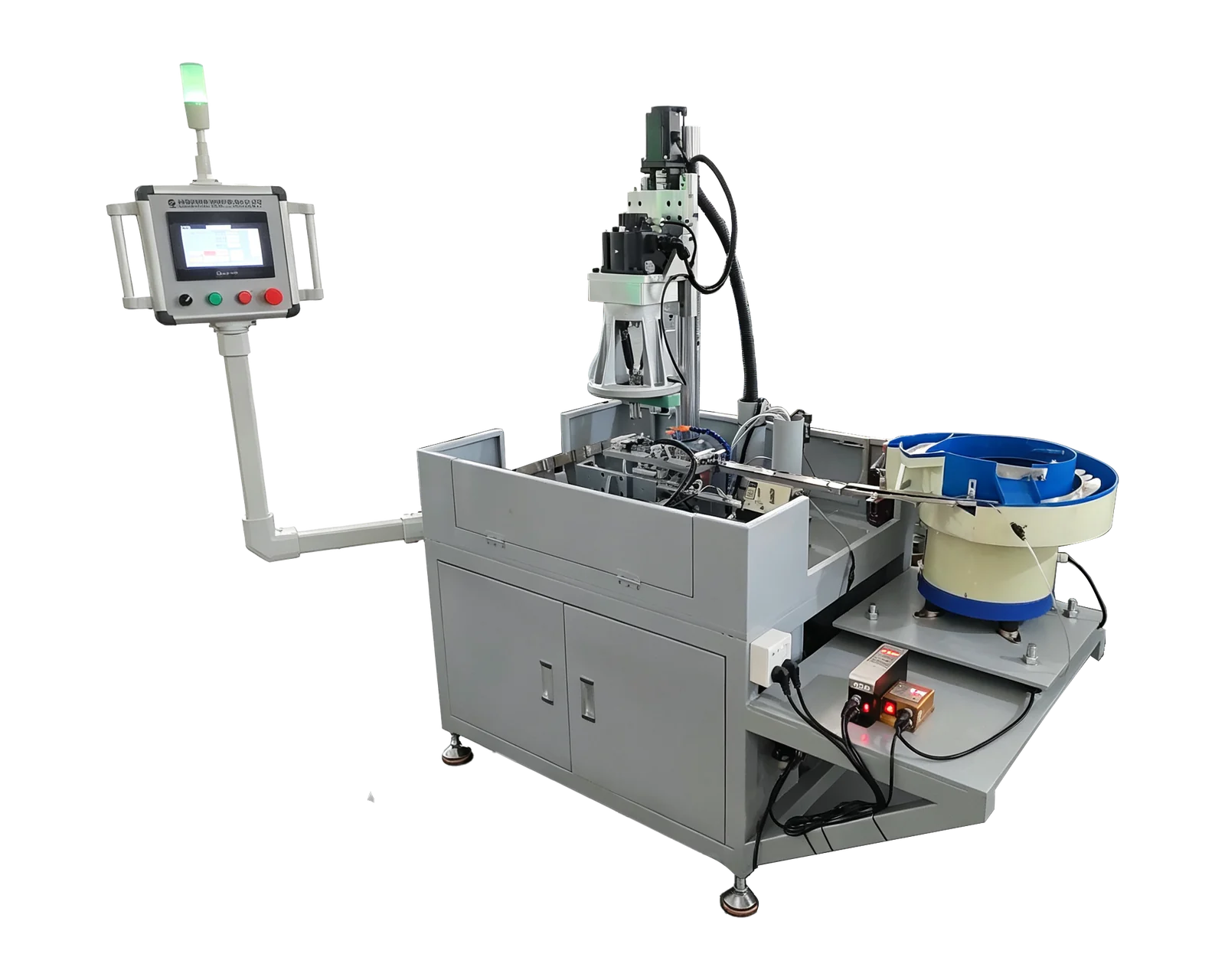
Explore equipment for your inquiry
Dual-Servo Multi-Spindle Drilling & Tapping Machine →Review the published specifications and configuration options against your part drawing before requesting a quote.
Start with the delivery window and the part mix
Give the supplier a demand table by part number and drawing revision. Include the quantity required in an ordinary week, any peak period and the batch sizes you actually expect to release. Annual demand alone hides whether production can be spread evenly or must fit a short delivery window. Identify firm orders separately from forecasts so capacity discussions reflect the confidence behind each figure.
Describe the planned shifts and the equipment sharing arrangement. A machine serving several part families cannot allocate the same hours to every family. Include upstream availability and downstream constraints where they affect when parts can be processed. The initial requirement should describe your production need; it should not present a preferred machine cycle as an already proven answer.
Agree the meaning of each time and output figure
Use a common set of definitions before comparing proposals. Ask whether a quoted cycle starts with a loaded fixture, includes transfer and loading, or describes only the machining operation. Also state whether output counts completed parts or parts accepted against the agreed quality requirements. Keep rejected parts and parts awaiting inspection visible instead of silently counting them toward the delivery target.
Use arithmetic to expose assumptions
Consider a hypothetical planning example, not a BINSING performance claim. A buyer needs 600 accepted parts in a shift. The shift has 480 minutes, with 60 minutes explicitly reserved for planned nonproduction work. That leaves 420 minutes, or 25,200 seconds. Dividing by 600 gives 42 seconds of available production time per required accepted part. This is a planning allowance, not a demonstrated machine cycle.
The example assumes one part family and does not yet account for unplanned interruptions or rejected parts. Instead of applying an unexplained efficiency percentage, list which losses are already excluded and which remain to be assessed. If several parts emerge per cycle, distinguish cycle output from output per part and check how empty positions or inspection holds affect the count.
Ask how the proposed output will be established
For an early quotation, ask the supplier to label the output figure as an estimate and state its basis. Separate known machining requirements from assumptions about loading, replenishment, changeovers and inspection. Identify which assumptions require representative parts or a later demonstration. This creates a path from a preliminary estimate to reviewable evidence without presenting an untested layout as a production commitment.
For the agreed observation, record the part revision, incoming condition, staffing, observation duration, completed count and accepted count. Record interruptions and any activities performed outside the observation window. A brief stable run may answer a sequence question while leaving longer production behavior unresolved. State what the observation supports and what still needs assessment before the production target is confirmed.
Keep demand changes separate from machine claims
Compare the documented requirement with the proposed configuration and its evidence. If a gap remains, discuss possible changes to the production plan, loading scope or equipment arrangement as separate options. For a standard platform, the review still needs the actual tooling and fixture. For a custom cell, the relationship between stations and surrounding work must also be included in the output boundary.
Retain the demand table and time definitions with the quotation. When order volume, staffing or part mix changes, update the requirement and ask whether the earlier assessment still applies. Email BINSING your drawings, batch mix and production window to begin this discussion. Request a written distinction between the required output, the estimated output and the evidence needed to confirm the proposed arrangement.