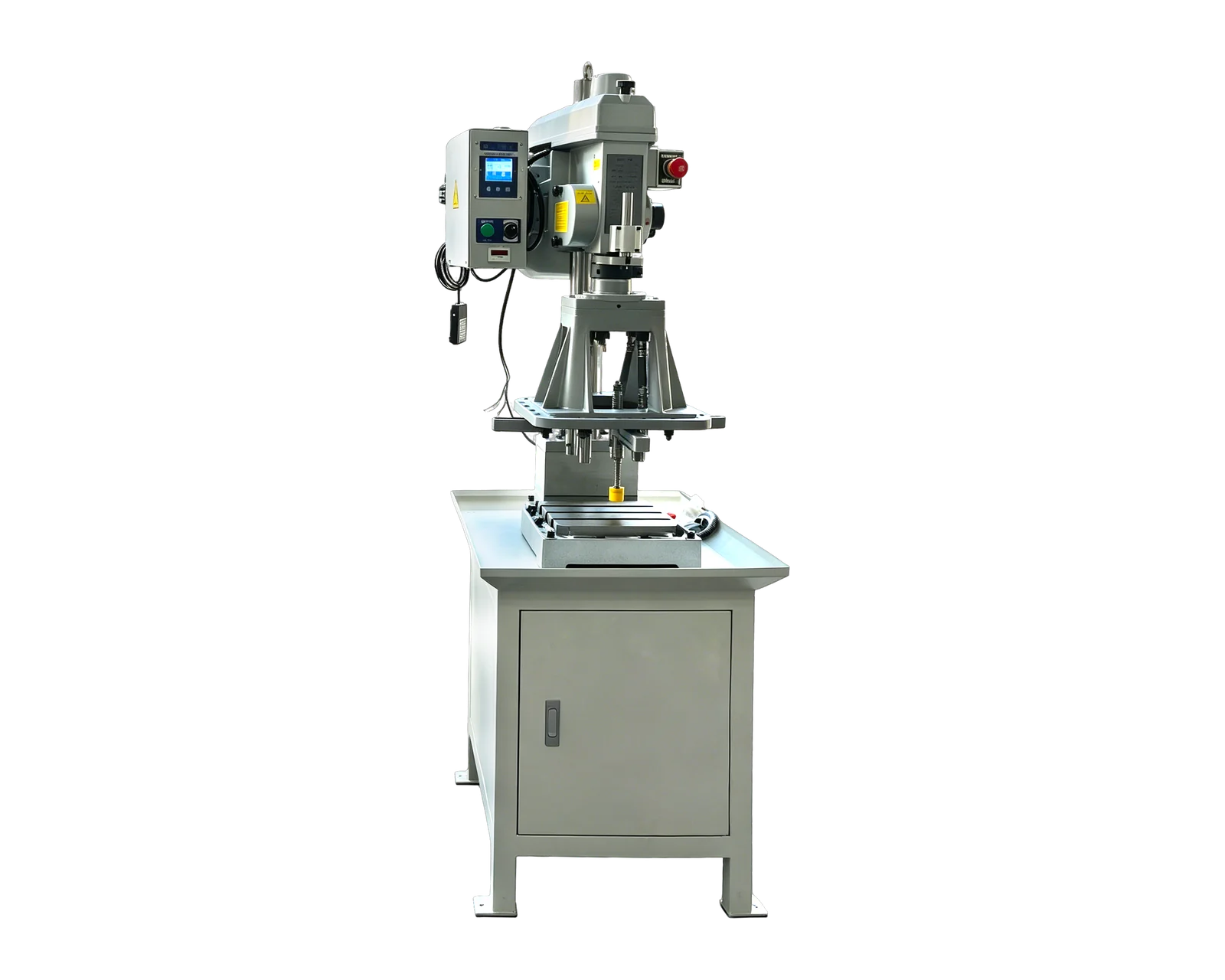
Explore equipment for your inquiry
Dual-Servo Multi-Spindle Drilling & Tapping Machine →Review the published specifications and configuration options against your part drawing before requesting a quote.
1. Define the adjustment block as the workpiece
A tensioner inquiry should identify the block that enters the machine, rather than use a photograph of the complete mechanism as its manufacturing specification. Supply its part number, drawing revision, material and incoming stage. Show whether sliding faces, slots, guide holes or threaded features already exist. Mark the particular faces from which the requested drilling and tapping operations enter the component.
Explain whether the block arrives alone or with a screw, insert or attached bracket. An attached item may be relevant to access or identification, but it does not automatically become part of the machining scope. If production will use bare blocks while trial samples contain assembled hardware, record that difference before discussing a fixture. The equipment review needs the actual condition that the factory intends to load.
2. Assign a separate row to each feature function
The words adjustment hole can hide several different requirements. A threaded feature receiving an adjustment screw, a locking screw hole and a clearance or guide feature should each reference the controlled drawing. Use the following register to explain their identities. It is a purchasing aid, not advice on selecting a screw, setting belt tension or designing the complete mechanism.
3. Define the purpose of a mating screw sample
A screw sample is useful only when its role is clear. State whether it illustrates the assembly, supports an agreed fit check or forms part of the delivered equipment package. Identify its revision and who controls the interface specification. A loose screw without traceable information should not silently replace the thread callout or the agreed inspection method for the block.
If the adjustment screw and locking screw are purchased from different sources, provide their interfaces as separate records. Ask the responsible design team to resolve conflicting information before releasing the machining requirement. The machine quotation should state the block operations it covers and list unresolved interface questions. Do not allow an equipment discussion to imply that the supplier has selected the assembly hardware or approved its service behavior.
4. Make the trial answer the component question
Hypothetical purchasing example: a block has one adjustment thread and two guide features. The guide features will arrive finished, while a separate contractor makes the adjustment screw. A drilling and tapping trial can assess the specified adjustment thread and the agreed preservation of incoming features. It cannot establish the performance of a complete tensioning assembly that was neither supplied nor evaluated under a defined assembly test.
Record the actual sample condition and identify the features checked. If a later variant changes the adjustment entry face but keeps the same exterior dimensions, review it as a distinct machining case. Retain the earlier result under its original part revision. Ask whether another representative sample is needed rather than extending the first result to every block that looks similar.
5. Request a feature-based equipment response
List the expected quantities by block version and identify which features vary between them. Ask the supplier to describe covered operations, proposed handling assumptions, inspection boundaries and information still needed. If guide finishing or slot production belongs elsewhere, include the handover condition in the inquiry. This lets the buyer compare proposals against the same incoming part and the same requested output.
Email BINSING the released block drawing, marked feature register, incoming photographs and relevant mating-interface information. Request an application review for the stated drilling and tapping work. Keep adjustment range, service tension and assembled mechanism evaluation with the responsible product team. A clear component inquiry provides a useful basis for discussing equipment without attaching an undefined assembly promise to a successful thread trial.