
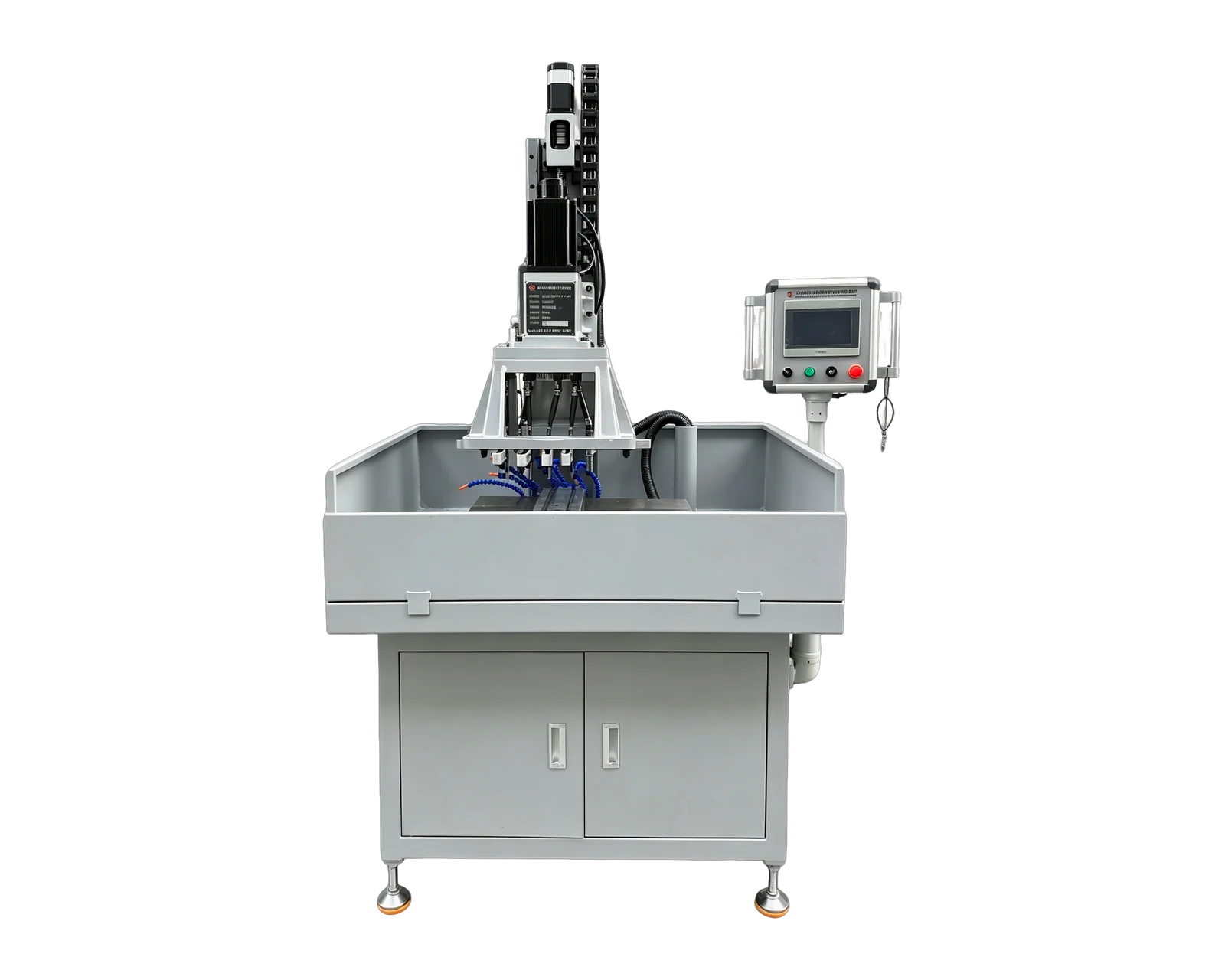
Explore equipment for your inquiry
Dual-Servo Multi-Spindle Drilling & Tapping Machine →Review the published specifications and configuration options against your part drawing before requesting a quote.
1. Identify the holder block rather than the cutting tool
The phrase tool holder can refer to a block, a complete assembly or a tool interface with several supplied components. Show the exact workpiece for this inquiry. Provide its part number, revision, material and incoming manufacturing stage. If a cutting tool appears in a photograph, explain whether it is assembly context or a separately identified reference item. The equipment proposal should have an unambiguous component boundary.
List the features already completed before loading, such as a tool-shank bore, seating face, pocket or slot. Mark the requested fixing threads and machine-mounting features on separate views where needed. A finished seat should not be grouped under a general instruction to machine all holes. Its incoming condition and preservation requirements may matter even when no operation on that seat is being purchased.
2. Create a feature ownership schedule
For every feature, specify whether it arrives complete, is produced by the proposed equipment or is finished later. Use the released component requirement as the reference. This prevents the supplier of a drilling and tapping stage from being assigned unspecified responsibility for the holder's complete manufacturing route.
3. Define the role of the supplied tool or screw
A supplied tool shank can help explain the holder interface, but it should have an identified purpose in the review. State whether it is for orientation, a defined assembly check or another agreed observation. Provide the controlled interface reference when it affects the block requirement. Do the same for fixing screws, especially when two screws look similar but belong to different holder versions.
Ask the responsible drawing owner to resolve discrepancies between the block drawing and the supplied interface item. Record the approved requirement before releasing the feature scope. Avoid asking the machine supplier to infer a revised thread or seat from whichever loose item happens to arrive with the samples.
4. Keep the trial tied to the requested block features
Hypothetical purchasing example: a block arrives with its tool seat and clamping slot complete, while two fixing threads remain to be produced. The equipment trial addresses those threads and the agreed condition of preserved features. It does not demonstrate production of the seat or slot. The trial report should identify which features were supplied and which were made during the test, with inspection evidence for the stated scope.
If another block version uses a different tool seat but retains the same outside shape, include it in the version register. The changed incoming geometry may need a renewed application review even when the fixing thread callout is unchanged. Ask the supplier which assumptions remain supported and which require additional evidence. Do not broaden coverage solely because the parts share a holder family name.
5. Request machining evidence without adding a performance promise
Provide the feature ownership schedule, block drawings, incoming photographs and planned quantities by version. Request a response that names the operations covered, handling assumptions, inspection methods to be agreed and any unresolved interface information. Where another supplier completes precision finishing, make the transfer condition explicit. The completed quotation should describe a defined stage with a checkable output, not an undefined complete toolmaking service.
Email BINSING the block package to discuss the drilling and tapping requirement. Separate component acceptance from cutting trials, holder rigidity, vibration behavior or tool-life assessment. Those outcomes depend on a broader application and need independently agreed evaluation. A successful fixing-thread trial is useful component evidence, but it should not be presented as proof that the finished holder will meet an unstated machining-performance target.