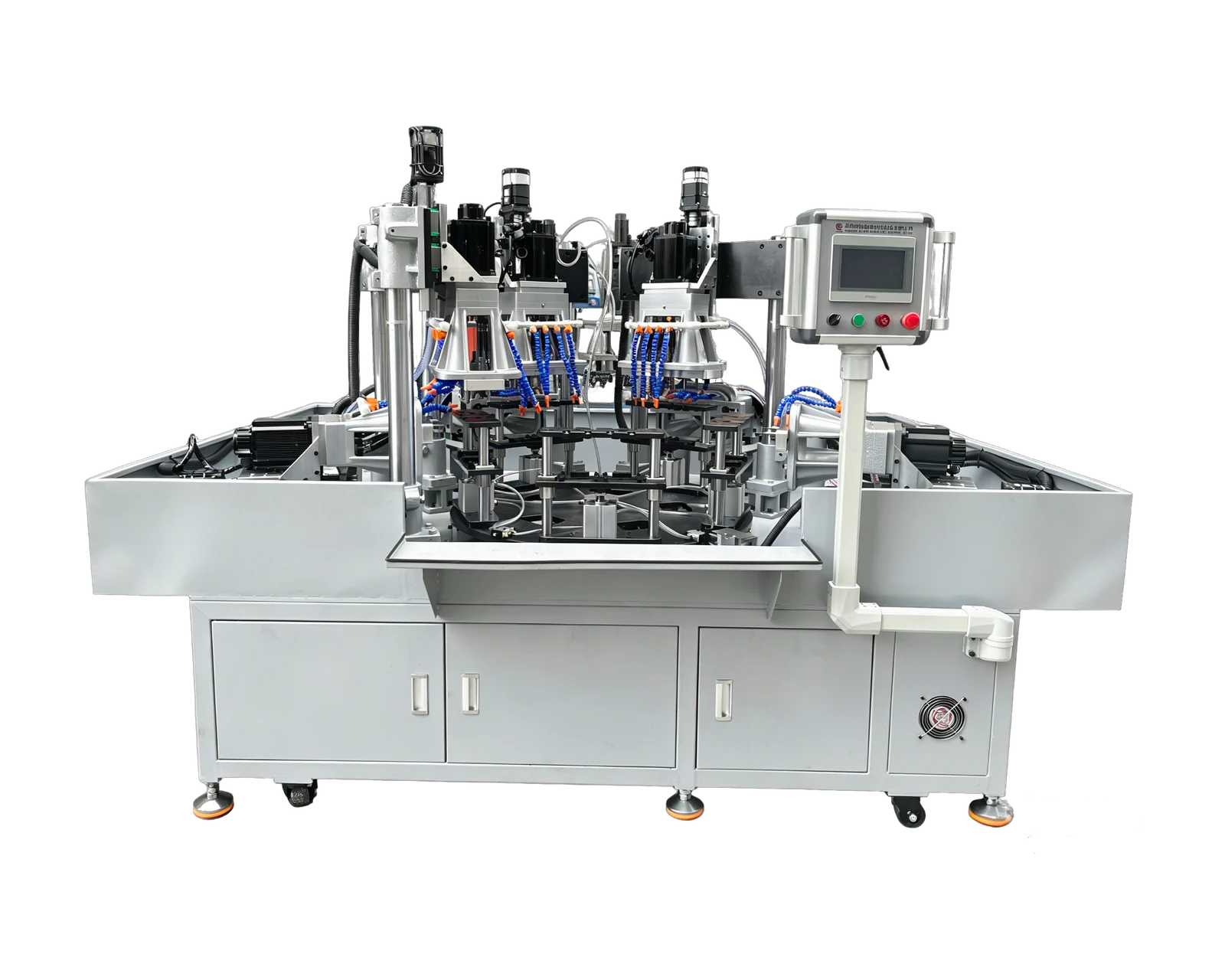
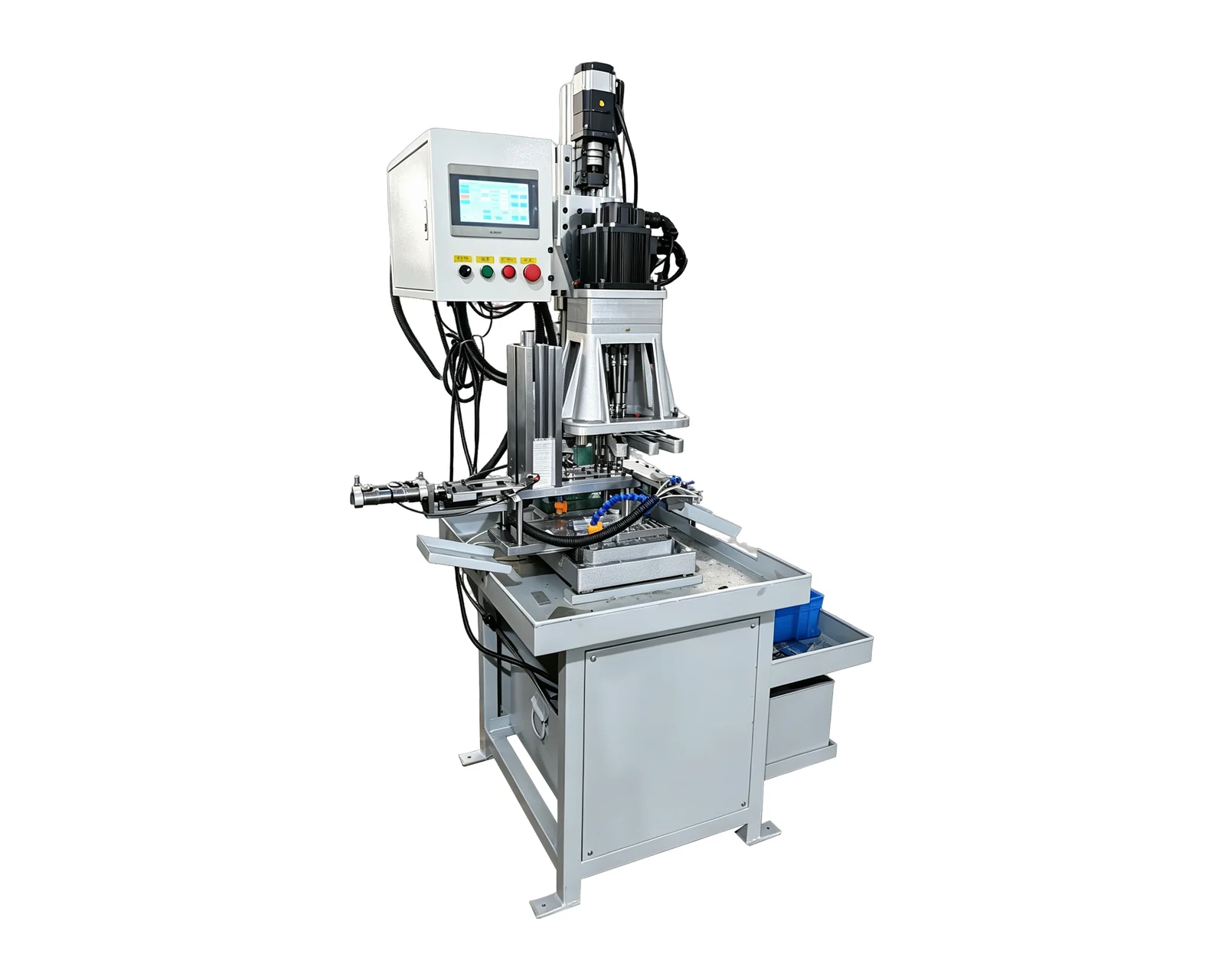
Explore equipment for your inquiry
Automatic Drilling & Tapping Machines →Compare standard platforms and custom layouts, then prepare the part and production requirements for your quote.
Ask what combined actually includes
One machine name can describe several arrangements: successive operations in one position, a part moving between stations, or a platform supplied for one selected operation. Ask the supplier to draw the proposed drilling, tapping, handling and inspection sequence. Identify every time the part leaves its locating surfaces. Do not infer simultaneous operation, automatic tool changes or one-clamping completion from a catalog title.
Apply the same detail to separate machines. Mark how a drilled part is identified, collected, moved and presented to tapping. An existing tray system may already handle this transition well; loose intermediate parts may require new controls. Neither arrangement is preferable without the real incoming part, hole requirements and work sequence. BINSING's platform page is an application discussion starting point, not confirmation of a particular combined configuration.
Record the intermediate state explicitly
Use this worksheet for both proposals. A row should contain a specific action or a confirmed absence of that action. If drilling leaves material that must be removed before tapping, include that preparation in the route and the trial. An omitted operation can make a quote appear faster without delivering the same finished part.
Separate first-part time from sustained output
Consider an intentionally simplified hypothetical route. The drill station releases one part every 24 seconds and the tapping station every 36 seconds, with handling already included in each interval. If the stations can run independently with adequate transfer support, the slower tapping stage limits ideal sustained output to one part per 36 seconds. The first part still has to pass through both operations. A 60-second sum describes neither all possible transfer delays nor the sustained output interval.
For a single sequential combined station assumed to spend 20 seconds drilling, 30 seconds tapping and 10 seconds on other included actions, the illustrative interval is 60 seconds. That does not prove separate machines are faster in general. A different combined layout could overlap station operations; a shared operator could prevent the separate route from achieving its assumed intervals. These numbers explain the comparison method and are not machine performance data.
Lean Enterprise Institute describes combination tables that separate manual work, walking and machine time. Use that principle to request an observed sequence for your proposals. The worksheet and numbers here are original illustrations, not a capacity model supplied by that source. Record waiting, tool service and inspection separately before extending a short trial into a shift estimate.
Test the production schedule as well as the main part
List any drilled-only orders and any parts arriving already drilled for tapping. Confirm how each proposal would process them. A combined system may need an approved alternative sequence, and a separate route may need different fixtures. Leave an unsupported job outside the confirmed coverage instead of assuming the unused operation can simply be skipped.
Also consider an interruption at either operation. A drilling station that keeps producing while tapping is unavailable creates intermediate stock, not completed output. Define a sensible production rule and storage limit for the actual factory. Then compare changeovers and inspection workload for the planned weekly mix. Send both the main part and these secondary jobs with the inquiry so the supplier reviews the complete route.
Start equipment selection at the automatic drilling and tapping category. A dual-servo platform requires review of its tools and operation changes; a traverse proposal requires a position-to-feature map; a rotary proposal requires a station and part-state map. These are different candidate routes, not interchangeable packages with an assumed common cycle. Keep unresolved operations in the comparison until the supplier assigns them.