Explore equipment for your inquiry
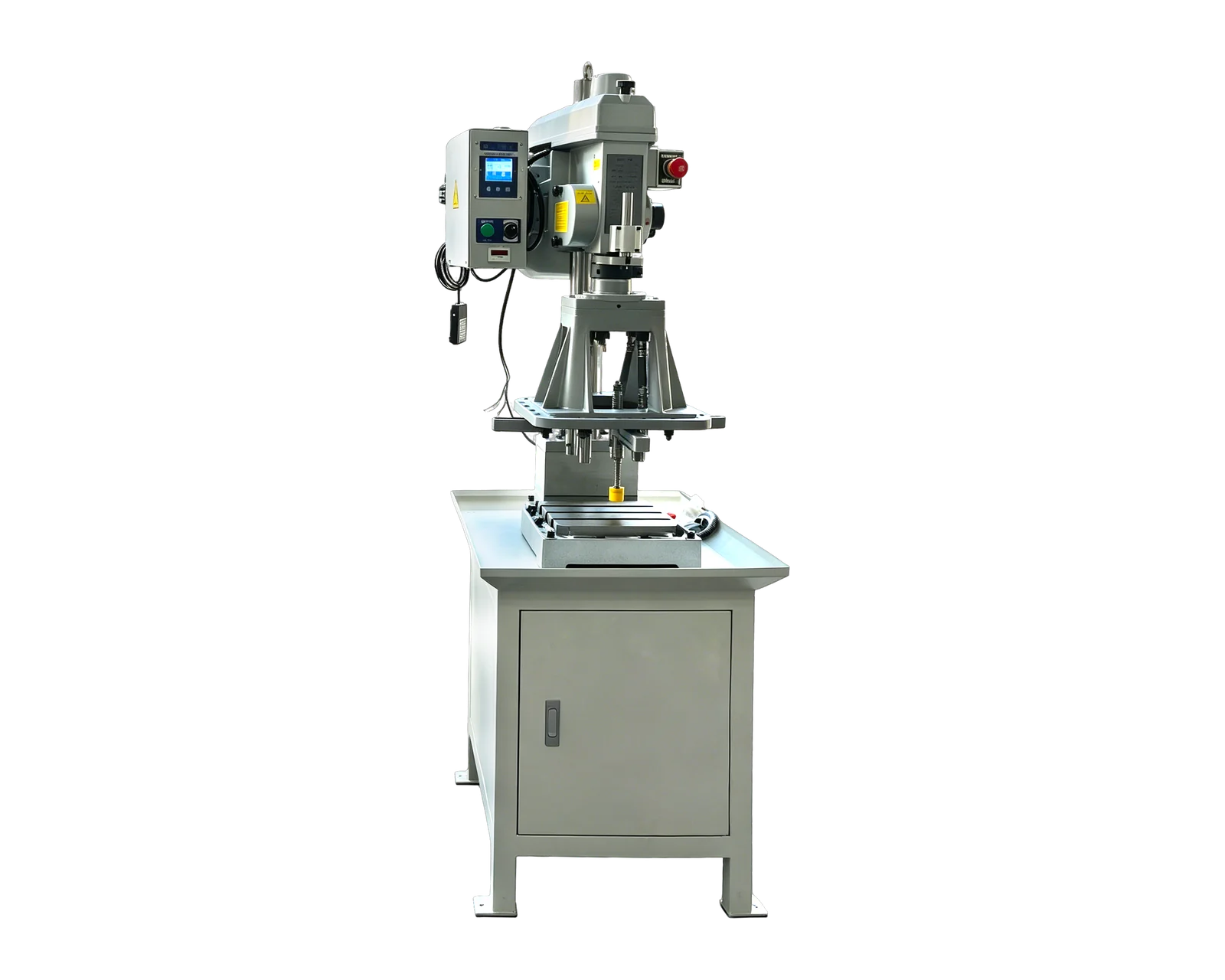
Dual-Servo Multi-Spindle Drilling & Tapping Machine →Review the published specifications and configuration options against your part drawing before requesting a quote.
Sheet thickness is not effective thread engagement
Sheet thickness describes the parent panel. Effective thread engagement describes the usable axial overlap of the screw and complete internal threads in the assembled joint. Entry chamfers, incomplete threads, the hole exit and screw position can reduce that overlap. For a tapped flat sheet, nominal thickness is therefore only an initial geometry input; it is not a guaranteed load-bearing length.
Dividing an assumed engagement length by thread pitch estimates the axial number of pitches. It does not calculate stripping strength or prove an acceptable joint. The required engagement depends on the sheet alloy and condition, thread geometry, screw properties, assembly torque and service loading. Ask the joint designer to define the requirement rather than accepting a general rule such as three turns for every material.
Compare four ways to provide the internal thread
The table is a selection aid, not a strength ranking. Each route needs confirmation for the actual part, including available space and access. A thread gauge checks specified thread geometry; it does not establish the load capacity of the complete joint.
An extruded hole needs its own section drawing
Wilson Tool describes sheet-metal tapping in pre-punched or extruded through holes and explains that thinner stock can require extrusion to obtain engagement. Its guidance calls for application advice rather than one thickness limit. This supports considering a collar; it does not establish that every alloy, thickness or thread can be extruded successfully.
Extruded-hole tapping means tapping the wall of a formed collar. Specify the geometry after punching and extrusion: bore profile, collar height, local wall thickness and transitions. Collar height alone is not effective engagement, and its wall thickness may differ from the original sheet. Confirm where complete usable threads remain after tapping. Hole extrusion and thread forming are separate operations; an extruded hole does not automatically require a forming tap.
Tapped hole vs rivet nut: compare the load path
A directly tapped hole transfers screw load through threads made in the panel. A rivet nut provides its own internal threads and transfers load through its installed connection to the panel. Böllhoff identifies blind rivet nuts as a route for thin-walled components with one-sided assembly. Check the selected fastener's grip range and setting requirements; a larger internal thread does not by itself prove adequate panel retention.
A self-clinching nut instead relies on controlled sheet-metal flow into its retention feature. PEM specifies different sheet-hardness limits by fastener family and publishes thickness, hole and installation requirements. Its performance data distinguish pushout and torque-out resistance. Use data matching the selected fastener and panel, and request application testing when the published conditions do not match. Neither retention value alone replaces the joint's service-load assessment.
Choose the construction, then validate the process
First define the joint: thread and screw, required engagement, assembly torque, service loads and expected disassembly. Next compare the available section with that requirement. Keep direct tapping only if the geometry and strength assessment support it; otherwise evaluate a collar or separate fastener with the responsible tooling or fastener supplier.
Before a trial, confirm the material designation and condition, thickness tolerance, hole specification and finished surface-treatment stage. For a collar, agree the permitted wall geometry; for a nut, agree the exact part number and installation conditions. Then approve thread inspection and joint tests appropriate to the design, keeping installation retention and screw-thread strength separate. Use representative production parts and record the tested configuration.
BINSING can review the drawing for a proposed drilling or tapping operation. This equipment review does not establish a supply scope for extrusion, clinching, riveting or thermal drilling. Resolve those process responsibilities separately before comparing machine proposals.