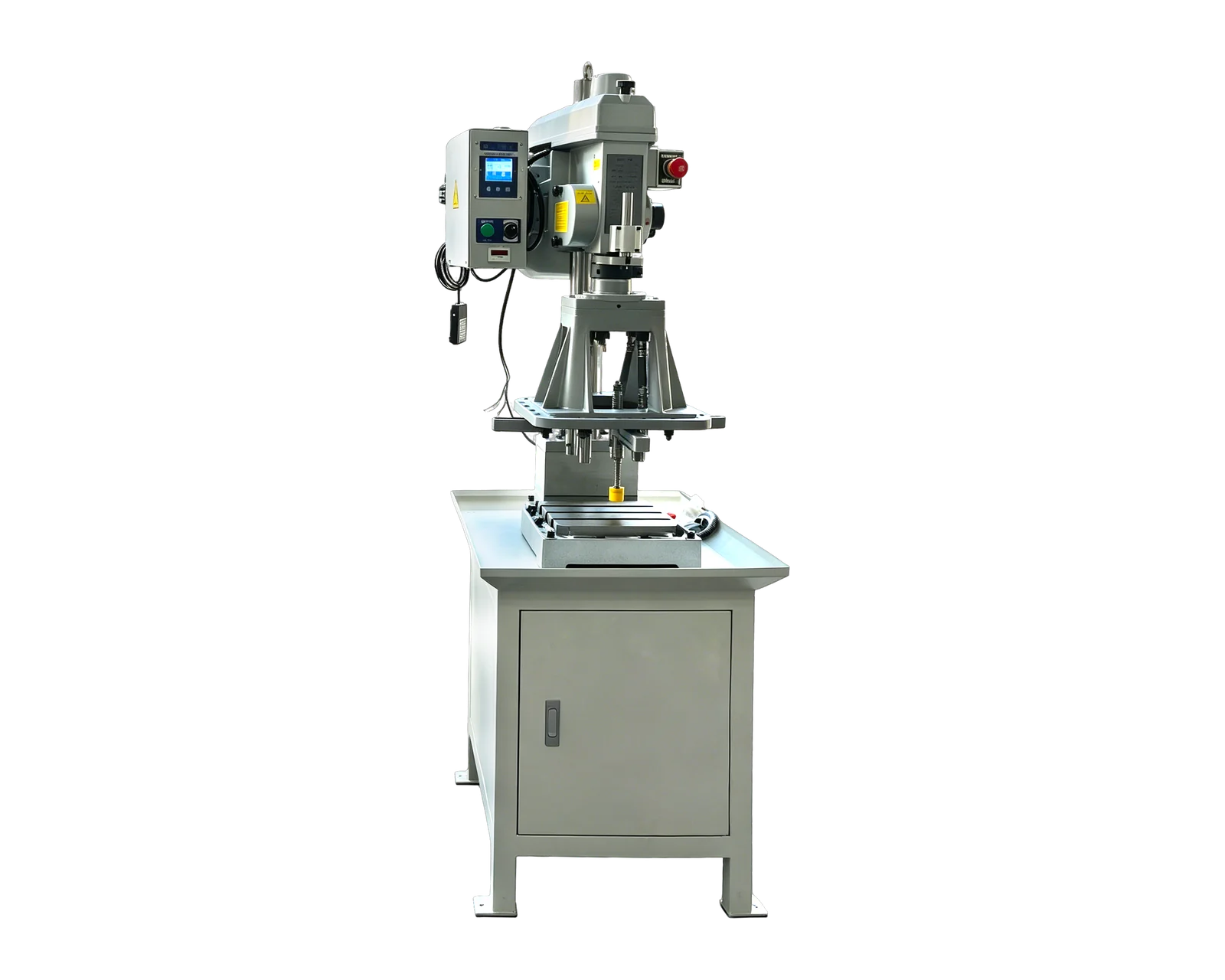
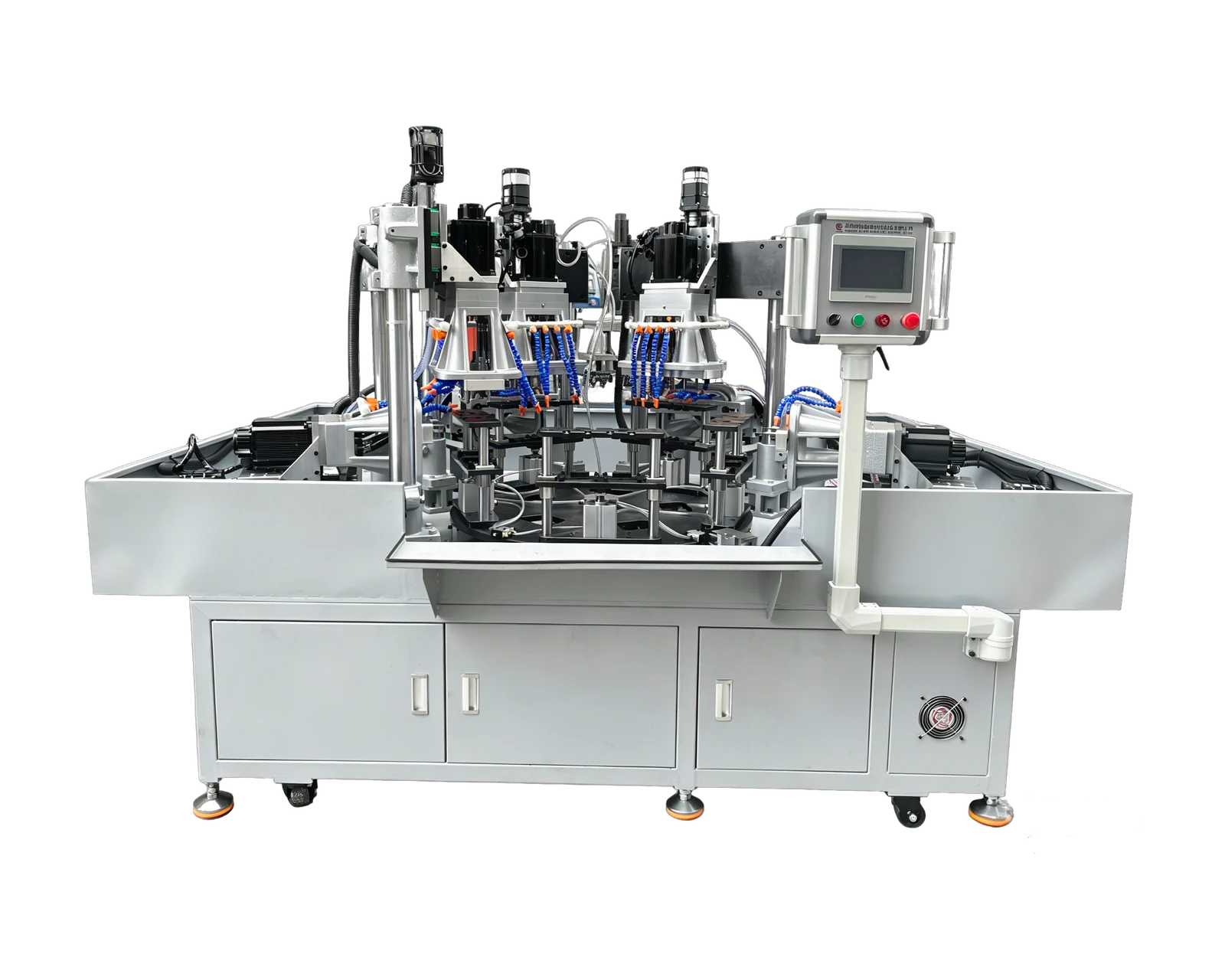
Explore equipment for your inquiry
Automatic Drilling & Tapping Machines →Compare standard platforms and custom layouts, then prepare the part and production requirements for your quote.
Drilling and tapping produce different features
In machining, tapping means making an internal thread with a tap. It does not mean striking the metal. The thread is the helical profile that lets a matching screw advance as it turns. An ordinary drill makes the opening but does not create that profile.
A screw may pass through an unthreaded clearance hole and engage a nut or a threaded second part. That first hole does not need tapping merely because a screw passes through it. If the drawing requires the screw to engage threads in the part itself, the process must produce that internal thread.
Why drilling usually comes before tapping
For a conventional drill-and-tap route, the hole-making operation leaves material in the wall for the tap to cut or form into threads. The preparation must match the selected tap: an oversized hole can leave insufficient thread material, while an undersized hole can impose excessive load. Use the tooling supplier's specification for the actual thread, material and tap rather than treating any existing hole as ready to tap.
The thread's nominal diameter is not a tap-drill instruction. For example, M8 × 1.25 identifies a metric thread with an 8 mm nominal diameter and a 1.25 mm pitch. It does not mean to drill an 8 mm preparation hole. Cutting taps and forming taps may require different preparation for the same nominal thread.
The hole need not be drilled at the tapping station. It may arrive from an upstream process, provided its actual condition meets the tapping requirements. Use the pre-drilled-parts guide to define that handoff. A combined drilling and tapping machine still needs a defined operation sequence; its name alone does not establish how the tools, stations or part transfers are arranged.
A through hole and a blind hole need different depth information
A through hole opens through the material; a blind hole stops within it. Either may be threaded if its geometry and application permit. Hole depth and usable full thread depth describe different features, so one depth value is not enough to specify both.
A tap has a lead-in portion before its complete thread profile. A blind-hole plan must account for that geometry, bottom clearance and chip handling where applicable. A through-hole plan must consider travel and clearance beyond the exit. These details belong in the existing blind-hole and tooling guides; the basic distinction is that a required thread depth is not automatically the tool's travel distance.
Tapping does not always mean cutting chips
OSG distinguishes cutting taps, which remove workpiece material, from forming taps, which create the thread through plastic deformation without cutting chips. Forming requires suitable material and preparation; it is not a universal replacement for cutting. The separate cut-versus-form guide covers the implications for the machine and tooling.
Thread milling is another way to make an internal thread, using a different tool and motion. It is not another name for tapping. Likewise, an external thread on the outside of a shaft is a different feature from a tapped hole. Identify the required feature before asking for a machine or tool.
Manual and machine tapping share the same thread requirement
A tap can be turned by hand with an appropriate holder or driven by a suitable machine. The required thread does not change with the drive method. In both cases the tap must follow the hole correctly and advance according to the thread lead; machine tapping also needs an appropriate feed, holding and reversal arrangement.
Automation changes how the part is located, the tools are driven and the sequence is repeated. It does not make an unsuitable hole or material acceptable. Automatic tapping also does not necessarily include automatic loading, and multiple spindles do not necessarily mean independent motion at every tool. Confirm those functions for the proposed equipment.
Choose the next guide from the part you have
Start with the finished feature and the incoming part. If only a plain hole is required, review drilling. If conforming preparation holes already exist, review the tapping stage. If both are required, define the sequence before comparing separate machines with a combined arrangement.
- Already have holes? Use the pre-drilled-parts guide to define what arrives at the tapping station.
- Need a thread near the bottom of a hole? Review blind-hole thread depth and clearance.
- Choosing a cutting or forming tap? Use the tap-method comparison instead of assuming the preparation is interchangeable.
- Working with thin sheet? Review effective engagement and alternative thread constructions.
- Comparing production arrangements? Use the separate-versus-combined guide after the required operations are clear.